Charles Leclerc's Commitment to Ferrari: Trusting Fred Vasseur
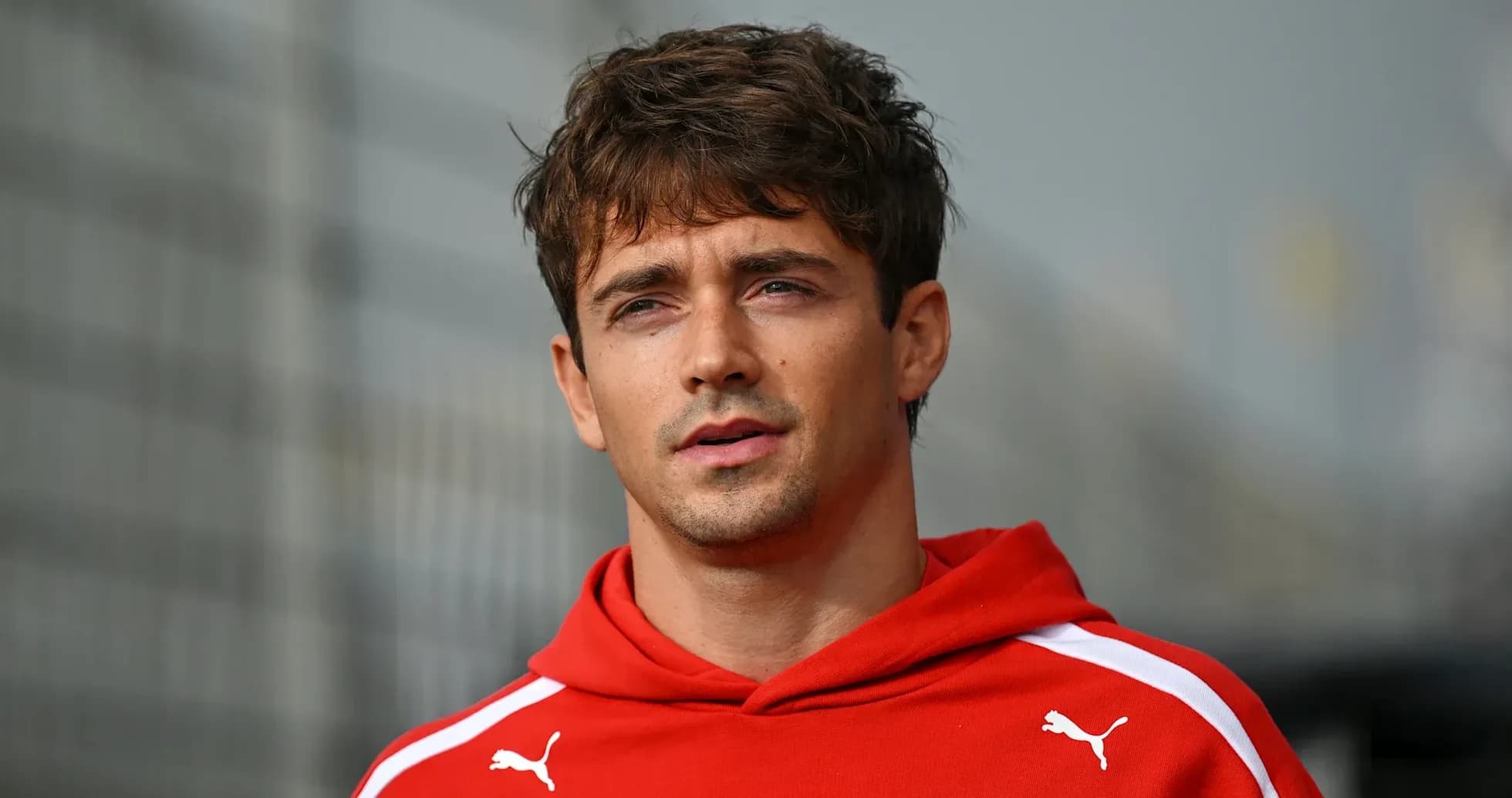
Charles Leclerc says his faith in Ferrari Team Principal Fred Vasseur was a “big reason” he committed his future to the Scuderia – and that belief ran so deep he had “no doubt” extending his deal was the only call to make.
The timing raised eyebrows. The first half of Leclerc’s 2026 season lurched between frustration and outright misery: two DNFs and a lonely eighth place across Monaco, Barcelona and Austria, while on the other side of the garage Lewis Hamilton was banking podiums and then a first Ferrari win in Spain.
Yet in the middle of that turbulence, Ferrari announced a new multi-year contract for the Monegasque, tying him to the team “for the coming seasons”. On the Beyond The Grid podcast, Leclerc laid out why, despite the bruises, he never looked elsewhere.
This is where I belong
For Leclerc, the decision was as much emotional as it was strategic.
“It just felt right,” he said of re-signing. “For me, this is where I belong, for now. This is where I feel good. This is where I am the most motivated to do well, just because I love this team so much.”
He has been in red on the F1 grid since 2019, but his roots in the Ferrari system run deeper, back through the academy and junior categories. That history still drives his ambition.
“I don't want to give up on my ultimate goal, which is to become a World Champion with Ferrari,” he said. “I believe in the project, I believe in every single person of the team.”
Leclerc pointed to a more aggressive Ferrari, one he feels is finally matching its rhetoric with risk.
“I think we are in a year where we've been showing innovation. We are very aggressive also in the production plan and in the upgrades we are bringing. That gives me lots of hopes for the future.”
Hope alone doesn’t keep a driver of his calibre tied down. One man, in particular, does.
The Vasseur factor
“Fred is a big reason why I have signed again as well,” Leclerc admitted. “I believe in Fred 200 percent.”
Vasseur and Leclerc go back years, to their days together at Sauber. The relationship has always been more than a formal team boss–driver dynamic.
“We've known each other for many years now and to be able to work with him in the team I've always loved is a privilege,” Leclerc said. “So, for me, I had no doubt that this was the right decision for me.”
He struggled to fully explain the connection, but the bond is clearly personal.
“It feels like I know Fred since forever. He's the kind of person that you speak once and, I don't know, I think it's the values. There's just something that was naturally working from the beginning and you cannot quite explain that.
“But from the very first talks, it felt like I've known him forever. So, obviously, the bond is stronger than just a work, business relationship.”
That trust has been vital during one of the most complicated stretches of Leclerc’s Ferrari career.
When the season turned sour
While Hamilton was racking up two second places in Canada and Monaco and then that landmark Barcelona victory, Leclerc’s campaign threatened to unravel. Same car, same team, wildly different outcomes.
The easy narrative would be to copy the seven-time World Champion. Leclerc knows it doesn’t work like that.
“It's not as easy as, ‘Oh, Lewis is doing that. I'll just do the same,’” he said. “Lewis is an incredibly talented driver and has a natural driving style that is his and he's the best in the world for that particular driving style.
“To reproduce that is very tricky.”
Instead of mimicking Hamilton, Leclerc pushed Ferrari to adapt the car to him.
“I tried to push more into trying to find ways to have this car a bit more fitted to my driving style. I found a few things in the data that was just not working.”
The answers were not sitting neatly on a laptop screen.
“In Formula 1, it's not always black and white. It's not like you sit in front of your computer, look at the data and say, ‘Oh, this is one tenth and a half of a second. Let's change that.’ It's not as easy as that. It's intuition. It's feeling.
“It's things that you might think, ‘Okay, this is what makes me a bit less comfortable in the car. And if I improve that feeling, then performance will come.’”
Silverstone proved the turning point. Ferrari made changes that weekend, and Leclerc converted them into victory.
He felt the direction was finally right – not perfect, but aligned with his instincts.
Fighting the urge to overthink
From that British Grand Prix onwards, Leclerc tried to simplify his approach in a sport that encourages endless analysis.
“The car is constantly changing so it's not like I can really go back to that feeling I had in Melbourne, so it's evolving but my goal is to get into the car and not overthink,” he said.
“When you overthink, you know that you are losing time on the table because our sport is not a lot about reacting on what's happening on the car. It's more about anticipating and feeling the car.
“Getting into a corner, I need to know exactly the way the car will behave so I don't have to overthink about things.”
Then came the line that will resonate with any elite athlete.
“I think overthinking is killing performance,” Leclerc said. “When things come naturally, that's where I think the flow state that we speak about, racing drivers or athletes as well, the flow state when things just flow naturally is really where you use 100 per cent of your potential. When you've got to overthink things, that’s where it becomes trickier.”
Ferrari’s job now is to give him a car that lets that flow state appear more often than not.
Can Ferrari really hunt down Mercedes?
On the Constructors’ standings, the picture is blunt. Ferrari sit second, but 87 points behind Mercedes. The gap is significant, yet the rules of this era mean it can evaporate quickly with the right development hits – or balloon if a team misfires.
Leclerc refuses to burn energy plotting theoretical title permutations.
“It’s not something I really want to put energy towards thinking about too much,” he said. “This championship will be won with upgrades. The upgrades are so powerful with these cars.”
He pointed to the current regulations, where downforce is king and marginal gains are anything but marginal.
“We've got a lot less downforce than we used to in the past, so every point of downforce you add to this car has got a much bigger influence on how the car feels like on track. So the pecking order can change so quickly one way or another.”
His focus is narrow, by design.
“I'm very much focused race by race and not really thinking about the long-term picture about if we've got a real shot with that championship. But surely until it's not finished, I'll keep believing in it and we'll see how it goes.”
What doesn’t change is the dream.
“The championship is something that I will dream of ticking off one day, particularly with the red team, this has been a dream of mine since many years. I feel we are getting closer. When will that be? I don’t know, I hope as early as it can be.”
Leclerc has nailed his colours to the Ferrari mast again, backed by a boss he trusts “200 per cent” and a project he believes is finally daring to stretch. The question now is simple: will the car catch up with the conviction?