Liam Lawson Shines in Brazilian Grand Prix Qualifying
Liam Lawson has spent most of this season waiting on other people’s decisions. At Interlagos, he delivered one of his own.
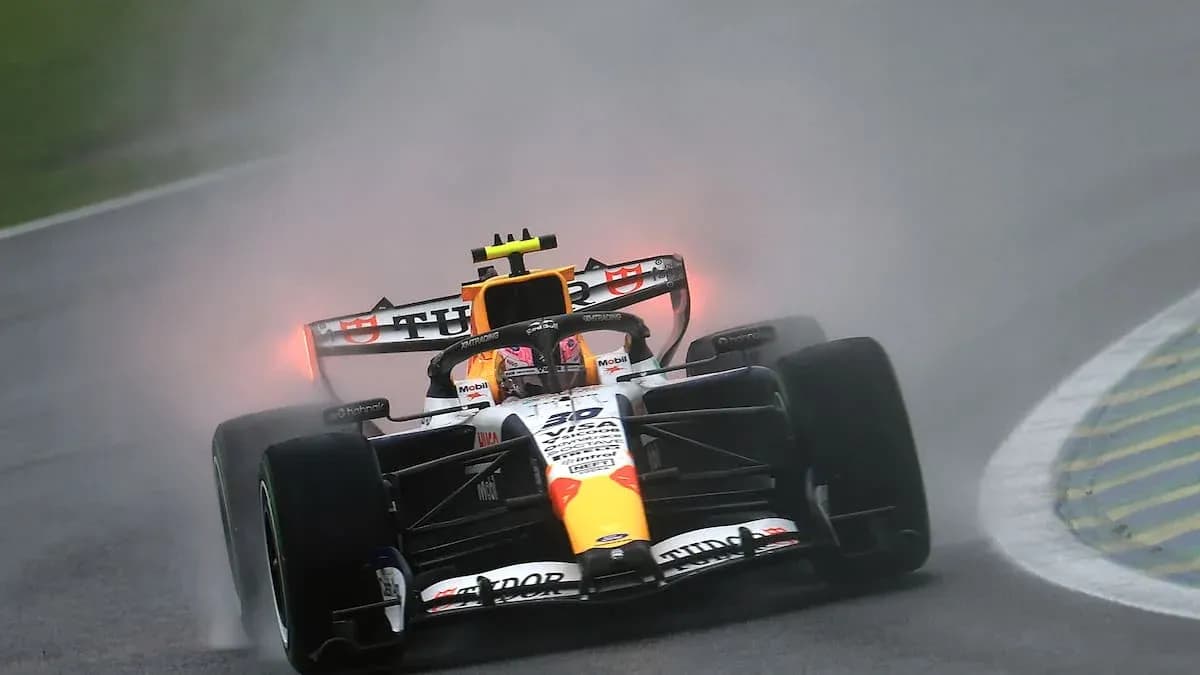
In a qualifying session that lurched from chaos to opportunity amid Brazilian downpours and red flags, the Kiwi dragged his Racing Bulls into the spotlight, securing third on the grid for the Brazilian Grand Prix – equalling the best qualifying result of his Formula One career.
Chaos, rain and a statement lap
Qualifying barely had time to begin before it was stopped. Less than two minutes into Q1, torrential rain forced a red flag and sent engineers and strategists scrambling back to the drawing board. The delay stretched past an hour. When the cars finally rolled out again, it wasn’t so much a standard session as a high‑stakes shootout on a rapidly evolving track.
The grip came and went in waves. Times tumbled, then plateaued, and drivers who mistimed their laps were punished. Lawson danced on the edge of that chaos but never really looked like falling off it. His 1m 32.085s in Q1 was good enough for seventh, with more than 1.2 seconds in hand over the cut line.
Racing Bulls banked an early win before the serious business even began. Constructors’ rivals Alpine saw both cars dumped out at the first hurdle, Franco Colapinto and Pierre Gasly stranded in 17th and 18th. On a weekend where every point matters, that was a body blow for the French outfit and a quiet boost for Lawson’s camp.
Verstappen out of the way, Lawson steps up
Q2 opened with another twist. Max Verstappen, burdened with a 30-place grid penalty for a power unit change, never rejoined the session. Red Bull parked him to save tyres, effectively freeing up a spot in the top 10 and clearing one heavyweight from Lawson’s path.
The New Zealander didn’t waste the opening. On a track that was finally starting to come back to the drivers, his first Q2 effort – a 1m 30.922s – slotted him comfortably inside the top 10. Then the conditions tipped in his favour again.
As the surface improved enough for intermediates, Lawson switched rubber and attacked. The reward: a 1m 27.049s lap that rocketed him to second in the segment, just 0.304s shy of session leader George Russell. It was aggressive, assured driving in the kind of greasy, half‑wet conditions that expose hesitation. Lawson showed none.
Not everyone survived the storm. His teammate Arvid Lindblad ground to a halt at Turn 5 with a mechanical issue, knocked out in 12th. The session ended under another red flag when Haas debutant Rafael Camara hit the barriers with under a minute left, locking in the order and leaving Lindblad stuck on the fringes.
Q3 tension and a career-best match
By the time Q3 rolled around, the weather had turned again. More rain. Less grip. Little chance of improving on the standout times from Q2.
Lawson’s best lap in the final shootout – 1m 28.321s – left him fifth on the timesheets. Under normal circumstances, that would have been an excellent result in its own right. This time, the stewards pushed him even higher.
Grid penalties for Russell (five places) and Ferrari’s Charles Leclerc (10 places) shuffled the deck. When the numbers stopped moving, Lawson found himself promoted to third on the grid, matching the career‑best starting spot he earned in Baku last year. That Azerbaijan weekend also delivered his best race finish of fifth. The parallels will not be lost on him, or on those watching from the Red Bull pit wall.
Ahead of him, Lando Norris sits on pole after a commanding display for McLaren. Newly crowned world champion Kimi Antonelli starts alongside on the front row. Beside Lawson on row two is Audi’s Nico Hülkenberg, a veteran presence in a wildly mixed‑up top 10 that reflects just how treacherous Interlagos became.
Lawson’s deficit to Norris’s pole time – 0.851s – underlines the gap to the very front. Yet in the context of the conditions, the pressure, and the machinery at his disposal, the lap carried far more weight than the stopwatch alone can show.
Fastest in the Red Bull family – and something bigger at stake
Perhaps the most telling detail of the day came from within his own organisation. Across the two Red Bull‑owned teams, Lawson was the quickest driver. Isack Hadjar, the nearest stablemate, qualified seventh and will start fifth after the reshuffle. Verstappen, serving that brutal 30-place penalty, lines up 21st.
On a day when every lap was a job interview, Lawson walked into the room and filled it. Racing Bulls needed a leader in the absence of Verstappen’s presence at the sharp end, and the 22‑year‑old delivered.
For the team, Alpine’s early exit from qualifying adds extra significance. With both blue cars marooned in the lower half of the grid and Lawson starting in clean air near the front, the constructors’ fight tilts subtly but decisively towards Faenza. One strong result on Sunday could redraw that particular battle.
Rain, risk and a chance to change the conversation
The forecast for the 71‑lap race? More rain. More jeopardy. More of exactly what Lawson tends to relish.
Interlagos has a habit of turning promising grid positions into chaos and chaos into opportunity. Lawson knows that better than most young drivers on the grid: his junior career is littered with days when tricky conditions separated the brave from the cautious and he came out on the right side of the line.
The Brazilian Grand Prix will go green at 6am on Monday, local time for viewers back home. By then, the track could be soaked, drying, or somewhere awkward in between. Perfect territory for a driver trying to prove he belongs not just on this grid, but at the heart of Red Bull’s long‑term plans.
His future may still be out of his hands. From third on the grid in Brazil, he finally has the platform to grab hold of the narrative himself.