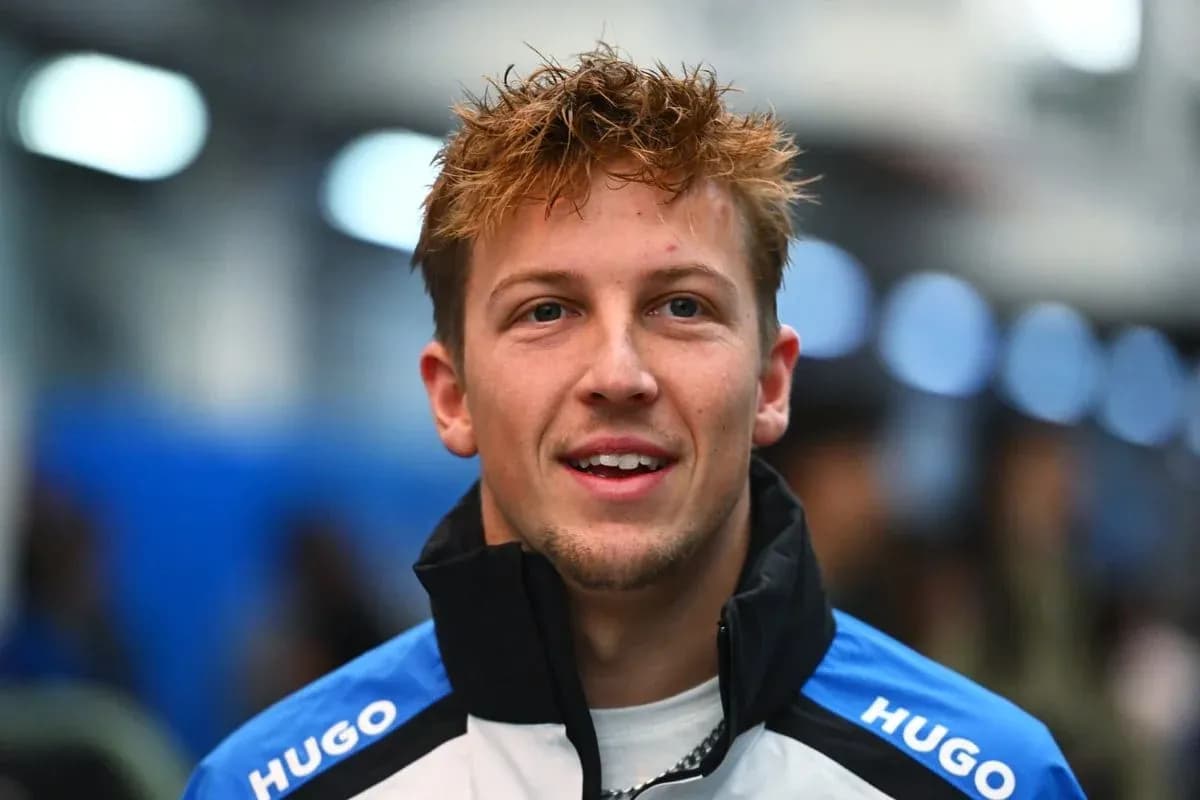
Liam Lawson's Formula 1 Future: A Battle for 2027
Liam Lawson has spent the last few weeks living on the edge of his Formula 1 future. In Brazil, he may just have dragged it into sharp focus.
The New Zealander is closing on a 2027 race deal with Racing Bulls, with his Interlagos heroics understood to have swung a long and delicate internal debate in his favour. The final sign-off still sits with Red Bull’s main shareholders, but the momentum is clear: Lawson has driven himself to the front of the queue.
A battle for one seat
Inside the Red Bull system, the choice has been brutally simple on paper, fiendishly complex in reality.
Keep Lawson, the proven performer who has quietly hauled Racing Bulls into the thick of the constructors’ fight. Or promote Nikola Tsolov, the highly rated junior currently fighting for the Formula 2 title, and stay true to the “finishing school” vision for Racing Bulls as a production line for Red Bull Racing.
For weeks, Lawson has been waiting to discover whether he stays alongside Arvid Lindblad for 2027, or watches Tsolov step in as the Bulgarian’s team-mate. An announcement is expected before the Las Vegas Grand Prix, ending a knife-edge saga that has divided opinion across the Red Bull empire.
On one side of the argument is cold, hard evidence. Lawson’s season has been outstanding. Ninth in the drivers’ standings, central to Racing Bulls’ surge to fifth in the constructors’ championship – a position that would mark the best finish in the team’s history and unlock millions in prize money. He has become the reference point, the driver around whom the team can measure Lindblad’s development in his second year of F1 in 2027.
On the other side sits Red Bull’s philosophy. The company pours money into its junior programme with one clear purpose: feed talent into the senior team. Tsolov, second in the F2 standings with two rounds to go in Qatar and Abu Dhabi, fits that brief perfectly. If Rafael Camara stays in F1 with Haas, Tsolov could even find the F2 title path clearing in front of him.
From that vantage point, the argument is obvious: if Racing Bulls is truly a breeding ground, why persist with Lawson, a driver who has already had a shot at the senior team?
The triple-header that changed everything
Racing Bulls ringfenced the Austin–Mexico–Brazil triple-header as a key audition for 2027. Every lap, every error, every flash of speed would count.
Tsolov did his part in Mexico, impressing in his FP1 outing and reminding everyone why he is so highly regarded. The same weekend, Lawson picked up a grid penalty and irritated Max Verstappen with a practice clash – not the sort of headline you want when your career is under review.
Then he hit back.
Lawson recovered to take seventh in the Mexico City race, a composed, mature drive under pressure. It steadied the narrative. Interlagos then ripped it wide open.
In Brazil, Lawson delivered the kind of weekend that forces boardrooms to rethink. He qualified third, launched himself into the fight at the front, and went wheel-to-wheel with Lando Norris, passing the McLaren early on to run as high as second. He eventually finished eighth on the road, promoted to seventh when Charles Leclerc collected a penalty.
In a season of quiet consistency, this was the statement performance. The sort of weekend that makes it almost impossible for a company to justify walking away.
Permane’s growing weight
Inside Racing Bulls, Lawson has a powerful ally.
Team principal Alan Permane has been impressed all year by Lawson’s speed, calmness and repeatability. That backing matters more now than it did a month ago. Permane’s authority has been strengthened by a new contract extension, formally announced last week, which cements his role within the Red Bull structure.
He has been careful in public. In Interlagos, Permane admitted the process was taking time, stressing that the team was “trying to apply a little bit of science” as it studied every angle. No rush, no knee-jerk calls, just a promise: “I’m very confident the right decision will be made.”
Behind the scenes, his view carries weight. It would be unusual – though not impossible – for Red Bull’s shareholders to overrule the preference of a team boss they have just committed to long-term. Doing so to replace a proven scorer with an untested rookie would add financial risk to sporting risk, given Lawson’s role in the push for fifth in the constructors’ standings.
The logic is blunt. You don’t casually discard the driver who has helped unlock your most lucrative season.
Red Bull watching, not dictating
Lawson knows Permane is not the only voice in the room. Red Bull Racing and the energy drinks company’s shareholders all have a say in who occupies those two Racing Bulls seats.
“Obviously, they'll decide on what they do there,” Lawson said after the Brazilian Grand Prix, acknowledging the scale of the organisation. He spoke warmly of Permane’s support and his enjoyment working with the team this year, but he also sounded like a man who understands how little of this is in his hands.
Red Bull team principal Laurent Mekies has been keen to draw a line between the two operations. Asked about Lawson’s future, he made it clear the decision belongs to Racing Bulls, not the senior team. His role, he said, is limited to offering an opinion when asked, even if both outfits share a junior programme and Red Bull Racing always has first refusal on standout Racing Bulls talent.
Mekies did not hold back on Lawson’s performances, though. He praised another “very strong weekend” and highlighted the arc of Lawson’s year: the way he stepped in for the injured Isack Hadjar at Red Bull after the summer break, the contrast with his inexperience at the start of the season, and the extra step he seemed to find when he returned to Racing Bulls.
What Lawson produced at Interlagos, Mekies said, perfectly captured the level he is now operating at.
Tsolov’s place in the puzzle
The final call appears to sit with Red Bull’s shareholders. They must weigh philosophy against results, projection against proof.
One scenario floated in the paddock was a long play: sign Tsolov for 2028 and let 2027 become a shootout between Lawson and Lindblad to decide who partners him. It would buy time, keep Lawson in the car, and still give Tsolov a clear path.
That idea, though, is not thought to be a serious option. The decision on the table is a 2027 one.
The more pragmatic route would keep Lawson and Lindblad as the race line-up, with Tsolov embedded as reserve. He would join the team full-time, take part in all four rookie practice sessions, and learn the ropes from the inside without the immediate pressure of a race seat. It would preserve Racing Bulls’ competitive edge while still honouring the junior pipeline.
Permane hinted recently that the eventual announcement would “make everyone happy”, a comment that only fuelled the sense that Lawson is likely to stay. Drivers rarely feel “happy” when they are dropped.
Lawson’s uneasy wait
For all the noise, Lawson is trying to live in the one place he can control: inside the cockpit.
He has heard the paddock chatter. Many in the sport believe Red Bull would be reckless to cut him loose after this campaign. He appreciates the backing, but knows it doesn’t sign contracts.
“I appreciate all the support. I've seen it over the last few weeks. It's honestly really nice to see,” he said. “Obviously, I would love it if it was more from a team.
“But at the moment I'm just trying to enjoy driving the car because, with everything else going on, I don't really know what else I'm meant to do. I don't really know what else I'm meant to say to you guys.”
The next race is in Las Vegas. By then, Lawson expects to know whether this season has earned him a long-term seat or just a line on his racing CV.
He has done what drivers are always told to do: answer the question on track. Now the question flips back to Red Bull.
Are they really prepared to walk away from the driver who just dragged their junior team to its best season yet?