Liam Lawson Questions Legality of Leclerc's Move at São Paulo Grand Prix
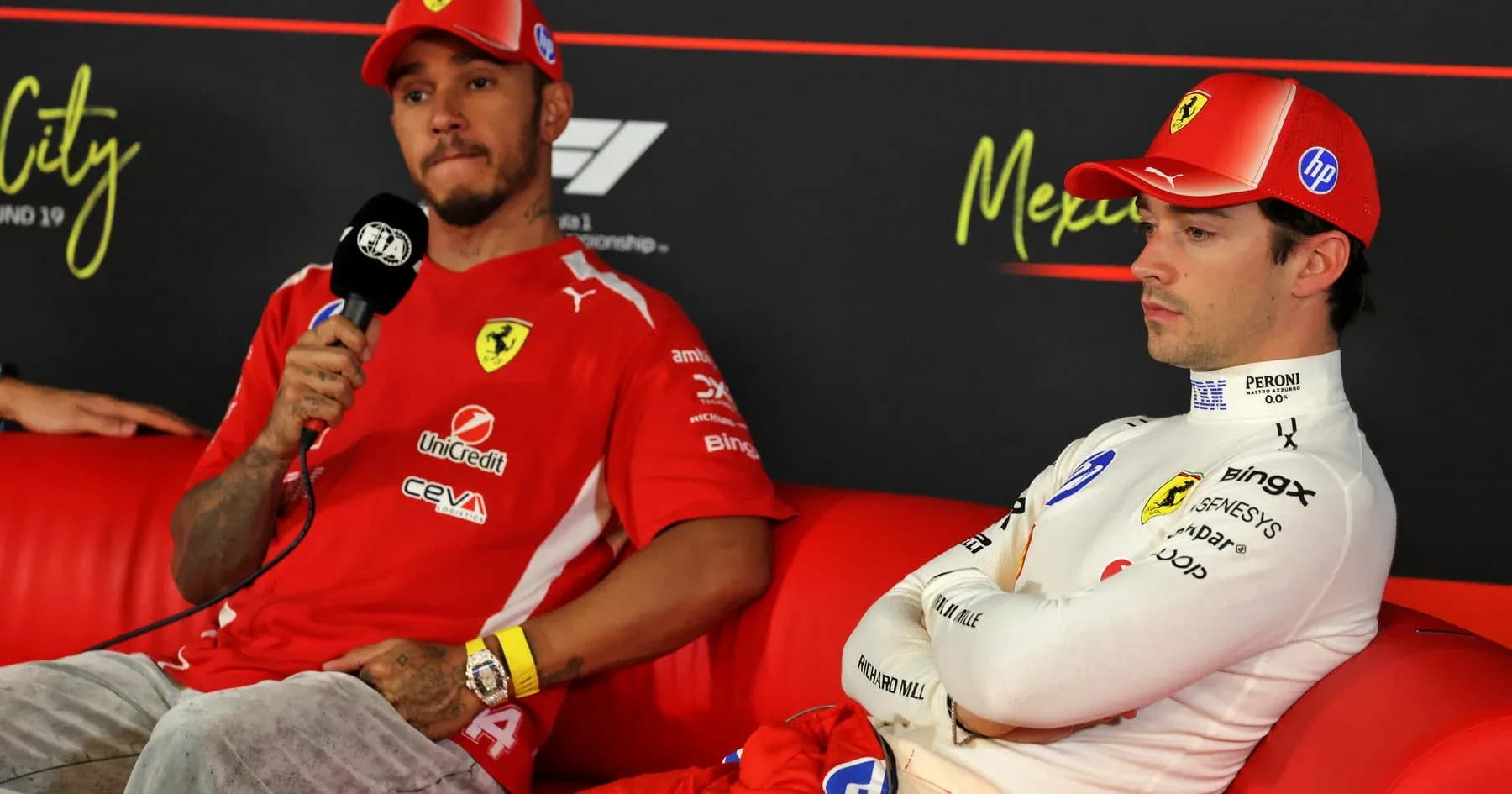
Liam Lawson left Interlagos with points on the board and a question on his lips: was Charles Leclerc’s late-race lunge for seventh actually legal?
In the drizzle and tension of lap 69 of 71 at the São Paulo Grand Prix, Leclerc went for a move that carried his unmistakable signature. Diving into Turn 12, the Ferrari clipped Lawson’s left-rear with his right-front, nudging the New Zealander wide and grabbing the momentum for the long climb back up the hill.
Lawson gathered it up and just about held the place into Turn 1. The fight wasn’t over. It simply moved a few hundred metres down the road.
Wheel-to-wheel into Turn 4 on the following lap, Leclerc finally forced his way through, sealing seventh on the road after a fierce scrap that lit up the closing stages. Lawson crossed the line eighth, 1.816s behind, but his finishing position may yet be written in pencil rather than ink.
Leclerc has been summoned to the stewards for allegedly causing a collision, leaving the door open for Lawson to inherit seventh if a penalty follows.
What stung for Lawson was not just the result, but the familiarity of the move.
He immediately linked it to a famous – and controversial – moment from Leclerc’s junior career: the 2017 GP2 race in Abu Dhabi, when the Monegasque used a “bump and run” on Alex Albon into the hairpin before the back straight, muscling his way into clear air and on to victory.
Reflecting on Sunday’s clash, Lawson didn’t dress it up.
He called it Leclerc’s “specialty”.
“I think it was his wing which hit my tyre, so I think we got really lucky,” Lawson told media, including RacingNews365, as he replayed the Turn 12 contact in his mind.
“I feel like it was exactly like his GP2 move on Albon in Abu Dhabi years ago; he did the same kind of thing, so maybe it is his speciality.
“I don't know if it is legal or not, and we'll go and review it, but it was a good battle overall.”
It was a measured response from a driver who had every reason to feel aggrieved. He’d spent the afternoon juggling ambition and survival in a race that swung from opportunity to damage limitation.
Lawson’s electric launch and Antonelli temptation
The drama with Leclerc almost overshadowed how sharply Lawson’s race had begun.
Launching from third on the grid, he exploded off the line with grip to spare into Turn 1, immediately feeling he might be able to do more than just defend his podium slot.
“It was a crazy race, honestly,” he said. “I had a really good start, good grip into Turn 1 and made a place up and was thinking I might try and attack Kimi at some point in the lap.”
For a brief moment, Lawson allowed himself to picture it: attacking Kimi Antonelli for the lead of a grand prix for the first time. The wet track, the crowd, the slipstream up the hill – it all teased the possibility.
Reality bit once the field settled.
“But once the pace stabilised, they're a lot quicker than us,” Lawson admitted. “We started to fall back, we were damaging the tyre quite a lot more than them, and then the pace in the dry was okay.”
His race became a balancing act. Protect the tyres, manage the gap, and hold off a charging Ferrari in changing conditions. As the track evolved and the grip came up, Leclerc closed in, and the battle for seventh hardened into something personal.
“At the end, I tried to keep Charles before, we had some contact into Turn 12, ended up losing the place.”
The move may yet be picked apart frame by frame in the stewards’ room, judged against the fine print of what constitutes hard racing versus avoidable contact.
Lawson, though, has already filed it in his mind under a different label: a hard lesson in how the very best – and the most ruthless – race when the points are on the line.