Madrid's Bold Step into Formula 1: A New Era of Racing
Madrid has never been short of a show. The city wakes to football, eats to football, falls asleep to the echo of another Real Madrid win. Fifteen European Cups, 36 La Liga titles, and a conveyor belt of Galacticos from Zinedine Zidane and Ronaldo to Jude Bellingham and Kylian Mbappé have made sure of that.
So Formula 1 has chosen to walk straight into the lion’s den.
A sport that has spent the past decade chasing new markets in the United States, the Middle East and Asia is now betting that one of Europe’s most football‑obsessed cities has room in its heart – and its calendar – for a grand prix. No Spanish world champion since Fernando Alonso 20 years ago. No race in Madrid since 1981. No obvious gap in a city that can pack 75,000 into the Bernabéu to watch Mbappé volley Malaga into submission by the half-hour mark.
This weekend, we find out whether Madrid really needs F1 – or whether, as some here are starting to whisper, F1 might need Madrid.
A football cathedral, a new kind of roar
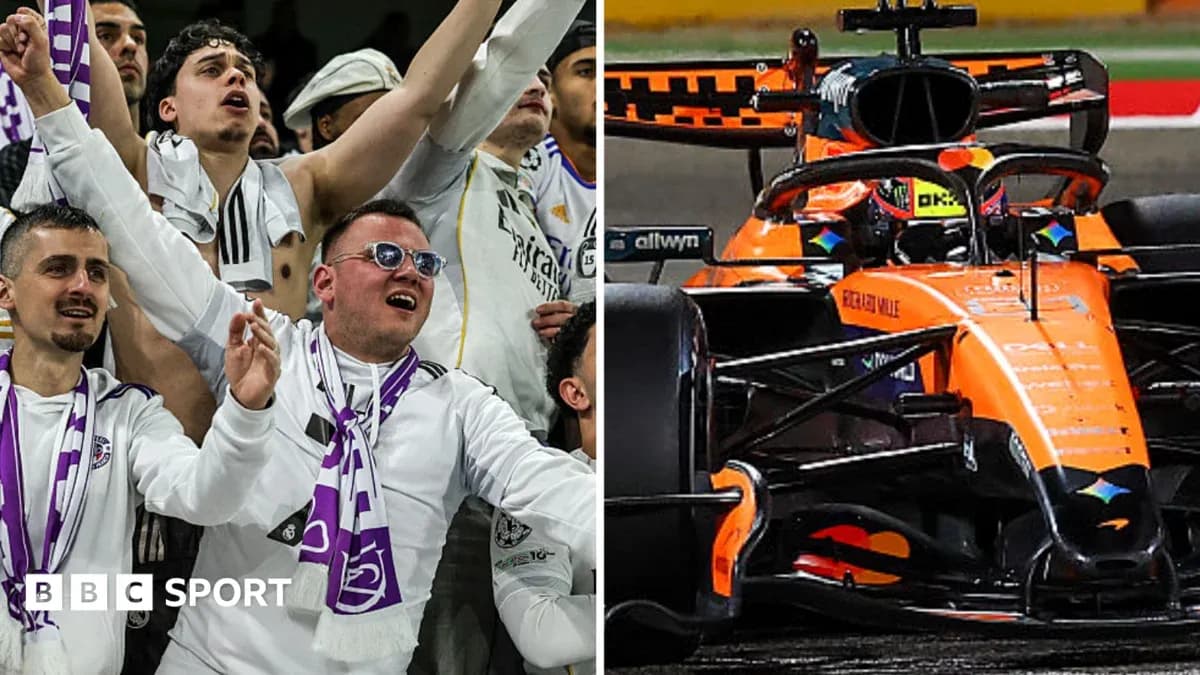
Walk around the reimagined Santiago Bernabéu and it still feels like a spaceship dropped into the middle of the city. Steel, glass and light, wrapped around those famously vertiginous stands that seem to lean over the pitch like a theatre balcony. Across town, Atletico’s arena hums with its own defiant energy. For decades, that has been the soundtrack of Madrid.
Now, just a few kilometres away, another stadium of sorts has risen: Madring, the new street circuit threaded around the Ifema expo complex by the airport. Real Madrid Femenino play in a compact, atmospheric ground right next to it. On one side, the chants. On the other, the scream of turbo-hybrid engines.
Local fans feel the pull of both.
“Yes, [the F1 race] is good for Madrid,” says one supporter, pausing between football talk to weigh up the new arrival. “There is pride in our sport, Madrid is an open city with open people and open minds. The race can take Madrid’s identity outside of football, and the most we can be seen by the outside world is the best. But I'm more than excited… I'm curious – I want to see how it goes.”
Curiosity, not conversion. That’s the starting point.
Another fan, already an F1 traveller, sees an opportunity – and a warning. “We've always been dreaming of having something from F1 closer to home. Having it back is great. I've been to Barcelona and the Belgian GP and I think let's see how it goes. Organising tends to be messy in the first year – I don't want to be the guinea pig.
“Let's hope it brings the city more into the spotlight. Madrid has a lot to learn from F1 about how to run a global spectacle; F1 could probably learn the true Spanish way. Barcelona is more international, the drivers and fans coming to Madrid will get more of a taste of Spain.”
Madrid, in other words, is ready to host – but on its own terms.
From Prado to paddock
This is a city that understands staging. The Prado curates masterpieces. The crossing signals chirp like birds. Mexican conifers sway over streams of traffic, framed by stately Palacios-style facades. It is elegant, composed, almost painterly.
It is not, on the face of it, the natural canvas for a high-speed street race.
So planners looked away from the postcard centre and chose something more pragmatic: the Ifema grounds, a sprawling expo zone on the city’s edge. To outsiders it might feel anonymous, a patch of concrete and halls near the airport. To F1, it offered space, flexibility and a blank sheet.
“It started as a joke, it was a fantasy,” admits Luis García Abad, Madring boss and former manager to Fernando Alonso. “An F1 grand prix is like a unicorn – you are trying always to see the unicorn but at the end you realise sometimes it's impossible. The queue of cities trying to organise an F1 GP is huge. They have to choose right – we signed a contract for 10 years.
“Maybe seven or eight years ago we talked about this race. At some point Ifema called me and said ‘what are you thinking [about its viability]?’ After one morning here I said: ‘It's possible.’”
From that moment, the fantasy hardened into a decade-long commitment.
Madrid’s scale helps. This is a compact capital with sharp, efficient public transport. Organisers have leaned into that, stripping back car parks and telling fans to leave their own vehicles at home. The theory is simple: let the metro and buses carry the crowd; keep the roads for the racing.
Of course, not everyone will be queuing at Avenida de América. Patrick Dempsey, Rafael Nadal, Mbappé and the rest of the celebrity set will glide into the vast VIP paddock, where six separate hospitality zones rise over the circuit. This is F1, after all. The red carpet travels with the pit wall.
Building a unicorn
What greets those who do make the journey is not just another temporary track. Abad sells it with the zeal of a proud host.
“It's a real experience, not just to be in Madrid but for F1,” he says. “Every part of the track has its own personality. Monumental… Turn 12, is huge, amazing. We really wanted to have an iconic part of the circuit – more than 30,000 people around one corner.”
Monumental. The name is already echoing through the paddock.
Turn 12 is a 26-degree banked beast, longer than Zandvoort’s famous curve, cutting through what will feel like a self-contained village on race day. A VIP platform crowns the structure, a viewing point fit for the King of Spain, perched like a fortress on the hill. In 44C heat, it’s punishing just to climb. Sitting on it is another matter.
“Luis wanted to think of something recognisable in our circuit. Something iconic,” says Carlos Jiménez, operations director for Ifema. He got it.
That headline corner is only part of the engineering story. Jiménez talks about sustainability as a guiding principle: renewable energy powering the event, existing buildings pressed into service, a layout that weaves public roads with purpose-built sections. Yet the numbers underline the scale. Around €65m has gone into additional construction, with another €85m spent on the track itself.
“There were a lot of challenges,” he says. “We started building it in the wettest winter in 20 years in Spain. The rain was torrential. We suffered a lot, and had to stabilise parts of clay which behaves badly with wet conditions. It was very challenging. There are three layers of asphalt here. We learnt from one layer to the next.
“In 2022 it seemed like a little bit of a crazy idea. But Madrid has momentum right now; it's a vibrant city, very well known for football. Like a ski resort must have entertainment for apres-ski, a circuit must have good after-race entertainment. Madrid will become in top position – the offer of this city is incredible in terms of gastronomy, a spectacular climate, which is very mild in September. And the party in Madrid is unbeatable.”
F1 wants a race. Madrid is offering a festival.
A street circuit with teeth
Labelled a street circuit, Madring is a hybrid: part existing roads, part freshly laid tarmac snaking between concrete walls and expo halls. Stand on the racing line and the first impression is claustrophobia. The walls feel close, the straights kink, the corners stack up.
It looks narrow. It looks unforgiving. It looks like overtaking will be hard work.
“From a driver's point of view it's quite a harsh circuit,” says Abad, relishing the challenge he’s helped create. “Twenty-two corners, up and down, banking corners – the circuit is adapted to the new [F1] regulations. I spoke with Charles Leclerc and he said it was an amazing track, and in the race I believe you will have the opportunity to overtake, but not by free. We're talking about gladiators – the best drivers in the world.”
The first real evidence has come from Formula 3. Plenty of drivers have already hustled their cars around Madring, and the feedback is strikingly similar.
“It's going to be really edgy,” says Madrid’s own F3 racer Bruno del Pino. “You are always on the limit, the corners are quick and the walls are close. It's like Jeddah but with more difficulty.
“With Monumental, you see so much of an angle it never ends. The first time around, you see it going straight up and you feel like you'll fly straight out [of the track]. It is flat for us because of the downforce so it's not really a corner, but the previous combination of Turns 10 and 11 are high speed and close to the wall – quite a few drivers will kiss the wall.”
Britain’s Freddie Slater doesn’t hold back either. “A lap of Madrid is so exhilarating, and the adrenaline is pumping – it's an incredible track to drive. It's one of the best tracks on calendar, if not the best. It's got character, it's got bumps, uphill and downhill – it's a bit more old-school.”
Old-school. In a brand-new setting. That blend might prove decisive.
Who needs whom?
Strip away the marketing gloss and the question remains: is this about Madrid joining F1, or F1 tapping into Madrid?
Abad leans firmly towards the latter.
“Not just Madrid needing F1, maybe even F1 needing Madrid,” he says. “We're investing money to create an experience inside of a city. The future of the [F1] championship is something in this direction – we need to take care of customers and spectators. They are our future.”
This is the crux. Liberty Media’s F1 has chased city backdrops and night-race skylines from Las Vegas to Jeddah, turning grands prix into destination weekends. Madrid arrives with something those newer venues had to manufacture: a sporting culture that already vibrates at fever pitch.
If F1 can tap into the energy that roars Mbappé’s volley into the Bernabéu net, if Monumental can become as familiar to Madrileños as the sight of a white shirt charging down the wing, then this won’t just be another date on an overcrowded European calendar.
It will be the moment a football city decided it had room for another obsession.