Madring's Misfire: Formula 1's New Circuit Fails to Deliver
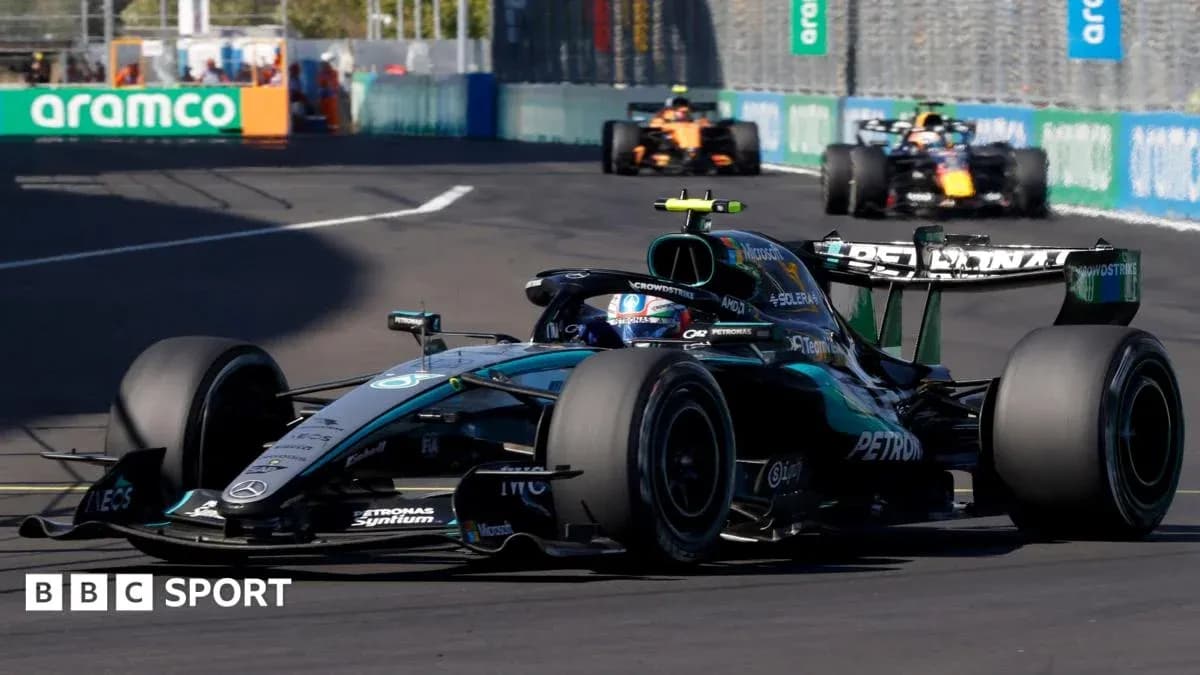
The Madring was supposed to be Formula 1’s latest showpiece: a half-purpose-built, half-street hybrid wrapped around Madrid’s Ifema exhibition centre, a stone’s throw from Barajas airport. Instead, it opened its account as one of the most processional, least entertaining tracks on the calendar.
Drivers warned everyone in advance. They walked the circuit, looked at the drawings, ran the sims – and predicted a parade. They got one.
Lando Norris summed up the mood with a line that cut straight through the corporate gloss. Looking at the layout, he said: “I don't know how someone looks at this design and goes: ‘Mint.’”
Hard to argue.
A Track That Forgot How Racing Works
The Madring’s failure is baffling because it didn’t have to be this way. This isn’t Monaco, where city streets dictate every compromise. Half the circuit is new tarmac, free of the usual constraints, yet it ignores some of the most basic principles of modern F1 racecraft.
Start with the biggest sin: no meaningful straight into a heavy braking zone.
In contemporary F1, that’s where the overtakes live – long drag, DRS open, big stop, room to send one down the inside. Madring offers nothing of that sort. Instead, it strings together medium- and high-speed sections that might flatter a qualifying lap, but choke off wheel-to-wheel combat.
Then there’s the corner design. Many entries demand braking and turning at the same time. That looks technical on paper, and it can be satisfying from behind the wheel, but it kills overtaking. Drivers can’t commit on the brakes when the car is already loaded up. Add in walls that jut back towards the racing line on exit and you don’t just discourage moves; you punish anyone brave enough to try.
And looming over everything is the monster: the pit lane.
It is the longest on the calendar, and that one decision warps the entire race. The longer the pit lane, the bigger the time loss for a stop. Teams see that, run the numbers, and immediately target the fewest stops possible. One-stop races with high tyre degradation mean drivers tiptoe around, nursing rubber instead of attacking. Less aggression. Fewer mistakes. Fewer safety cars. Less chaos. Less racing.
What should have been a new-era show in Madrid turned into a high-speed queue.
How To Fix a Broken Circuit
The irony is that the drivers don’t hate driving the place. Quite the opposite. Norris called it “good fun to drive” and “great in qualifying”. That’s important. It means the bones of a decent circuit are there. The racing, not the rhythm, is the problem.
And the fixes are not exactly a mystery.
Norris has already sketched out a blueprint. He wants turns 18 and 19 gone – erased. From Turn 17, he argues, the track should run straight to Turn 20, opening up a long blast and then a big, wide braking zone, something in the mould of Turn One or Turn 10 in Austin. A proper hairpin. A real overtaking chance.
“Create much better opportunities for everyone and you'll be able to enjoy the race,” he said. In other words: give the drivers somewhere to fight.
He also pointed at what he called “trickier changes”: reworking the clumsy, unpopular Turn Five chicane and the run from there to Turn Seven. That section currently feels awkward and bitty, the sort of stop-start fiddling that might look clever on a CAD screen but doesn’t translate into good racing.
Then there’s the off-track mess.
The pits and paddock are scattered and fractured across a sprawling, industrial-feeling site. F1 staff found themselves trekking across a patchwork of buildings and open areas in a way that no other circuit demands. The place feels, as one description had it, like holding a grand prix at the NEC in Birmingham.
The pit lane itself is split by a building. That alone should ring alarm bells. F1 needs a clean, coherent operational base. If the series is serious about Madrid as a long-term home, it has to find a way to place the pit lane and paddock together, outside, and in one contiguous space. That’s not a luxury; it’s a requirement.
The upside? None of these issues are unfixable. This isn’t a doomed layout carved into ancient streets. It’s a new-build project with room to evolve. The question is whether the will exists to do it quickly.
When the VSC Becomes a Lottery
While the Madring’s design drew criticism, the Spanish Grand Prix also shone a harsh light on another pillar of modern F1: the virtual safety car.
Lando Norris again found himself at the centre of the debate.
The VSC is meant to be a neat compromise – slowing the field without bunching it up, freezing the order while marshals clear a hazard. It keeps the race moving, avoids the full reset of a physical safety car and, in theory, limits disruption.
But it has always carried a strategic quirk. A pit stop under VSC conditions costs significantly less time than one under green-flag racing. Teams know this. They plan for it. They wait, they gamble, they pounce. When a squad times it right and outfoxes a rival on the pit wall, it’s seen as sharp strategy, part of the sport’s fabric.
Norris himself benefited from that dynamic in Miami in 2024, when a safety car intervention helped him flip the race on its head and claim his first F1 win.
Spain was different.
This time, Norris lost a race win because of where he happened to be on the track when the VSC was thrown. Others could dive into the pits and cash in the time gain. He could not. One driver, uniquely disadvantaged by a timing quirk that no strategy model could fully anticipate. On Sunday, no one could recall another example quite like it.
Inside the drivers’ briefings, this isn’t a new talking point. Norris admitted after the race that the topic “has been spoken about many, many times”. Those meetings are supposed to be confidential, a safe space for blunt exchanges between drivers and the FIA, but word still filtered out: this edge case has been on the radar for a while.
So what now? One idea already floating around the paddock is simple: make a VSC last at least one full lap. That way, everyone has the same basic opportunity to respond. No one is frozen out by pure bad luck.
McLaren team principal Andrea Stella captured the dilemma neatly. “Offering a personal opinion, I'm puzzled myself as to what's right,” he said. Do you extend the duration so that “everyone will have been subject to the same track conditions”? Or do you “keep it in the hands of the Gods, and sometimes you are lucky, sometimes you are not”?
Within F1, there’s an acceptance that safety cars – virtual or otherwise – are part of the competitive jigsaw. They inject randomness. They reward bold calls. Past attempts to tame that, such as closing the pit lane at certain times, created their own controversies.
Any change now would go through the usual channels: the sporting advisory committee, then the F1 Commission, where teams, F1’s commercial rights holder and the FIA weigh up the options. Those wheels turn slowly unless there’s a clear, urgent consensus.
Right now, that urgency is not obvious. Norris’ misfortune might end up as a footnote in the rulebook’s evolution – or the moment that finally forces a rethink.
A Tight Market for F1 Hopefuls
Away from the track layout and safety car politics, another question hangs over the paddock: who gets in next?
With so many established names tied down to long-term deals, the door to Formula 1 in 2025 is barely ajar. But it’s not completely shut.
Haas looks like the most likely entry point. Esteban Ocon’s position there is under scrutiny, and the American team is weighing up its options. They want speed, but they also want funding. That narrows the field.
Two names stand out.
Leonardo Fornaroli, Italy’s reigning Formula 2 champion and part of McLaren’s driver development programme, has already tested for Haas and made a strong impression. So has Rafael Camara, the Brazilian currently second in this year’s F2 standings and a product of the Ferrari Driver Academy. Both bring talent. Both bring backing. Either could be the next rookie through the door.
Ryo Hirakawa, Haas’ reserve driver and long-time Toyota protege, remains in the frame, but he is considered a longer shot. In a market this tight, even a reserve role with strong manufacturer support doesn’t guarantee promotion.
Red Bull, as ever, holds some of the more intriguing cards. There is talk of F2 championship leader Nikola Tsolov being fast-tracked into the Racing Bulls seat. To make room, one of Liam Lawson or Arvid Lindblad would have to step aside.
That’s a brutal choice. Lindblad has turned in an outstanding rookie campaign and looks every inch a long-term Red Bull project. Lawson, though, has also done an assured job this year. Dropping either would be a statement.
At Cadillac, the long-term plan had Colton Herta earmarked for F1. The idea was clear: move him to Europe, run him in Formula 2, let him adapt to the circuits and culture, then graduate him. On paper, a logical path.
Reality has bitten hard. Herta’s F2 season has been a struggle. A best finish of fifth and 19th in the standings make any immediate promotion to F1 – even for 2027 – a huge risk. Cadillac knows that.
Another American, Ugo Ugochukwu, has forced his way into the conversation. He clinched the Formula 3 title in Madrid on Sunday and has been linked with Cadillac interest. He spent several years in McLaren’s driver development programme before they split at the end of last season, and his stock is rising fast.
Yet timing and physics both work against him in the short term. Next year would almost certainly be too early for an F1 step, and his height presents a serious packaging challenge. He is well over six foot, taller even than the current giants of the grid – Ocon, Alex Albon and George Russell. Fitting a driver of that size into the tight confines of a modern F1 chassis is not a trivial exercise.
Beyond those possibilities, the market is largely locked. Seats are tied up. Options are exercised. The one wild card is Fernando Alonso, whose future beyond this season is still not settled. If he walks away, a single decision from one of the sport’s greats could trigger the only meaningful chain reaction left.
So F1 heads towards its next chapter with a new circuit under review, a safety system under scrutiny and a generation of hopefuls peering through a very narrow gap in the door.
The sport can fix Madring. It can tweak the VSC rules. It can shuffle its driver deck.
The real question is whether it will move fast enough – on track and off it – to match the speed of the cars it sends out every Sunday.