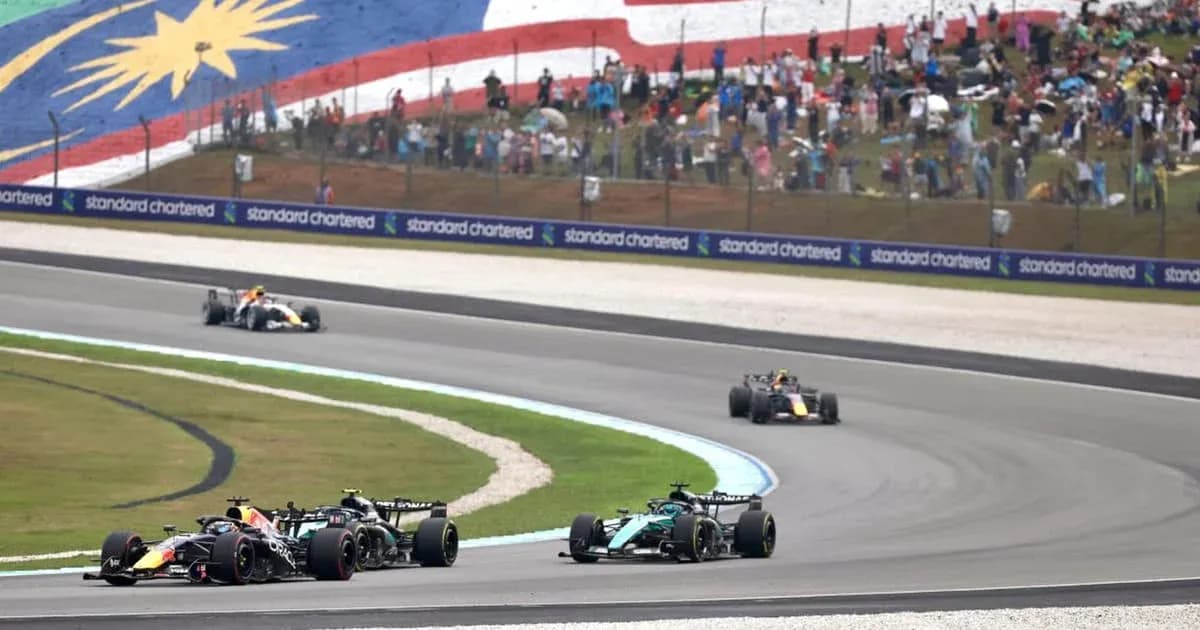
Malaysia's Formula 1 Return Costs RM350 Million
Malaysia’s brief return to the Formula 1 calendar came at a far steeper price than first advertised, with the government now revealing that hosting the relocated Bahrain Grand Prix at Sepang carried an estimated overall bill of RM350 million.
Estimated overall bill: RM350 million
Costs soar past early estimates
In a written reply to Nazri Abu Hassan (PN–Merbok), youth and sports minister Dr Taufiq Johari said the event, held from Oct 2 to 4, cost around RM350 million in total, including hosting fees and circuit preparations.
Malaysia’s direct share came to RM70 million, he said, covering circuit maintenance and operating costs. Bahrain picked up the rest of the tab.
The number sits sharply above the RM40 million estimate given in July by Sepang International Circuit (SIC) chief executive Azhan Shafriman Hanif for local preparations. At the time, he indicated that Malaysia and Bahrain would split those expenses.
Just a day earlier, on July 27, Prime Minister Anwar Ibrahim had said the government would only need to spend the RM16 million already allocated annually for maintaining and upgrading the circuit, suggesting minimal extra outlay for hosting F1 again.
The ministry’s latest breakdown leaves a clear gap between those early projections and the eventual RM70 million cost to Malaysia. No explanation was offered for the discrepancy.
Big bill, bigger economic splash
If the price tag raised eyebrows, the government countered with the scale of the event’s economic impact.
Citing figures from Formula One Management, Taufiq said the race generated an estimated RM950 million in economic activity. That surge covered spending on hotels, tourism, aviation, transport, food and beverage outlets and a range of supporting services around the grand prix weekend.
The race also delivered a sizeable employment boost. According to Taufiq, about 7,300 job opportunities were created:
- 6,167 in businesses and services catering to visitors
- 757 in race operations and infrastructure
- 376 involving F1 teams, sponsors and race operations
He did not, however, reveal how much the government actually collected in taxes, fees and rental income from the event — the crucial numbers that would show how much of the RM70 million outlay might realistically be recouped.
For now, those details remain off the public record.
Weighing up a Formula 1 future
Taufiq said SIC and an appointed consulting firm are still crunching the numbers, assessing both the costs and the wider economic benefits of bringing F1 back to Sepang.
Their findings will form the basis of a bigger decision: whether Malaysia should seriously consider hosting future F1 races again, or treat this as a one-off return driven by exceptional circumstances.
The Bahrain Grand Prix was shifted to Sepang because of conflict in West Asia, opening the door for Formula 1’s first race in Malaysia since 2017. Back then, the country walked away from a long-standing slot on the calendar after hosting the F1 Grand Prix from 1999 to 2017, citing rising costs.
Now, with RM70 million spent, RM950 million in economic activity claimed, and key revenue figures still under wraps, the same question hangs over Sepang once more: is the spectacle of F1 worth the price of admission?