McLaren's Title Defense: Norris Rises as a World Champion
A month ago, McLaren’s title defence looked finished before the summer break had even begun.
Kimi Antonelli had ripped clear at the top of the 2026 standings on 204 points. Between them, Lando Norris and Oscar Piastri still couldn’t match that total – Norris on 103, Piastri on 92 – and the papaya cars looked more like podium outsiders than a threat to Mercedes’ new prodigy.
Then came Budapest. Then came the upgrade.
The car wakes up – and so does the champion
McLaren arrived at the Hungaroring with a car that looked familiar on the surface but carried serious surgery underneath: heavily revised front and rear corner bodywork, a new floor, a new rear wing. This wasn’t a tweak. It was a reset.
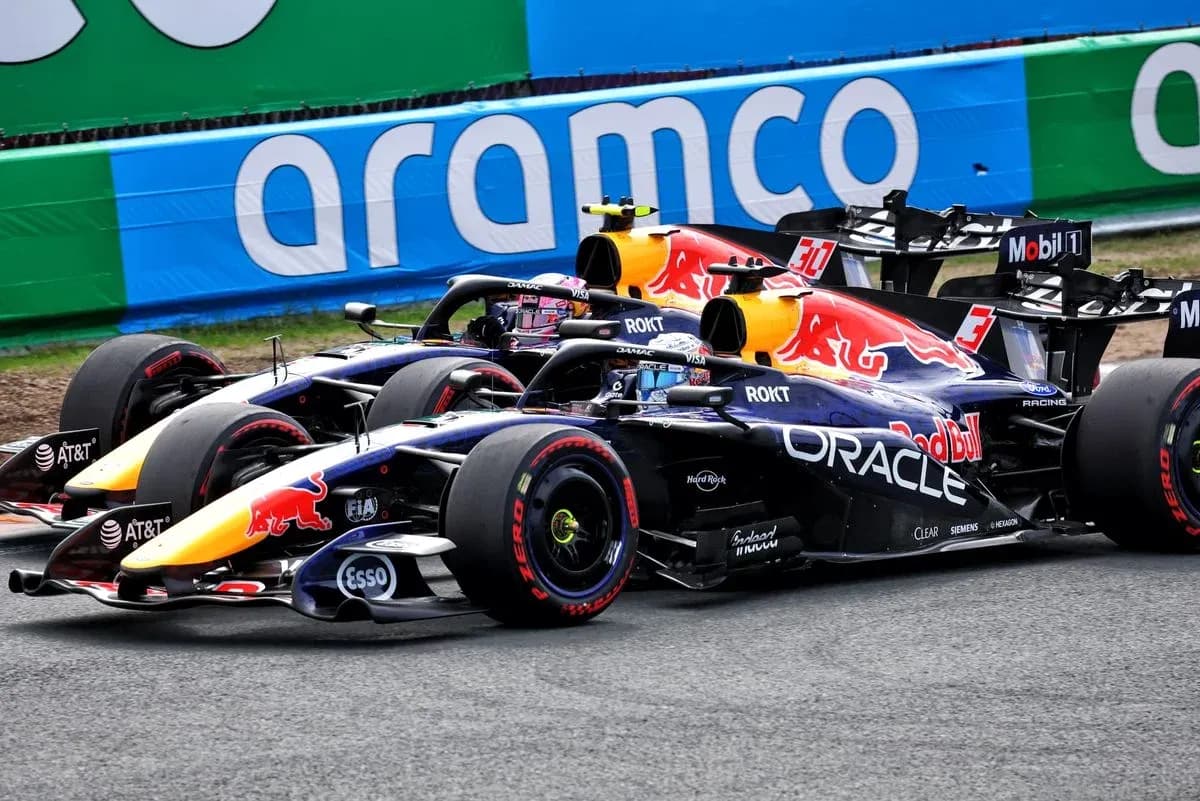
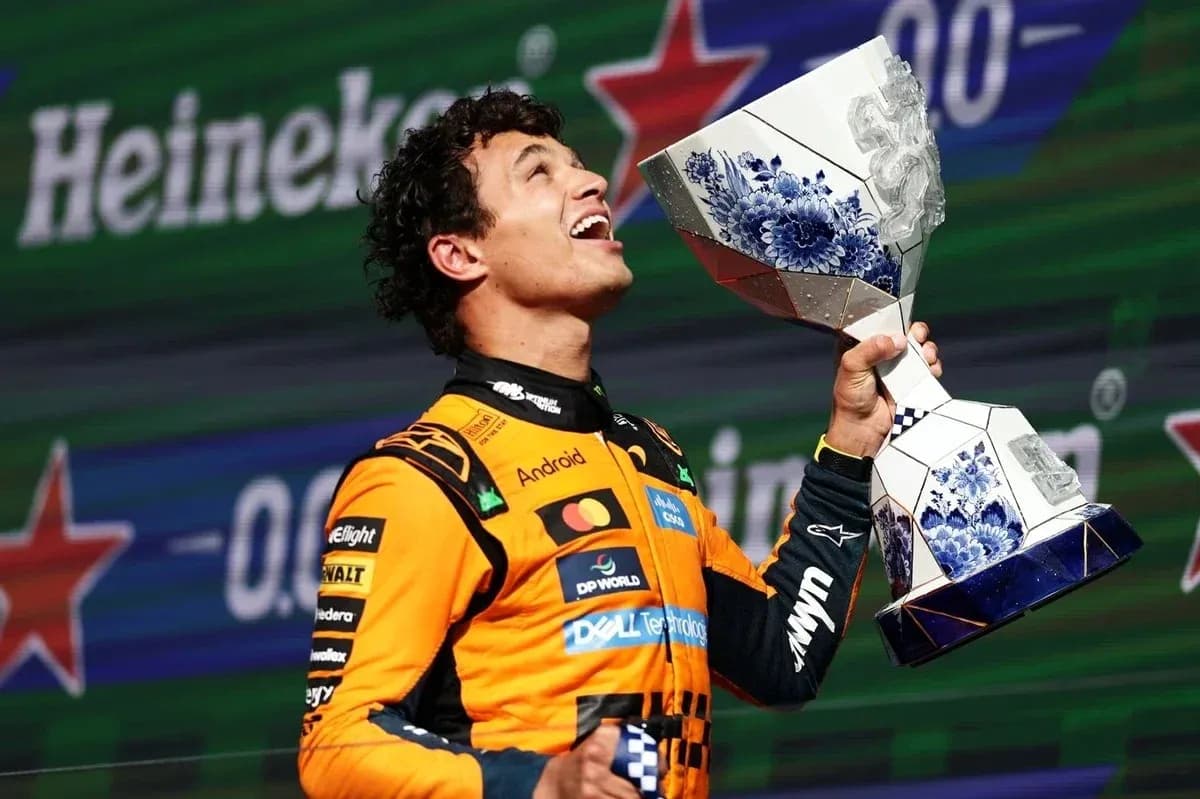
The response was brutal. Norris stuck the MCL40 on pole and converted it into victory. One race later at Zandvoort, he did it again – this time with a statement move, sweeping around the outside of Antonelli at Turn 1 to seize control of the Dutch Grand Prix.
The gap in the championship has shrunk to 83 points. Still sizeable, but no longer suffocating. The title race that looked like a coronation for Antonelli now has a defending champion charging back into the frame.
It would be easy to pin it all on the upgrade. New parts, new pace, simple story. Andrea Stella isn’t buying that.
“He’s driving at the level of a world champion”
McLaren’s team principal has watched Norris grow up inside the team. He’s seen the raw speed, the near-misses, the self-criticism. What he sees now is something else.
"Lando is driving and operating at a very high level, in absolute sense, in relation to a Formula 1 world champion," Stella said after Zandvoort. "He's driving at the level of a world champion."
That might sound like a platitude about the reigning champion, but Stella’s point cuts deeper. He believes Norris is not just matching the car – he’s stretching it.
What changed? Stella traces the inflection point back to the start of the 2025 season. Something “clicked”. Not a single breakthrough, but a way of working built around Norris and now being mirrored on Piastri’s side of the garage. A method that has produced, as Stella puts it, “continuous improvements”.
Race by race, he sees a stronger driver. Zandvoort, he insists, was not a weekend McLaren could expect to dominate. The sprint had underlined that. So the team dug into tyre exploitation, into how to extract more from the car over a stint. Both drivers moved forward. Only Piastri’s puzzling second stint left a question mark.
The trajectory, Stella says, is positive for both. But right now, Norris is the one turning that curve into points.
Qualifying: from concern to weapon
The numbers back it up. Across 2025, Norris and Piastri were dead even on Saturdays – 15-15 in their qualifying head-to-head, including sprint sessions. On one lap, they were almost interchangeable.
The reset to the 2026 cars initially tilted the other way. Before the unexpected April break, Norris trailed 3-1 in qualifying. The reigning champion looked oddly vulnerable over a single lap, and that started to feel like a genuine concern inside McLaren.
Then the switch flipped.
Since the break, Norris has dominated 12-1 in qualifying, with Piastri only ahead in Monaco. The average gap is small – 0.128s – but it keeps falling on the same side. Norris’ side. While Piastri wrestles with his own form, Norris has turned Saturdays into a platform for Sundays.
Stella is acutely aware of the shift. That early-2025 anxiety over Norris’ qualifying has gone. In its place is a driver who now routinely maximises the car in low-fuel trim, then doubles down when the grip disappears and the race turns ugly.
"When you have conditions in which the car slides in the race, there's not much grip, he is the master in this kind of conditions," Stella said. On days when others hang on, Norris attacks.
Assertiveness without recklessness
Speed alone doesn’t explain this surge. Stella keeps circling back to something less tangible: mindset.
He talks about a different Norris. One who drives with a higher level of assertiveness, who understands when to strike and when to disappear from the fight and wait.
The move on Antonelli at Zandvoort was the headline act – a bold, committed sweep around the outside of Turn 1 that screamed confidence. But for Stella, the quieter moments matter just as much.
Self-confidence, he argues, isn’t always about lunging at every gap. Sometimes it’s about the opposite: recognising that a fight is too risky, that the race is long, that the real opportunity will come later. Backing off not out of fear, but out of conviction that you’ll get another chance – and make it count.
That’s the Norris he sees now.
It fits the pattern of his recent wins. In both of his latest victories, Norris lost the lead at the start from pole. On paper, that’s a problem. Inside the cockpit, there was no panic. No radio messages dripping with frustration. Just a driver content to wait, to manage, to prepare the overtake that would decide the race.
"I did not hear or perceive any decay in his confidence," Stella said. Norris knew he was fast enough. He simply chose his moment to cash in.
For Stella, that blend of assertiveness and calm is the biggest step Norris has taken away from the stopwatch and the simulator. It’s not about set-up or tyre prep. It’s about how a world champion reads a race.
The champion’s climb
McLaren’s upgrades have dragged the MCL40 into the fight. That much is obvious from the results sheet.
But the sharper story lies in the cockpit. Norris has turned a season that threatened to drift into a quiet title surrender into a live defence. He is still 83 points behind Antonelli. He still needs more weekends like Budapest and Zandvoort, and fewer like the start of the year.
Yet the dynamic has changed. The leader now has a hunter on his tail, armed with a quicker car and a sharper edge.
If this is Norris driving “at the level of a world champion”, as Stella insists, the real question is how far that level can still rise – and whether Antonelli’s early-season cushion will be enough when the pressure finally bites.