Mercedes Faces Challenges Despite Points Haul at Dutch Grand Prix
Mercedes left Zandvoort with a haul of points, a sprint win and a bigger championship lead for Kimi Antonelli – and still walked away calling parts of its car “rubbish”.
On raw numbers, the Dutch Grand Prix weekend looked like a success. George Russell stuck it on pole and won the sprint. Antonelli and Russell locked out second and third in both qualifying and the grand prix. McLaren’s Lando Norris, though, took the pole that really mattered and the main race victory, and the manner of that swing has left Mercedes’ engineers scratching their heads.
Fast start, fading edge
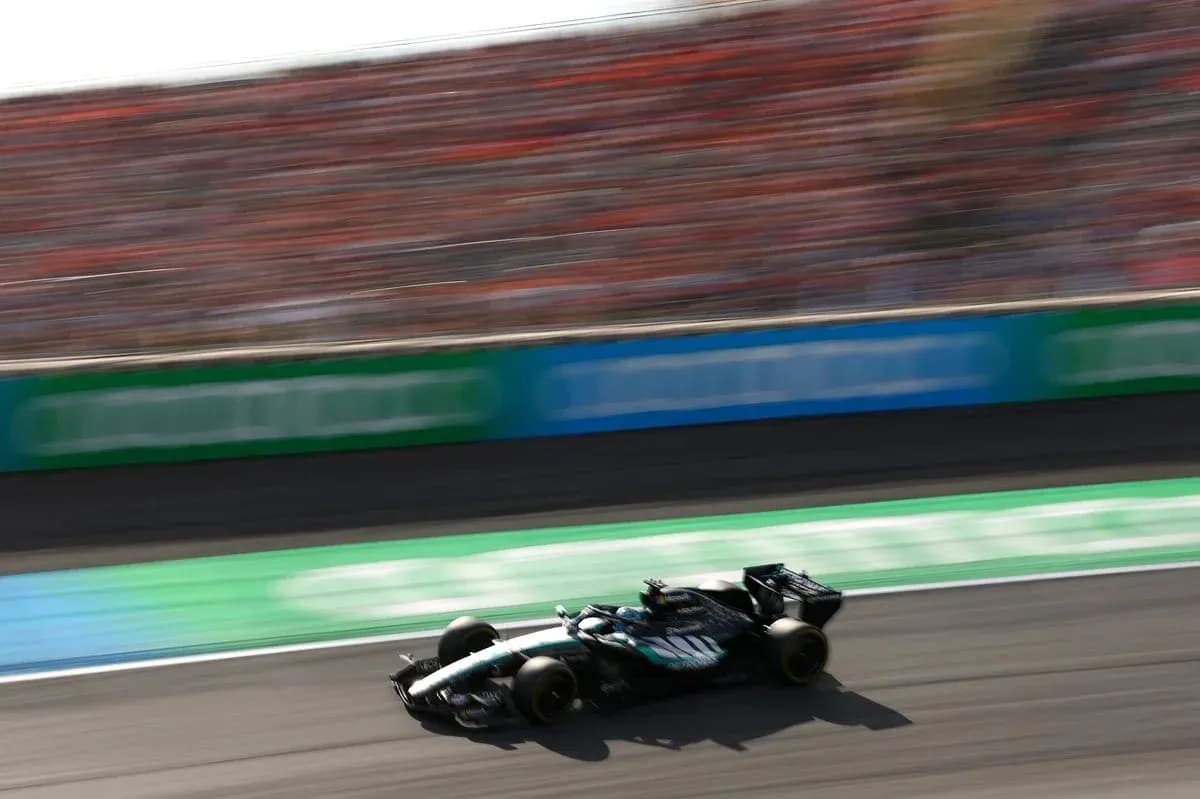
The early signs were ominous for the rest of the field. Russell’s sprint dominance suggested Mercedes had Zandvoort’s tight, banked layout under control. The W15 looked planted, especially over a single lap.
Then Sunday came, and the picture changed.
Norris and McLaren stepped forward, Mercedes slipped back a notch, and the stopwatch exposed a weakness the team hadn’t seen all year. The car that had looked so sharp suddenly laboured through the high-speed sweeps, bleeding time and punishing its tyres.
Trackside engineering director Andrew Shovlin didn’t sugarcoat it on Mercedes’ Nu Silver Arrows Radio Show.
“There were a few corners where we were pretty rubbish, like that combination of [Turns] 7, 8, 9,” he admitted. The fast right-handers, loaded up on the left-hand side tyres, became the problem zone. “We don’t really understand yet fully what’s causing that.”
The data told the same story. In the quickest corners, Mercedes fell away. Elsewhere on the lap, the car looked solid. That contrast is what bothers the team most.
A mystery in the high-speed
This wasn’t a familiar flaw resurfacing. Shovlin pointed out that Mercedes hasn’t suffered this specific issue at other tracks, even those with long, loaded corners in one direction. Zandvoort’s fast middle sector simply exposed something new.
“We’ve got some ideas,” he said, but nothing concrete yet. The team will spend this week pulling apart the telemetry, trying to understand why a car that was competitive everywhere else suddenly looked vulnerable when the speeds climbed and the lateral loads spiked.
What makes the puzzle even trickier is that Mercedes didn’t throw big changes at the car between the sprint and the grand prix. No radical set-up swing. No overnight experiment that backfired.
“We didn’t change the car,” Shovlin stressed. The variables came from tyres – different compounds, different life, the usual race-day mix. That should bring predictable swings in pace and balance. What they saw was anything but predictable.
Two cars, two different stories
Across the garage, the same machinery told two very different stories.
Russell’s opening stint in the grand prix lacked bite. He looked flat compared to his later runs, when his pace improved and he came back into the picture.
Antonelli’s race went the other way. His first stint was strong, then the performance dropped in the second, tailed off again in the third, and only partially recovered later on. The rhythm never quite returned to what he had shown earlier in the weekend.
“It wasn’t like we were playing around with electronic settings or up and down on flap angles,” Shovlin said. Yet the balance shifted significantly from stint to stint for Antonelli, without a clear trigger.
By the chequered flag, the two drivers were describing almost opposite cars. Russell felt more understeer. Antonelli fought more oversteer. On paper, their set-ups didn’t justify such a split.
“The two drivers, normally they report similar things with a car at the end of the race,” Shovlin explained. This time, the gap in feedback – and in how the car behaved – has left the engineers with a bigger job than usual.
Big points, bigger questions
Strip away the confusion and the scoreboard still flatters Mercedes. Second and third in both qualifying and the race. A sprint win. Forty-six points in total – the team’s second-best weekend of the season, only behind the 55 it banked in China. Both, notably, sprint weekends with extra points on the table.
Antonelli’s lead at the top of the standings stretched to 59 points. On a day when the car wasn’t at its best, he still beat Russell in the grand prix and managed the damage to Norris.
From the pitwall, Shovlin actually relished the challenge.
“It was actually good fun, sat on the pitwall and having to make decisions in a hurry,” he said. The team enjoyed the tactical fight and felt it “rose to the occasion” under pressure.
Yet the tone from Mercedes is clear: this result doesn’t mask the underlying issue. The car’s behaviour through Zandvoort’s high-speed sequence, and the way its balance shifted without obvious cause, cannot be left as an oddity filed under “track-specific”.
“There’s a bit of head-scratching to do over the next few days,” Shovlin concluded.
They leave the Netherlands with points in the bank and a championship leader pulling away. But the real question hangs over those fast corners and the unexplained split between their two cars.
If Mercedes want this title push to last, they can’t afford for “pretty rubbish” to become a recurring description.