Mercedes Returns to Glory with Ninth Constructors' Championship
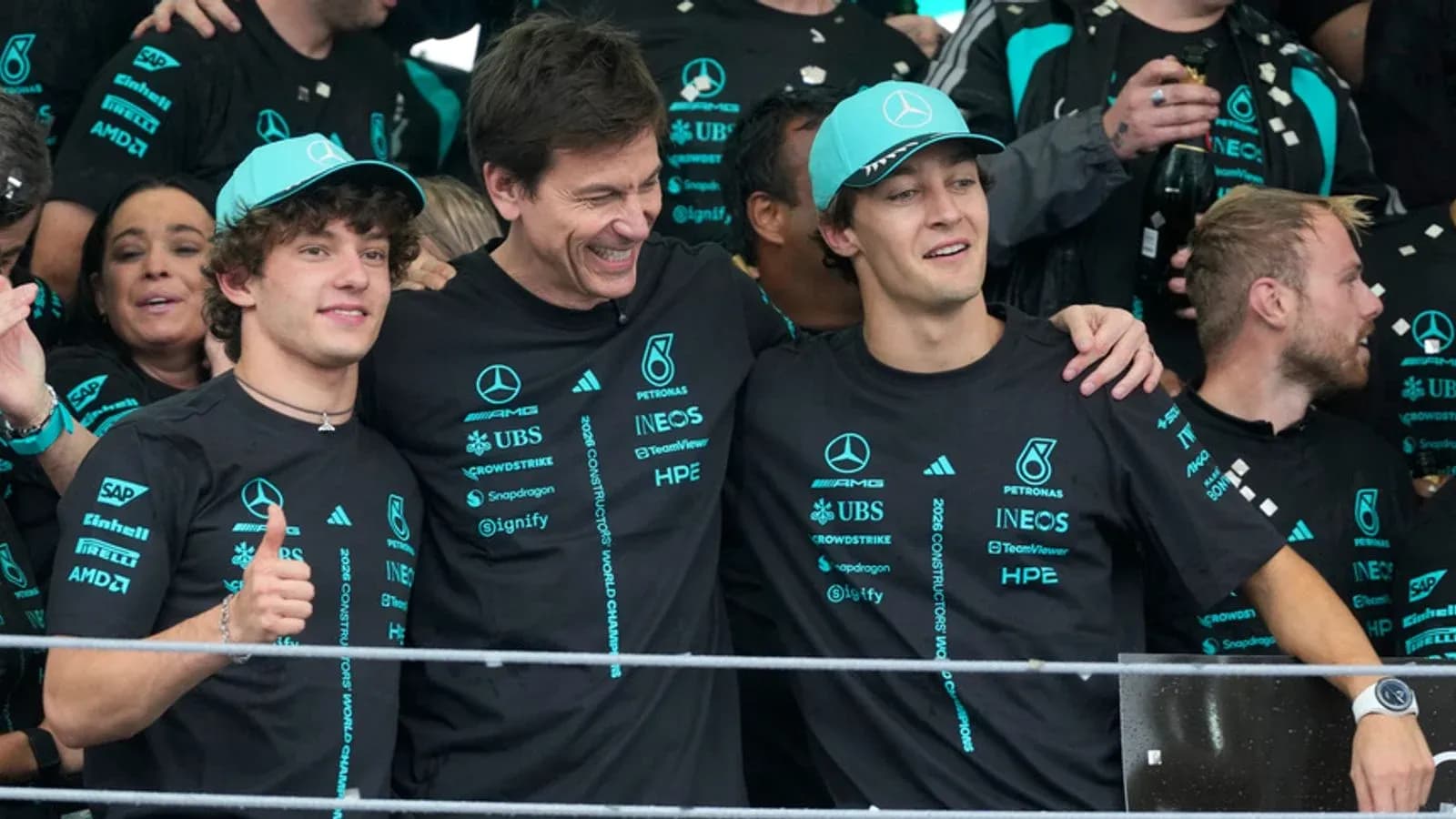
Toto Wolff stood in the Sao Paulo dusk with a constructors’ trophy that felt heavier than the previous eight. Not because of its size, but because of the road Mercedes had to take to get it back.
Five years after their last title and four seasons of bruising reality checks, Mercedes are champions again. Constructors’ champions for a ninth time, level with Williams and chasing only McLaren and Ferrari in Formula 1’s history books. Drivers’ champions again too, thanks to Kimi Antonelli’s coronation earlier in the month. A new rules era in 2026, and once more, they’ve nailed it first.
This one means something different.
From domination to doubt
Regulation changes in 2022 ripped up the script. The ground effect era arrived and Mercedes, the team that had turned winning into a habit, suddenly found themselves lost in their own data.
They bounced between concepts, convinced they’d finally cracked the code, only to discover they hadn’t. Wolff admits it now: they thought they understood the problem, then realised they didn’t. The car porpoised, the balance shifted, the gap to the front refused to close as quickly as their standards demanded.
On paper, those four years don’t look like a collapse. Second, second, third, fourth in the championship. Race wins scattered across the calendar. Seven Grands Prix victories shared between George Russell and Lewis Hamilton. Respectable, even impressive, for most teams.
It didn’t feel that way inside Brackley and Brixworth.
For a team built on relentless winning, “not bad” felt like failure. Every Sunday that ended without a title fight was another reminder of what they’d lost.
The long climb back
That’s why this 2026 season matters so much to Wolff. The new regulations offered a reset, but no guarantees. Mercedes had been burned once by a rule change; they couldn’t afford to misread the next one.
This time, they got it right.
Across the year, the Mercedes package became the benchmark. Not always the fastest car at every circuit, but the best car on average. Efficient, consistent, adaptable. Exactly what you need to win a constructors’ championship.
Wolff’s pride is rooted less in the silverware and more in the 2,500 people he insists are the real stars. The engineers in Brackley, the power unit specialists in Brixworth, the mechanics, strategists, and analysts who rarely see a TV camera but live every lap.
He has always pushed the idea that Mercedes doesn’t have two superstars in the cockpit, but thousands spread across its factories. This title, he says, belongs to all of them.
A scruffy finish, a statement season
Ironically, the day Mercedes sealed their ninth constructors’ crown was not one of their finest on track.
At Interlagos, Lando Norris dominated in mixed conditions, while both Antonelli and Russell spun. No Mercedes driver stood on the podium. Russell salvaged fourth, Antonelli followed in fifth. Not the statement win they might have imagined as a coronation.
But the job was done.
Russell was blunt about it. They came to Brazil to secure the Constructors’ Championship. They did it. Style points could wait. After four difficult years, the significance of simply being back on top outweighed the frustration of a messy race.
Antonelli, the new world champion and the symbol of Mercedes’ future, was quick to turn the spotlight back on the team. He called it an “incredible year” and spoke about a group of people who “push every day” to give their drivers a chance to fight for wins and titles. In his first championship season, he has already learned the central truth of modern Mercedes: the car is a collective achievement.
A rare kind of comeback
Wolff sees this campaign as something only a handful of sporting dynasties have managed. A run of consecutive championships. A sharp downturn. Then a return to the summit.
Most teams don’t come back from that. They fade. They accept a new place in the pecking order. Mercedes refused.
The resilience he talks about is not a slogan. It’s the willingness to admit they were wrong, to tear up concepts, to endure public scrutiny, and to keep going when the wins dried up and the questions grew louder.
They were never “complete losers”, as Wolff puts it with a touch of defiance. The statistics always said they were still near the front. But for a team that had redefined dominance, “near” wasn’t enough.
Now the numbers match the ambition again.
Nine constructors’ titles. A new world champion in Antonelli. A reborn contender in Russell, who joined in 2022 hoping to fight for championships and has finally arrived at the sharp end he expected.
The question isn’t whether Mercedes are back. It’s how long they plan to stay this time.