The Mystery of the Missing Diamond in Formula 1
On a glittering Sunday in Monaco, Formula 1 lost a diamond and gained a legend.
Between 1pm and 3pm on 23 May 2004, a 1.4 carat stone worth around $300,000 vanished from the nose of a Jaguar Racing car in front of the watching world. It has not been seen since. No insurance claim, no forensic trail, no satisfying resolution. Just a crash, some shattered carbon fibre and a mystery that refuses to die.
If you were in Monte Carlo that afternoon, you are part of the crime scene.
A team in trouble, a stunt in desperation
By 2004, Jaguar were not so much racing in F1 as clinging to it.
Since entering the sport in 2000, the Ford-owned team had underwhelmed. Results were modest, patience at board level was thin, and by the time the circus rolled into Monaco, the message from Detroit was brutal: find a buyer or face extinction.
"My job flipped from primarily running the team to primarily selling the team," former team principal Tony Purnell recalls. "It was probably the worst year of my life." He was trying to keep a secret and keep a team alive at the same time.
Jaguar needed attention, and not the kind that came from yet another anonymous midfield finish.
The year before, a tie-in with Terminator 3 at Silverstone had given the team a rare feelgood weekend off the track. Director of communications Nav Sidhu wanted to bottle that magic. This time, the target was Ocean’s Twelve, the sequel to the heist blockbuster Ocean’s Eleven, filming in Monte Carlo that winter.
Sidhu worked the phones. One conversation led to another, and suddenly Jaguar had Hollywood royalty attached to a struggling F1 team. George Clooney, Brad Pitt, Matt Damon. Jerry Weintraub, the legendary producer. The movie’s branding and its stars would front Jaguar’s Monaco weekend.
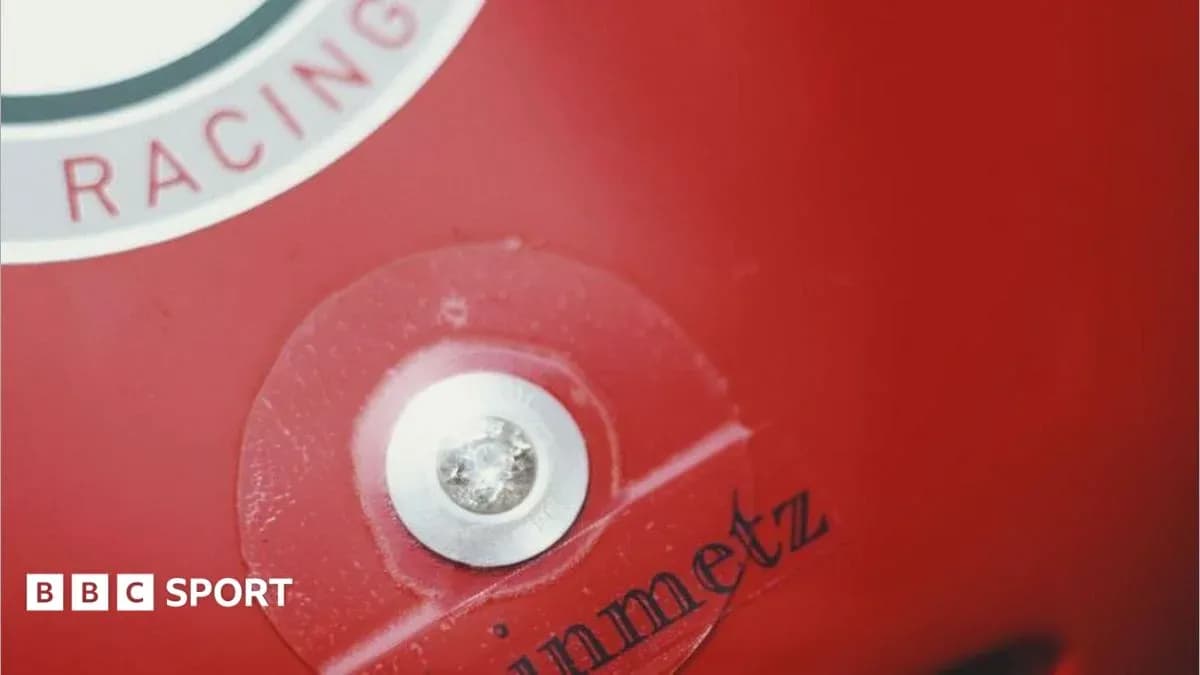
The film revolved around the theft of a diamond-encrusted Fabergé egg. Sidhu decided the car needed its own piece of sparkle. He struck a deal with diamond company Steinmetz: each Jaguar would carry a real diamond on its nosecone for the race. Two cars, two stones, around $1m of jewellery glinting at 200mph.
It was audacious. It was risky. It was perfect for Monaco.
Then the lights went out.
One lap, one mistake, one missing stone
The streets of Monte Carlo are unforgiving at the best of times. Narrow, bumpy, hemmed in by walls and barriers that punish the slightest error. Overtaking is rare. Accidents are not.
On lap one, chaos.
Austrian rookie Christian Klien, in the diamond-tipped Jaguar, tangled with a Jordan as the field streamed out of Mirabeau. The contact damaged the front of his car – the very section carrying the stone – and left him a passenger as he slid helplessly into the barriers at the Loews hairpin.
The car crumpled. The diamond disappeared.
Klien climbed out unhurt. Marshals craned the car away and tucked it behind the barriers. The race roared on for another 76 laps.
Back in the garage, Sidhu had a different race of his own. The phone rang. Steinmetz wanted to know if their diamond was safe.
"I can't remember what I answered, but it certainly wasn't 'yes'," he admits. He could not even get near the car. Under F1 protocol, nothing moves until the chequered flag falls.
So he waited. Ninety minutes that felt like ninety years.
When he finally reached the wreck, the answer was brutal in its simplicity. No diamond. No trace. No neat little stone nestling in the mangled carbon.
Just a hole where a publicity stunt had turned into a whodunnit.
Fake stone? Not a chance, say Jaguar
Theories began immediately and have not stopped since.
The first: it was never real. A prop, a replica, a clever bit of sleight of hand.
Sidhu shuts that down.
"I've learned that any diamond company is not going to go out there, particularly in the public domain, and use fake diamonds because clearly there's a high risk of being caught," he says. The reputational damage to Steinmetz, Jaguar and even Formula 1 would have been enormous if a fake had been exposed.
Purnell backs him. He remembers a conversation with David Pitchforth, Jaguar’s managing director at the time.
"David said, 'Tony, it was definitely real because when they came to the office with it, I picked the diamond up, went to the window and scratched the window' because that's how to tell."
Purnell never doubted him. "Hearing that from Dave, I'm in no doubt it was the real thing that was put on the car."
Could a mechanic have swapped it? Created a copy? Purnell doesn’t buy it. The operation was too public, the stakes too high, the logistics too tight.
If it went missing, it was because a real diamond went missing.
Pocketed, shattered or swept away?
So where did it go?
Purnell leans towards the simplest explanation. "I think somebody probably just picked it up, put it in their pocket and... they're probably smiling and thinking, 'it's in my drawer'."
He also knows what 100mph impacts can do. "I do think also that a fairly large diamond zooming through at 100 miles an hour probably shattered. Somebody's got a little bit, somebody else has got another [little bit]."
Or maybe there was no happy ending for anyone. "Maybe, sadly, just some guy was sweeping up the road or one of those trucks with the brushes and it all went down the sewer."
It is Monte Carlo. Within an hour of the race, the circuit reverts to public roads. Hundreds, probably thousands, of people would have walked over that crash site before the evening was out.
Sidhu has his own view. "Someone's picked it up," he says, convinced.
Fans routinely scour circuits for souvenirs. Bits of tyre rubber, shards of wing, fragments of floor. Anything that can be claimed as "Michael Schumacher’s front tyre rubber" or a piece of some star’s car.
"Somebody may have picked it up not having any idea it came off a car," Sidhu suggests. In a town where diamonds are just part of the scenery, one more stone on the tarmac would hardly raise an eyebrow.
"There's a lot of diamonds in Monte Carlo," he points out. "Somebody dropped a diamond in Monte Carlo. Well, they're not going to miss that, are they? Probably not."
For the romantics, there is an even more cinematic theory: that Clooney, Pitt and Damon – stars of the heist franchise – somehow orchestrated a real-life steal. Purnell allows himself a smile at the thought.
"It did occur to me that the ultimate thing would be if Clooney, Pitt and Damon had contrived to steal it because it was so in line with Ocean's Eleven. But that was a fantasy too far."
Fantasy, yes. But the story fits Monaco a little too well.
Did Klien crash on purpose?
The most cynical theory is also the most explosive: that Klien deliberately put the car in the wall to engineer the diamond’s disappearance.
Again, those inside Jaguar reject it outright.
Sidhu is blunt about the economics. The damage to the car cost more than the stone itself, which reports at the time said was uninsured. More importantly, points meant prize money, sponsor satisfaction and leverage in the hunt for a buyer.
"For us, bringing two cars home, ideally in the points, had far bigger commercial benefits to us in terms of constructors' points, broadcast money, and more importantly, trying to retain our sponsors and trying to protect the integrity of the team," he explains.
Klien crashed right in front of the marshals. He had no time to rummage around a broken nosecone. No quiet moment to slip a gem into his glove.
"Christian didn't try and say all the brakes failed or anything like that," Purnell recalls. "He's just said 'I made a rookie mistake'."
He was a young driver on his Monaco debut, trying to prove he belonged in F1. "No amount of money would have got Christian to do that [crash on purpose]. He wanted to make a success of what he was doing."
The mistake was real. The diamond’s fate is the only thing that isn’t clear.
A disaster on track, a PR masterstroke off it
While the world obsessed over the missing stone, Purnell’s first reaction was far more traditional: dread.
When Klien hit the wall and later Mark Webber also retired, Jaguar’s day looked catastrophic. No points, no finishers, no sporting positives. In the paddock that afternoon were heavyweight figures who mattered to the team’s future: HSBC chairman Sir John Bond, Jackie Stewart, senior Ford executives.
"When Christian went into the wall and then later Mark retired, my entire thinking was 'Oh God. What am I going to say?'" Purnell admits.
He needed to persuade sponsors to stay, convince potential buyers there was a project worth rescuing. "How am I going to explain another bad performance? How am I going to say 'just stick with the plan? We know what we're doing, it will take time' because sponsors don't have time. They want success."
Then the diamond took over.
"No-one mentioned Jarno Trulli winning the Grand Prix, no-one asked how the Jaguars did. No-one was interested that Mark Webber's car broke as well. It was, 'where's the diamond?'" Purnell says.
The story exploded. TV bulletins, front pages, water-cooler chatter. Formula 1, often invisible in the United States, suddenly cut through.
"I remember talking to somebody in Detroit saying, 'fantastic publicity over here, you know we never hear anything about Formula 1 but it's on the newscasts, it's in the papers - fantastic'."
Did that help sell the team to Red Bull six months later? Purnell thinks so. "I think that helped quite a lot because it buzzed the Jaguar team and showed that huge publicity was possible even if you weren't doing so well."
Red Bull bought the operation, rebranded, and turned the struggling outfit into a superpower. Eight drivers’ titles, six constructors’ crowns, a modern dynasty built on the foundations of a team that once glued a diamond to the front of its car and watched it vanish.
"You couldn't design a better PR weekend," Purnell reflects.
He’s right. The stunt backfired in the most spectacular, and yet most useful, way possible. Jaguar left F1, but the story lived on, burnished by the glamour of Monaco, the allure of Hollywood and the enduring appeal of an unsolved mystery.
Somewhere, perhaps in a drawer in a modest flat or locked away in a safe in a Monte Carlo apartment, there might still be a stone that once rode the nose of an F1 car for less than a lap.
If it ever surfaces, what does that say about a sport – and a city – where losing a $300,000 diamond is just another chapter in the show?