Norris Leads Unpredictable Brazilian GP Qualifying in Wet Conditions
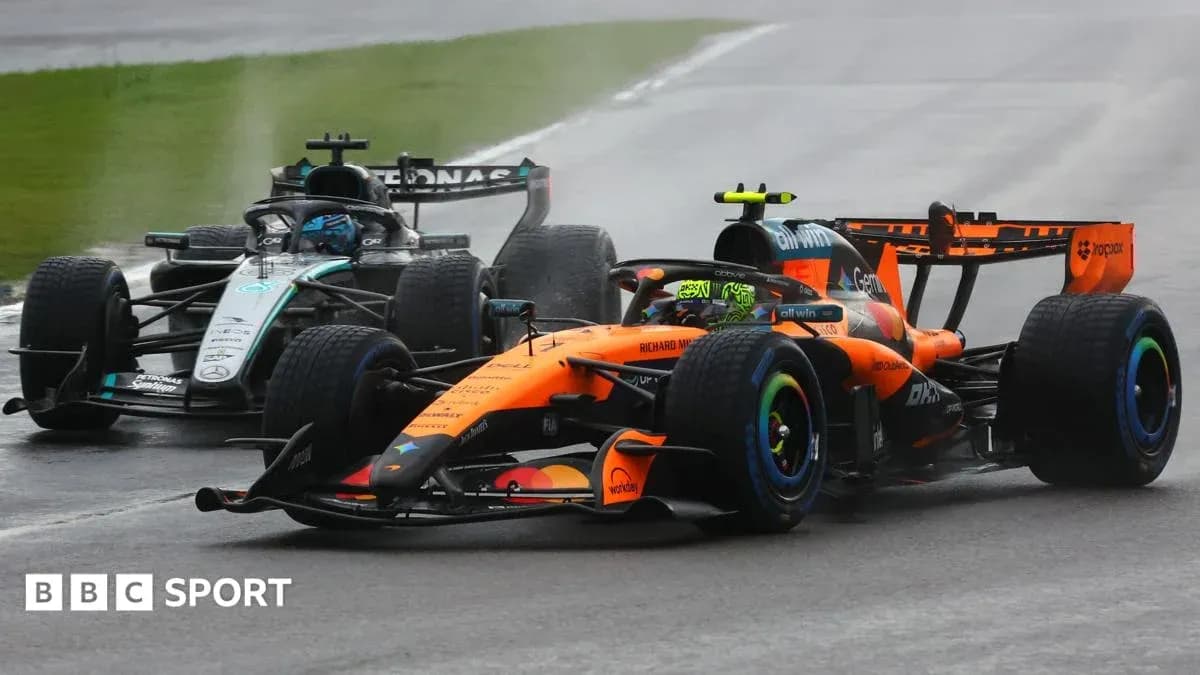
Lando Norris has driven in the wet before. Plenty of times. But as the spray hung like a white curtain over Interlagos and cars sliced blindly into Turn Four, even he admitted this was different.
“Some of the wettest conditions” he has ever faced – and he wants more of it on Sunday.
Norris dances in the deluge
For the third year in a row, Norris owns pole in Brazil. This one came at the end of a qualifying session that was less a timetable and more a survival exercise: red flags, nearly 90 minutes of stoppages, and a track that swung from treacherous to borderline undriveable.
Drivers emerged from their cockpits shaking their heads. The word “borderline” did a lot of work in the paddock.
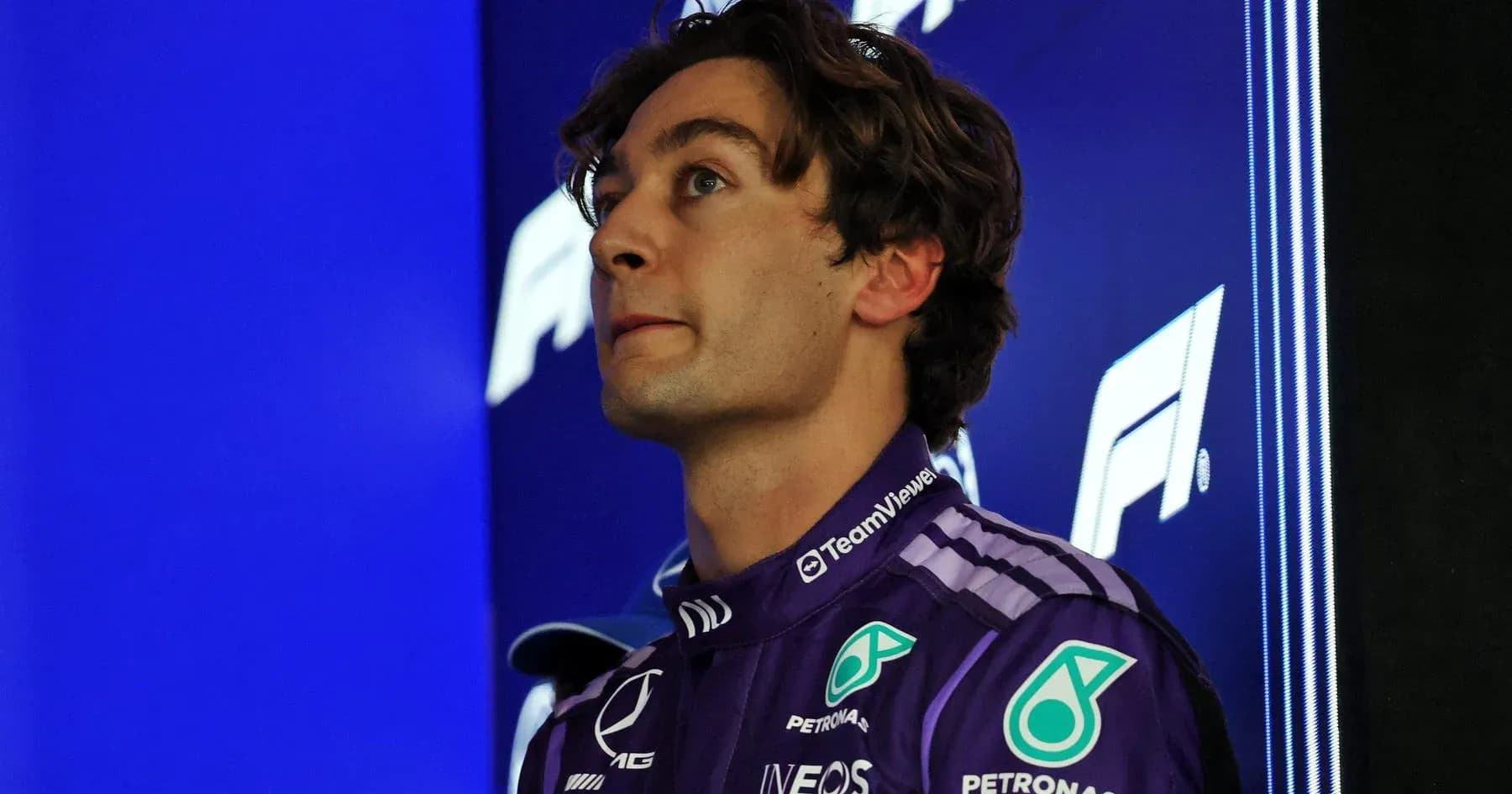
George Russell, second quickest on the day and simmering over a team call he believes cost him pole, painted the picture best. Visibility “zero” into Turn Four. Wheelspin in fifth gear at over 200km/h. Aquaplaning on the straight. No reference points, no horizon, just faith.
He loves the rain. He loves this place. But even Russell drew a line: if that had been a race, he said, they simply should not have been running.
The chaos, combined with a raft of grid penalties, ripped up the usual front row script. What emerged was a grid with a distinctly unfamiliar look – and a sense that Sunday could be anything but routine.
A scrambled grid and a chance for outsiders
Behind Norris and Russell, the second row tells its own story about who kept their nerve.
Racing Bulls’ Liam Lawson, still waiting for clarity on his future, seized the moment. So did Audi’s Nico Hulkenberg, who joined him on row two. For both, it was the kind of wet-weather opportunity that can define a season, or a contract meeting.
Haas rookie Oliver Bearman lines up sixth. Fernando Alonso and Alex Albon, in eighth and ninth, made their first Q3 appearances of the 2026 campaign, reminders that talent has not vanished even if the machinery often makes it look that way.
At the other end of the grid sit two of the sport’s heaviest hitters. Ferrari’s Lewis Hamilton and Red Bull’s Max Verstappen, both taking fresh engines and triggering penalties, start 20th and 21st. Verstappen has won here from 17th on a wet Sunday before. Now he and Hamilton will stare at a sea of spray from the very back.
Charles Leclerc, fourth fastest on raw pace, tumbles 10 places for his own engine usage. His penalty helps create a grid that looks like it has been shuffled by a storm – which, in a sense, it has.
Light rain is forecast for race day. At Interlagos, that phrase has a habit of understating the drama.
Norris: “We’re lucky it’s wet”
Norris has not started from pole since Spain in September. McLaren have brought upgrades, and he acknowledged they have helped, but he did not pretend this was a straight fight on dry pace.
“We’re lucky it’s wet, because if it was dry, I wouldn’t be sitting here,” he admitted. In the dry, he said, McLaren simply did not have Mercedes’ speed.
The rain gave him a window. He climbed through it.
Across the sessions, Norris felt in control. The tension came in Q3, as the light faded and the track turned into a patchwork of damp lines, standing water and deceptive dark patches. He needed to push hard enough to find the grip, but not so hard that one misjudged puddle turned a pole lap into a trip to the barriers.
He threaded that needle with two strong laps, built a buffer, and managed the risk. It was, he said, “more rewarding” precisely because of how knife-edge it felt.
He wants that knife back in his hands on Sunday.
“I’m hoping for a wet race,” he said. There is every chance he gets one.
Russell’s frustration, and a season of near-misses
Russell’s mood was very different. Another weekend, another sense of what might have been.
Seven days ago, he watched his team-mate Kimi Antonelli clinch the world title and become the youngest champion in history. Here, in the rain he relishes, Russell felt he had done enough for pole – until Mercedes told him to back off a lap he believed would be his best after catching Albon in the middle sector.
The team gambled that heavier rain would hold off long enough for another attempt. It didn’t. The chance evaporated with the grip.
Russell’s radio response was sharp. Toto Wolff reminded him he was still second; Russell snapped back that he was not there to be second. On paper, it was an odd hill to die on: a five-place grid penalty meant he would not have started from pole even if he had topped the times.
For Russell, though, it was about something deeper than Sunday’s starting slot. It was about proof.
“Gives me the confidence and reminds me again that I haven’t forgotten how to drive,” he said. On a year like this, that matters.
He felt his pace, alongside Norris’, was “by far the best out there” in the rain. Like Norris, he is openly hoping the clouds stick around. If it pours, he believes his chances grow.
Alonso shows what’s been wasted
The wet brought another storyline into sharp focus: Fernando Alonso, and the car that has held him back all year.
The Aston Martin-Honda has been short on power and tricky to handle. Alonso has spent much of the season fighting the machinery rather than the field. There have been precious few weekends where his talent could shine through the fog of deficits.
This was one of them.
Aggressive in Q1 and Q2 when conditions were still a mystery for everyone, Alonso forced his way into Q3 for the first time this season. That alone felt like a small victory.
He wanted more. Lined up first in the pit lane to bank a lap before the next wave of rain, he rolled the dice. The tyres never came alive. Ice-cold rubber, no grip, and the clock ticking. By the time he looked at the timing sheets, the gap to sixth was 1.8 seconds – a chasm in F1 terms.
Even in the wet, the engine still matters. Less time at full throttle means rivals cannot fully exploit their extra power, but drivability, torque delivery, and how the unit behaves in the corners still count. Alonso was blunt: Aston Martin still has “a little bit of an issue there”.
What the rain does do is shift the equation. It becomes less about horsepower and more about nerve. How much risk are you willing to take when the car starts to surf?
Alonso, like Norris and Russell, wants more of that. If it dries, he knows the long Interlagos pit straight will expose Honda’s lack of power and drag him back towards Aston Martin’s usual territory.
Ferrari’s bruises and a reset
Ferrari arrived in Brazil nursing both mechanical and emotional bruises.
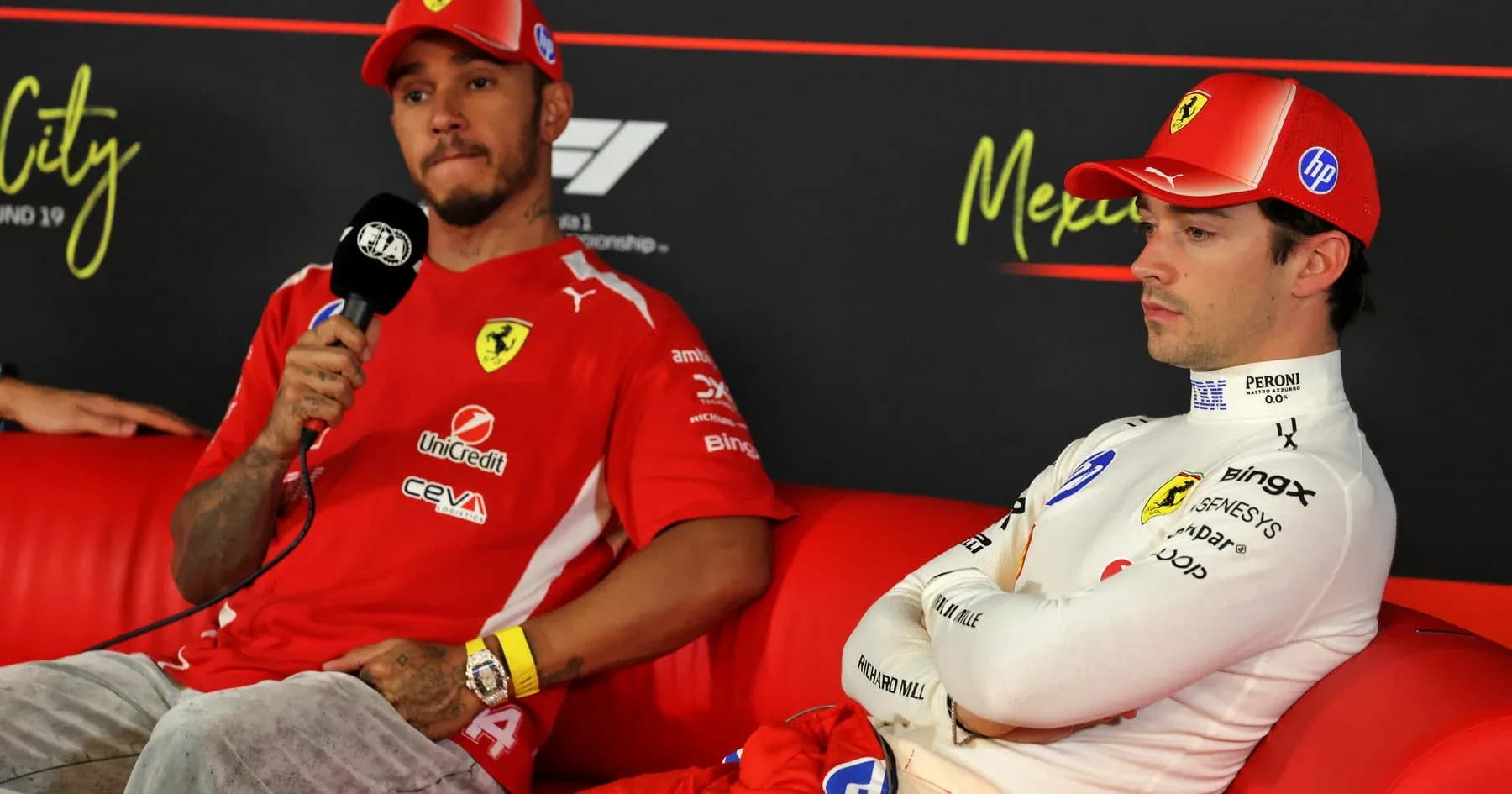
The week began with clear-the-air talks between Leclerc and Hamilton after their first-lap clash in Mexico cost them a shot at victory. Between races, Leclerc flew back to Europe for the birth of his first child, daughter Bianca, before returning to face the media and his new team-mate.
He described the conversation with Hamilton as “needed” and overdue, a way to shut down a storyline that had “taken proportions that are way too big” and dragged on too long. Tension is inevitable, he said. They both want to beat each other. Sometimes they will disagree. Talking helps.
Hamilton echoed that. They sat down, they spoke, they “squashed it”, and they move on. No demands, just two drivers laying out where they can do better and how they can support each other.
On track, the weekend did not get any kinder.
Both took new internal combustion engines, accepting 10-place grid penalties. Then Hamilton’s brand-new unit failed in final practice. Ferrari fitted yet another engine, sending him to the very back alongside Verstappen.
Leclerc, with his own penalty, starts six places ahead of Hamilton. In a strange way, Ferrari might welcome that separation after Mexico’s fireworks.
What they will not welcome is the sight of both cars mired in the pack on a circuit where, according to several drivers, overtaking has become tougher with the latest generation of cars. Interlagos has rarely been shy about producing drama. This year, the field suspects it will be harder work.
Storm clouds, storylines, and a wet dream of a race
So the grid forms with Norris on pole, Russell alongside, Lawson and Hulkenberg on the second row, and a cast of underdogs, veterans and champions scattered like confetti behind them.
Rain hangs in the forecast. Three of the sport’s sharpest operators in the wet – Norris, Russell and Alonso – are openly praying it arrives. Verstappen and Hamilton lurk at the back with nothing to lose and everything to gain.
Interlagos has seen titles decided, hearts broken and miracles forged in the spray.
On Sunday, with the sky threatening and the field scrambled, who dares to lean hardest into the rain?