Verstappen Critiques Ferrari's Driver Strategy: A Lesson in Team Dynamics
Max Verstappen walked away from Mexico with another winner’s trophy and, in his view, a textbook example of how not to run a top team.
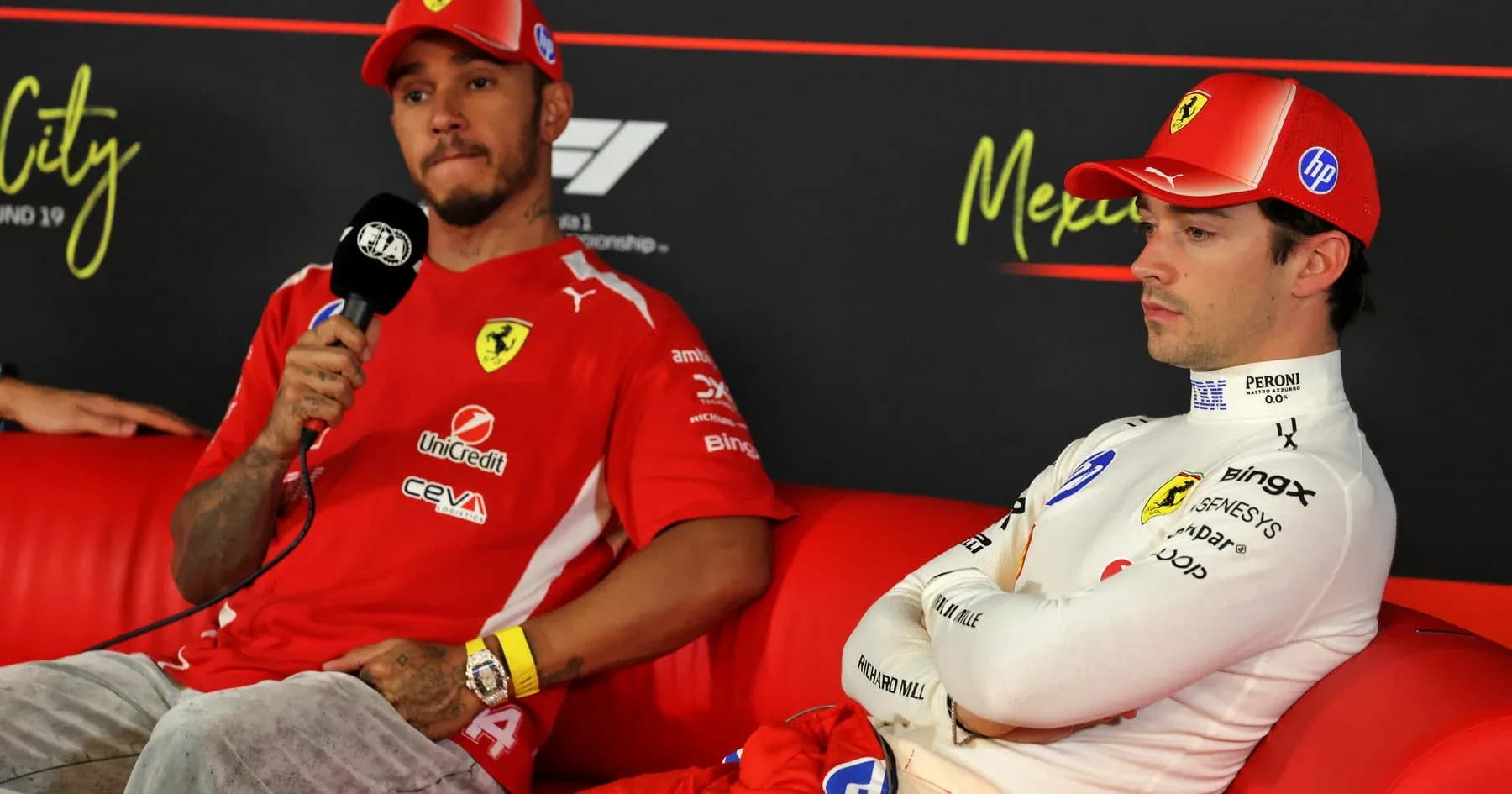
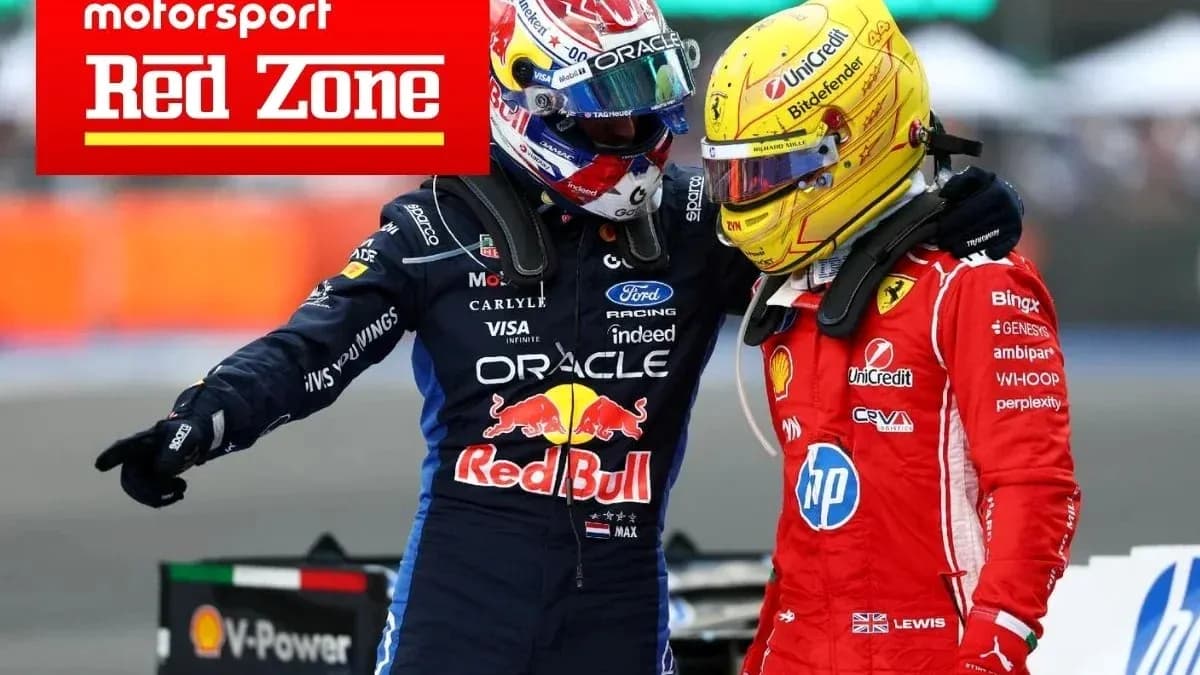
As the Ferraris of Lewis Hamilton and Charles Leclerc tore into each other on the opening lap at Autodromo Hermanos Rodriguez, Verstappen simply slipped through the chaos, controlled the race, and converted it into victory. Hamilton salvaged second. Leclerc, hit with a time penalty, dropped to fourth.
For Verstappen, the conclusion is obvious.
“I've said it before, and a lot of people often don't agree, but if I was a team principal, I'd never get two number one drivers because then you get things like this,” he told Viaplay during the Sao Paulo Grand Prix weekend.
Two alpha drivers. One corner. No compromise.
“One won't yield for the other because they both think they can win, and that's how I am too. And if I was a team principal, I'd change this.”
The Dutchman believes Ferrari effectively handed him the Mexico win by refusing to impose a hierarchy. In his mind, a clear structure would have protected the team’s race.
“If you had a clear number one and number two, they would've gone through the first corner as P1 and P2 and finished like that. Or P1 and P3, that's fine too, because as a team you're still scoring great points.”
That is the crux of Verstappen’s argument: Ferrari’s commitment to equal status might thrill the purists, but it leaves the door wide open for a ruthless operator to walk through. In Mexico, he did exactly that.
Vasseur Holds the Line
Inside Ferrari, the stance remains very different.
The team has repeatedly insisted that Hamilton and Leclerc are free to race, and that policy survived a bruising double-header. After a dramatic weekend in Mexico, team principal Fred Vasseur brought both drivers together for a clear-the-air meeting.
“We did [the meeting] yesterday evening because I had to fly back to Europe between the two races, but it went well,” Vasseur said at Interlagos. “It was good to discuss, good to clarify my position and their position. It was good to do and now we turn the page and we are focused on the next one.”
The message from the Frenchman is continuity, not revolution. No sudden switch to a Verstappen-style pecking order. No public demotion of one star in favour of the other.
“The guidelines is still the same,” Vasseur stressed. “They accumulated perhaps a bit of frustration because they are starting each weekend side-by-side and you have a kind of accumulation of fact. But at the end of the day, the guidelines is always the same.”
Side-by-side on the grid, side-by-side in ambition. That friction is built into Ferrari’s current model.
Respect, Brand, and a Tightening Fight
If Verstappen talks about hierarchy, Vasseur talks about respect.
“They need to respect each other, they are two competitors with the fighting spirit for sure, but they need to have respect for the other one,” he said. “But mainly and firstly, they need to respect the brand, the team, the people working at home, the people working on track. I think we are putting a lot of effort on this, and the message was clear and will stay clear.”
Ferrari left Interlagos with only six points to show for it, Hamilton and Leclerc crossing the line eighth and ninth. It was a modest haul for a team of their stature, but enough to keep them second in the standings, 95 points clear of Red Bull with three races to go.
The gap gives Vasseur some breathing space. It does not answer the bigger question.
Verstappen looks at Ferrari and sees a team that could have locked out the front, protected its race, and tightened its grip on second place. Instead, their internal duel opened the door for him to pounce.
Ferrari looks at itself and sees two elite drivers, trusted to race, told to respect the badge and the people behind it, but not shackled by a rigid number one–number two divide.
One philosophy prioritises control. The other, freedom.
Mexico showed what happens when those worlds collide. The next three races will show whether Ferrari’s faith in equality can stand up to the cold, ruthless logic of a champion who would never let two number ones share the same garage.