Aaryavir Sehwag Shines with 160 in U19 Asia Cup
In Al Amerat’s dry heat, with India’s campaign under early strain, a familiar surname walked out to open – but the story that followed was entirely his own.
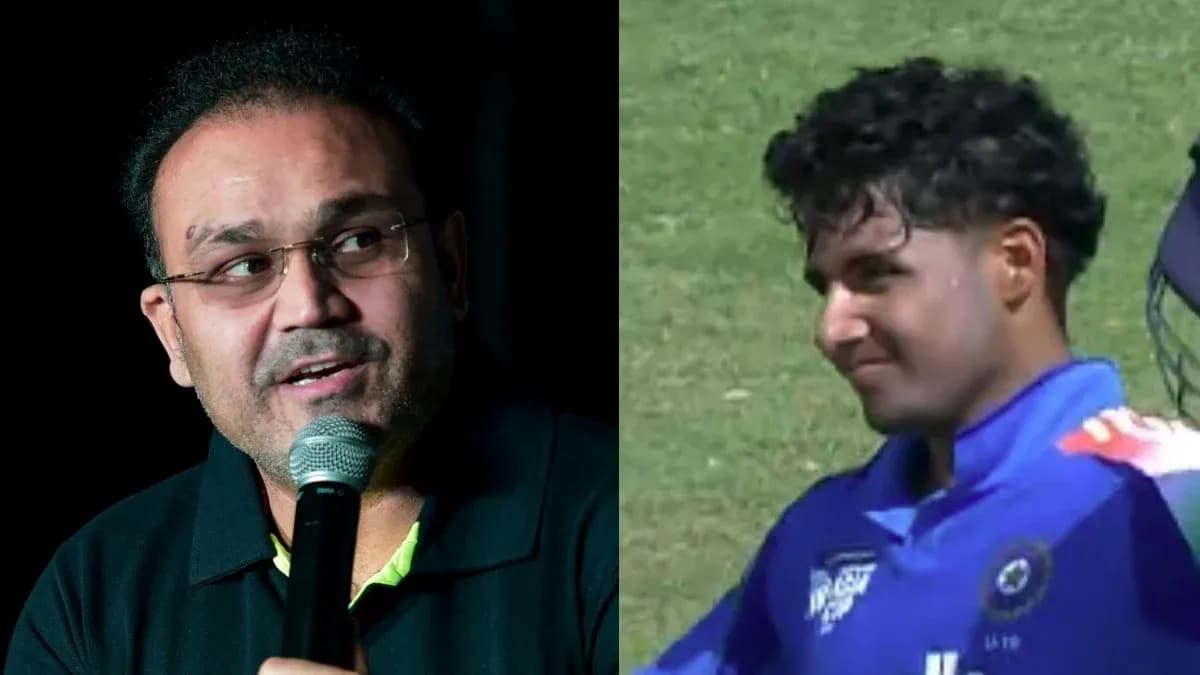
Virender Sehwag’s son, Aaryavir, peeled off a majestic 160 in the U19 Asia Cup 2026, his first hundred for India in Youth ODIs, to drag his side back on track and flatten UAE. It wasn’t just a big score. It was a statement innings, built on old-school grit, a modern range of strokes, and a deeply personal routine that has nothing to do with humming film songs.
His father used to sing at the crease. The son chants “Sita Ram”.
A different Sehwag, a familiar fearlessness
India needed this. A heavy defeat to Pakistan had rattled their campaign and exposed the tricky, two-paced surfaces of Al Amerat. Sent in after losing the toss, India’s young openers knew early wickets could crack the day wide open.
So Aaryavir did what his father rarely did in his pomp: he dug in.
He saw off the new ball, played late, left well. Dot balls piled up. The scoreboard dawdled. He didn’t flinch.
“The plan was simply to bat for 45 overs,” he explained later. Coaches had drummed it into him: stay out there, absorb the pressure, cash in later. So he accepted the early grind, trusting that the runs would come. The belief never wavered.
They came, and how. Once set, the right-hander shifted gear, turning a watchful start into the highest individual score of the tournament so far. The innings grew in authority with every over – drives began to whistle through the covers, the pull shot surfaced, the gaps appeared as UAE’s attack ran out of ideas. India moved from survival to dominance, and the game slipped beyond the hosts.
By the time he walked off for 160, the result was no longer in doubt. India had their convincing win. They also had a new Sehwag headline.
Inside the mind: from songs to “Sita Ram”
The most intriguing part of the day came not from the bat, but from what was happening in his head.
Where Virender Sehwag famously hummed songs to keep his mind uncluttered, his son has carved out a different rhythm. No music. No noise. Just a mantra.
“When I talk to my father about the mental aspect of batting, he tells me something that helps me stay in the present moment,” Aaryavir said. “He often sings, so there should be some kind of reset button that keeps you focused on the present.”
His own reset is spiritual and sharp-edged.
“So, when I’m batting, I keep repeating ‘Sita Ram’ in my mind so that no other thoughts come in. I focus only on the ball. Then, depending on where the ball lands, I play my shot. I just try to react to the ball rather than think about what I should do in a particular situation, or whether I should score a fifty or a hundred.”
Ball. Mantra. Shot. Repeat.
The routine worked to perfection against UAE. The early dots didn’t rattle him because the process, not the scoreboard, held his attention. Once he had his tempo, the innings flowed, and the numbers took care of themselves.
A promise made, a message awaited
The hundred carried an extra layer of meaning. The night before the game, he had spoken to his father and promised a big score in the tournament. That first Youth ODI hundred for India turned the promise into something tangible.
But the reaction he wanted most would come later, and not from a crowd or a dressing room.
“For me, whenever he texts me saying ‘well played’ after a good knock, it means more to me than anything else,” Aaryavir admitted. “It’s a big moment for me, and I’ve always loved it when my dad praises my batting because he doesn’t do that very often. Whether I score a hundred or not, he doesn’t praise me much.”
That’s the other weight he carries. Not the burden of the surname, but the scarcity of compliments from a man who has seen it all at the top level. A simple “well played” from Virender Sehwag still hits harder than any headline.
He also knows there will be no shortage of emotion at home.
“So, I hope he’s happy, and I hope my mum is happy too. She expresses her emotions well. I hope my dad is happy and proud of me as well,” he said.
The runs are for India. The text message, if it comes, is for him.
Hungry for more, eyes on the bigger badge
For all the romance around a first hundred and the nostalgia of a famous surname back atop a scorecard, Aaryavir was in no mood to treat 160 as an arrival point.
Despite steering India back to winning ways, he spoke like someone only just starting a much longer climb.
“But it’s a long journey, and I’m not satisfied. I’m not done with my cricket yet,” he said. “I’m looking forward to scoring many more hundreds and winning many more matches. I want to wear the senior Indian team badge.”
That is the real target: a place in the senior side, the blue cap, the weight of national expectation for himself, not just as Virender’s son. Performances in age-group cricket are the stepping stones; he knows that. He also knows nothing is guaranteed.
So the plan is simple. Keep scoring. Keep chanting. Keep working.
“Hopefully, when I wear the senior Indian team badge, my father will be able to praise me openly. Until then, the hard work will continue,” he signed off.
On a hot day in Al Amerat, India found their footing again. More importantly, a young opener with a famous name and a quiet mantra gave a first real glimpse of what his own story might look like when he finally walks out with that senior badge on his chest.