England's Dominant Victory in Adelaide Levels ODI Series Against Australia
England finally roared in Adelaide. After weeks of confusion and fragility, this was the night their erratic one-day side looked like a serious team again, crushing Australia by 135 runs to level the series 1-1 and drag a decider in Hobart into sharp focus.
Tom Banton lit the fuse. Gus Atkinson and Sonny Baker kept the fire burning.
Banton’s statement innings
Two days earlier in Perth, England folded for 131. Same team in name, a completely different beast in Adelaide.
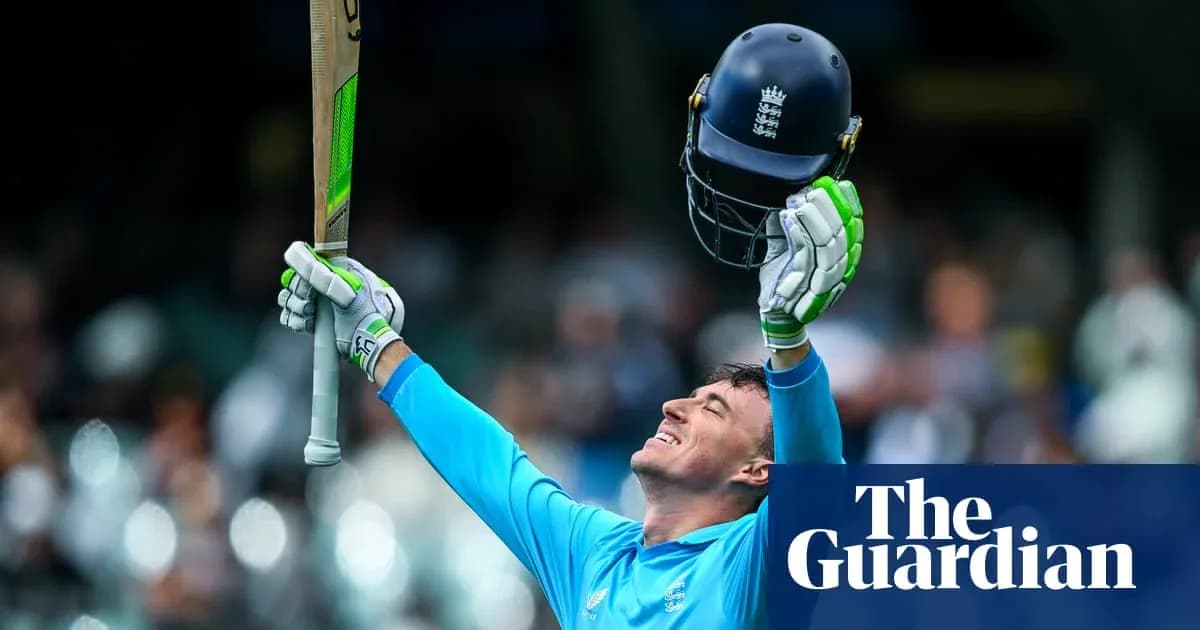
Given another chance at the top of the order, Banton played the innings of a man intent on keeping that spot for good. His 121 anchored England’s 355-6, their highest ODI total in Australia, and it came with a clarity and authority that has often been missing from this side.
He took a nasty blow early, thudded on the helmet by left-armer Spencer Johnson on 10. It barely changed his tempo. Once he found his range, Adelaide’s short square boundaries became targets rather than features. The pull shot, especially, turned ruthless.
After Ben Duckett flashed to point for nine, the memories of Perth lingered. England needed calm as much as aggression. Banton found both in a 137-run stand with Joe Root, who compiled a typically neat 62, steering the innings through its nervy middle overs.
The platform set, Banton shifted gears. He moved through the 70s and 80s with increasing freedom, punishing anything short and trusting his range down the ground. When he finally holed out to deep square-leg, one pull too many, his job was done. The tone had been set, and Australia were already under the scoreboard.
Cox and Jacks light up the finish
If Banton built the stage, Jordan Cox and Will Jacks turned the finish into a show.
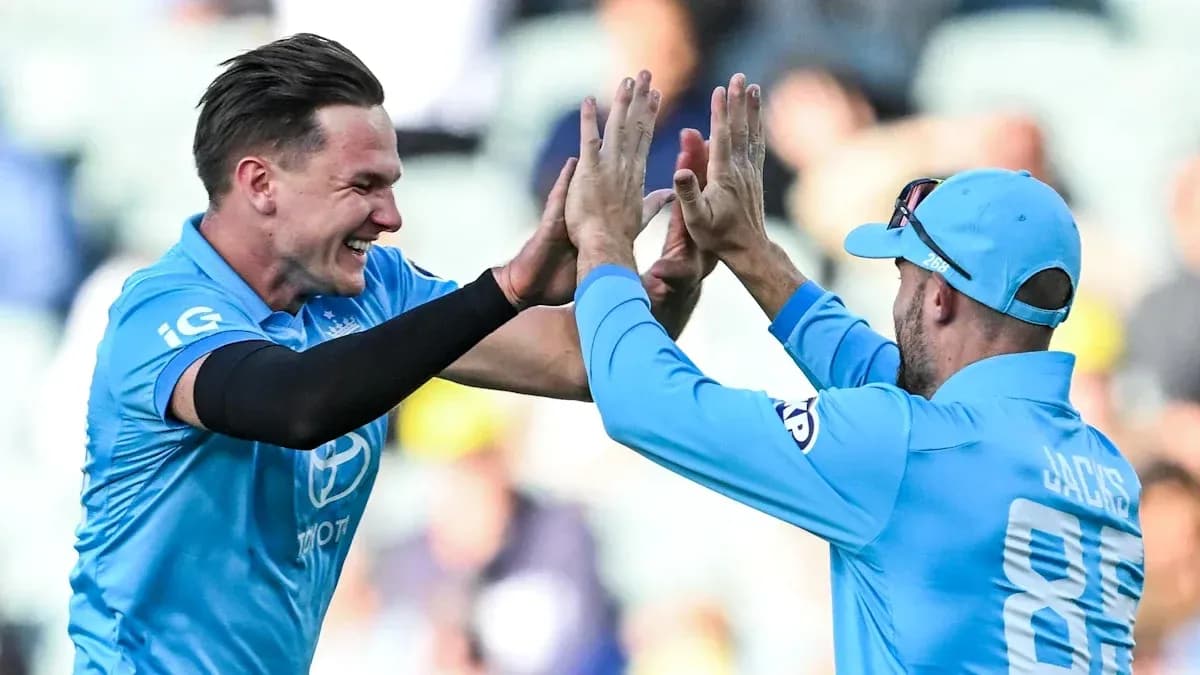
England were 245-4 after 40 overs, solid but not decisive. Cox, in for Jos Buttler and under pressure after a run of low scores, tore that script up with a sparkling 67 from 49 balls. Jacks stayed unbeaten on 54, and together they ripped 110 from the final 10 overs.
Cox’s range was striking. He drove, cut, scooped and pulled, constantly shifting the angles. One reverse scoop off Xavier Bartlett for four was outrageous, the sort of shot that announces a player’s confidence as much as his talent.
He had arrived after a scruffy moment from Harry Brook, the captain chopping a ramp into his own stumps for five. The innings could have stalled again there. Instead, Cox and Jacks kept the tempo high without losing shape, running hard and cashing in when Australia missed their lengths.
By the time the 50 overs were up, Beardman – the young quick who destroyed England in the first ODI – was resting, Australia’s attack had been flogged, and 355 felt heavy. It proved mountainous.
Baker and Atkinson rip through the top order
England’s white-ball problem this year has been brutally simple: they haven’t taken enough new-ball wickets. So they picked Sonny Baker for Jamie Overton, hunting swing and early incision.
They got it.
Baker found movement with the new ball and struck the key blow when he drew Mitchell Marsh into a prod, Root flying high at slip to cling on. The Australia captain gone for two, and England had belief.
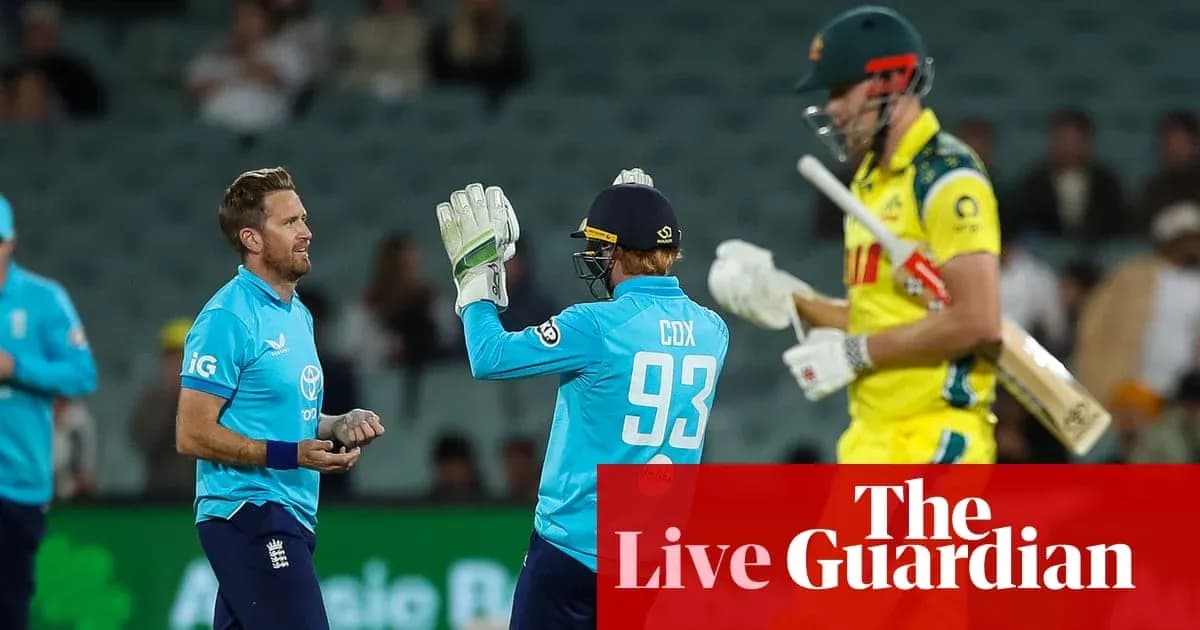
At the other end, Atkinson was relentless. He had already dismissed Travis Head in the first ODI; he did it again, this time nicking him off for seven with a ball that straightened just enough. The nip, the discipline, the repeatability – this was a fast bowler suddenly looking very comfortable at this level.
Australia slumped to 29-4 inside seven overs, their chase wrecked before it had even begun. Atkinson then removed Cooper Connolly and Josh Inglis, both caught behind, to seal career-best figures of 4-28. It felt like a reward for a string of performances where his numbers hadn’t matched his threat.
England were not flawless. They shelled four chances, letting Inglis, Matt Renshaw and Cameron Green all off the hook. Renshaw made 63, Green 64, the pair dragging Australia from embarrassment to something more respectable.
But the damage had been done early, and this time England did not let a wounded opponent wriggle free.
Curran’s late lift, Dawson’s control
Sam Curran, short of rhythm and confidence in recent weeks, found a small but important spark. He finished with two wickets in two balls, including Jack Edwards bowled by his looping slower delivery – the “moon ball” – that dipped and clattered into the stumps.
Green’s dismissal summed up England’s night. Stumped in freakish fashion when the ball deflected off Cox’s shin and onto the stumps, his exit snuffed out any remote hope of a miracle chase.
Liam Dawson, preferred again to Adil Rashid, played his part with 2-41, tying down one end and feeding pressure back onto a batting line-up already battered by the new ball.
Australia were eventually bowled out for 220 in 44.3 overs. The margin – 135 runs – underlined the gulf on the day.
An unpredictable side, a timely reminder
This victory snapped a seven-match losing streak against Australia in Adelaide across formats and ended a run of six straight away defeats to them in ODIs. It also cut across the narrative of a side sliding, almost helplessly, through Rawalpindi, Lahore and Perth.
England had already won three ODI series this year before those damaging losses to Sri Lanka, Pakistan and Australia. That inconsistency makes them maddening to read. This performance only deepens the mystery.
On one hand, they failed to defend 430 against Sri Lanka and allowed a last-wicket heist against Pakistan. On the other, they can summon nights like this: a ruthless top-order hundred, fearless finishing, incisive new-ball spells.
Banton now has four fifties and two hundreds in nine innings as an opener. His chance came through Jacob Bethell’s knee injury; his numbers say the position should be his to lose. Cox has one more game in this series to strengthen his claim, and perhaps more if Buttler is not fit for January’s trip to South Africa. Atkinson and Baker have given the selectors something they’ve been desperate for: evidence that this attack can bite early.
These are the performances that hint at a genuine World Cup challenge next year. The question is no longer whether England can hit these heights.
It’s whether they can stop crashing back down from them.