Abhishek Sharma's 30-Ball Century Powers India to Victory
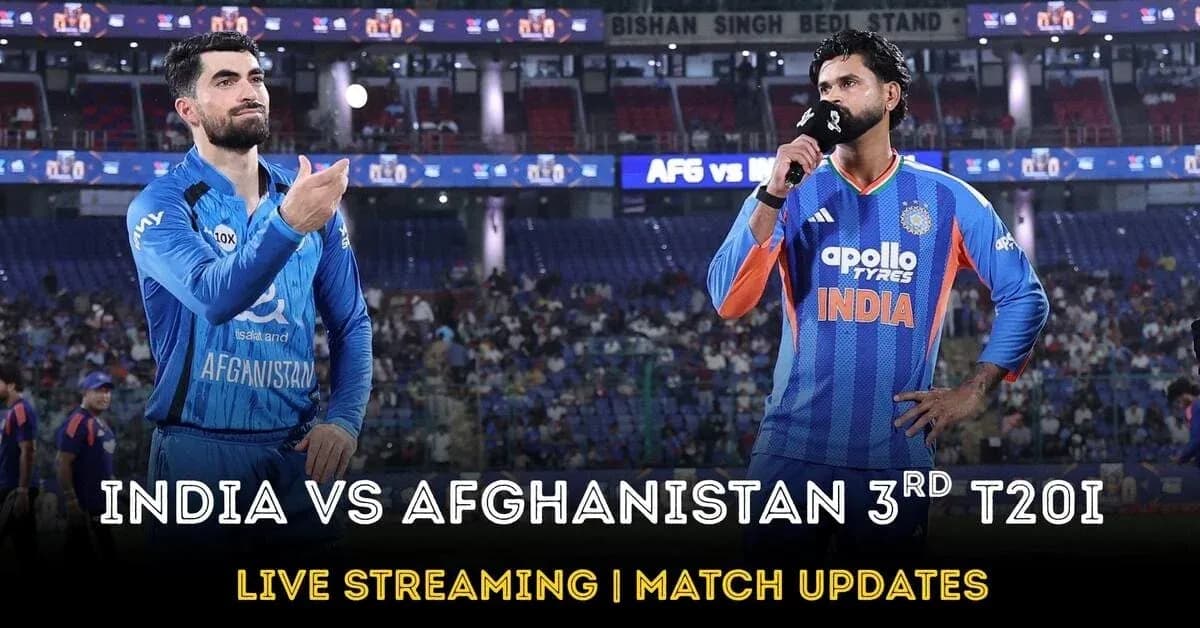
Under heavy Delhi humidity and a low, clouded sky, Ibrahim Zadran finally got the toss call right. Afghanistan’s captain chose to bowl in the third and final T20I at the Arun Jaitley Stadium, hoping the new ball would bite before the pitch flattened out.
For six overs, it felt like the surface wasn’t the only thing under assault. Afghanistan’s attack, their plans, even their belief, took the hit.
At the centre of it all stood Abhishek Sharma, bat blazing, rewriting the record books with a 30-ball hundred that turned a routine bilateral dead rubber into a night to remember.
Toss to turmoil
On paper, Zadran’s call made sense. India, already 2–0 up and chasing comfortably in both previous games, would now have to set a total. The hosts-in-name-only wanted early movement, quick wickets, and a chance to finally control a chase.
Shreyas Iyer didn’t flinch.
“We would have batted first,” he said at the toss, framing it as a welcome test rather than a twist. One change only: Yash Thakur in for Arshdeep Singh, with Vaibhav Sooryavanshi still waiting for a debut. The batting core stayed intact — Abhishek, Sanju Samson, Ishan Kishan, Iyer, Tilak Varma — the same group that had dismantled targets in the first two games.
Afghanistan shuffled more aggressively. Noor Rahman and Abdullah Ahmadzai came in, Gulbadin Naib and Noor Ahmad made way. Rashid Khan and Mujeeb Ur Rahman remained the twin spin pillars, with Fazalhaq Farooqi and Azmatullah Omarzai tasked with giving them something to work with.
They got Abhishek instead.
A cautious start, then the storm
Farooqi began well. One over, five runs, India 5 for 0. Samson scratched around, Abhishek found a single boundary over extra cover, and the ball still looked new and dangerous.
The illusion didn’t last.
Omarzai’s first over detonated the innings. Samson took a single, then Abhishek launched. A leg-side offering disappeared over deep square leg. A mis-hit still raced for four down the ground. Another length ball sailed over deep extra cover. Twenty runs off the over, and the tone of the evening changed.
Farooqi returned and was treated with even less respect. Abhishek went straight down the ground for six, then rode a bouncer over fine leg, dragged a slower ball past deep square, and top-edged another short one over short fine. Twenty-three from the over. After three overs, India were 45 without loss, and the powerplay had a new protagonist.
Samson joined in next, lifting Mujeeb straight for six, but this was Abhishek’s canvas. By the time Mohammad Nabi came on for the fifth over, India were simmering. Nabi’s first ball was thumped back over his head by Samson. The next sailed over long-on. A drop at mid-off spared Samson and brought up 9,000 T20 runs for him. Then Abhishek took over again — six over long-on to reach fifty, a cut for four, and another blow into the stands. Twenty-nine off the over. India 85 for 0 after five.
Rashid Khan, Afghanistan’s trump card, walked in with the powerplay still alive. Even he couldn’t halt the surge. Abhishek, momentarily beaten by turn and length, reset and carved him for back-to-back fours through extra cover before lifting him over sweeper for six. India’s hundred arrived at the end of the sixth over, 100 without loss, Abhishek 76 from 22 balls. The contest between one of the world’s premier T20 spinners and India’s new left-handed firebrand was brutally one-sided, at least in that spell.
History in 30 balls
With the field spread, Afghanistan finally found moments of quiet. Ahmadzai’s first over went for nine. Mujeeb’s second cost 15, but at least he wasn’t being torn apart ball after ball. It felt like containment. Not control, but survival.
Abhishek didn’t stay quiet for long. On 86, he rocked back and launched Mujeeb over long-on again, then drilled him straight for another six to move into the nineties. By the end of the eighth, India were 124 for 0 and Abhishek had 93 from 28.
The landmark came in Ahmadzai’s second over. Samson took a single, Abhishek clubbed another six to move to 99, then nudged down the ground to reach his hundred from just 30 balls — the fastest T20I century by a batter from a Full Member nation.
Helmet off. A brief, composed celebration. A meditation pose in the middle of the storm he had created.
It was his third T20I hundred, but this one felt different. This was not a flat-track accumulation. It was a sustained assault on an attack that knew exactly what was coming and still couldn’t stop it.
By the time Rashid finally ended it, Abhishek had 108 from 34 balls, with nine fours and 11 sixes. He tried to carve a googly over extra cover, edged, and Rahmanullah Gurbaz did the rest behind the stumps. The review was optimistic; UltraEdge showed a clear spike. India went to drinks at 142 for 1 in the 10th over, the innings already shaped decisively.
Samson anchors, Rashid resists
With Abhishek gone, the innings needed a different tempo. Samson, already in, provided it.
He lifted Mujeeb over long-off, threaded singles, and kept India moving. Tilak Varma, though, never settled. A moment’s hesitation running to Rashid proved costly: a clean pickup, a direct hit, and Tilak was gone for 2 off 5. Rashid had his second wicket involvement of the over and Afghanistan a sliver of control.
Shreyas Iyer arrived and scratched around early, but Samson kept ticking. A straight drive for four off Mujeeb, a flick to deep mid-wicket, then a calm nudge to long-on took him to a second consecutive T20I fifty, this one from 34 balls. It was quieter than Abhishek’s chaos, but no less important in the context of setting up a towering total.
Rashid, as he so often does, fought his own battle within the larger onslaught. He removed Abhishek, ran out Tilak, and allowed just three runs in his 12th over. Afghanistan’s problems lay elsewhere: the early overs, the missed lengths, the inability to pin India’s openers down.
By the end of the 13th over, India were 164 for 2. Samson had 50 from 34, Iyer 4 from 5, and the platform was built for a final charge.
Afghanistan’s challenge grows
For Afghanistan, the script felt painfully familiar. Their top order has stumbled through this series, leaving Omarzai, Nabi, and Rashid to rescue innings that never quite reached par. Omarzai’s 64 in the opener came from 43 for 5. In the second game, Zadran’s 37 and late blows from Nabi and Rashid pushed them to 159, still not enough.
Now, with India’s top order again dictating terms, the equation is brutal. Contain a line-up led by Abhishek, Samson, and Iyer on a true Delhi surface, then avoid another early collapse against Jasprit Bumrah and company.
The match-ups tell their own story. Gurbaz, twice dismissed for ducks in the series, has a strike rate of just 37.50 against Bumrah in T20s. Rashid has had success against Iyer, dismissing him three times and keeping him to a strike rate of 120, but Abhishek has turned their personal duel upside down, scoring at 237.77 against the leg-spinner despite being dismissed twice.
Tilak, too, presents a tactical puzzle — 154.33 against pace since 2025, only 116.97 against spin. Afghanistan know where their small windows lie. They just haven’t been able to prise them open long enough.
Zadran had spoken at the toss about “some support for the bowlers at the start” and the need to “keep things easier” against one of the best sides in the world. The support never really arrived. The pitch has played as advertised: full of runs, punishing anything even slightly off line.
India, with an eye on the Asian Games and a clean sweep here, have treated it like a launchpad. Afghanistan, chasing for the first time in the series, now face the starkest question of their tour: can their batters finally stand up to the occasion, or will Abhishek’s 30-ball masterpiece be the defining image of a one-sided contest?