Ajit Agarkar's Future as India's Chief Selector in Limbo
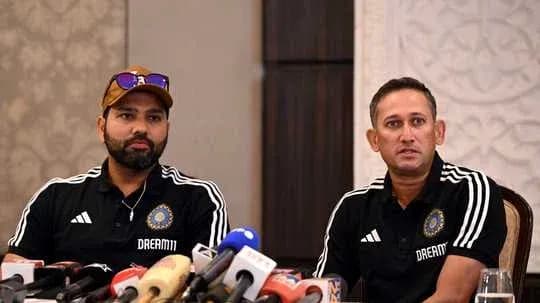
Ajit Agarkar’s future as India’s chief selector remains stuck in limbo, and the BCCI’s Annual General Meeting in Chennai on Friday did little to clear the fog.
The big decisions stayed behind closed doors. The big question stayed unanswered.
What did emerge, though, was significant: the BCCI’s office bearers have been formally empowered to take a call on the senior men’s selection committee. In other words, the power to decide Agarkar’s fate now rests with a small group at the top, not the full house that assembled for the AGM.
Agarkar in the crosshairs
Agarkar’s position has been under quiet but persistent scrutiny for weeks.
His absence from a recent review meeting on India’s tour of the UK raised eyebrows, even as the BCCI publicly played it down. That review, which examined India’s performances across formats in England, was exactly the sort of high-level debrief a chairman of selectors would normally be expected to attend.
Then came the Rohit Sharma episode before the Lord’s ODI, which dragged the selection panel into the spotlight. Selectors reportedly told the former captain he was not part of the team’s plans for that game, only for the board to step in and reverse course. The incident sharpened the focus on who really runs selection in Indian cricket — the committee or the corridors of power.
Agarkar, appointed in July 2023, is understood to have a contract running until October 2026. On paper, he is only a year into a three-year tenure. On the ground, his grip on the role looks far less secure.
Yet, for now, the machinery carries on.
The selection meeting to pick squads for the West Indies ODIs, the Irani Cup and the India A teams went ahead earlier this week without any visible turbulence. Those close to the process described it as “business as usual”, the selectors going about their work as though nothing had changed.
The reality, though, is that everything could change with a single decision from the top brass.
No quick replacement on the horizon
If the BCCI does decide to move on from Agarkar, it cannot simply plug in a new chairman overnight.
The board is bound to follow its own appointment protocol: issue a public advertisement, shortlist candidates, conduct interviews, and only then name a new chief selector. That process takes time, and with international cricket rolling on, any vacuum at the top of the selection table would be keenly felt.
One name has already begun to circulate in the background. Former India wicketkeeper-batter Parthiv Patel is understood to be a potential candidate to step into the role if a change is made. Patel, who has stayed close to the game through commentary and franchise roles since retirement, would represent a younger, recently-retired voice in the selection room.
For now, though, his name remains just that — a possibility, not a decision.
Junior selectors stuck in the queue
The uncertainty is not limited to the senior panel.
The process to appoint a new junior selection committee is also still in motion. The BCCI advertised for five posts on August 24, but interviews have yet to begin. There was an expectation in some quarters that the new junior committee would be unveiled soon after the AGM.
That has not happened. The latest indication is that the process will stretch until the end of the month, leaving the junior structure in a holding pattern at a time when age-group cricket remains central to India’s long-term planning.
Ranchi holds its ground for BGT
Away from the selection intrigue, there was clarity on one front.
Ranchi will remain a venue for next year’s Border Gavaskar Trophy, despite speculation that it could be dropped from the marquee Test series. Saurabh Tiwary, secretary of the Jharkhand State Cricket Association (JSCA), moved quickly to knock down the rumours.
“There is no change in the venue. If anybody has to write to the BCCI about it, it should be me and I have not written it,” he told the media, leaving little room for doubt.
The five-Test series will open in Nagpur on January 21. Chennai, Guwahati, Ranchi and Ahmedabad will host the remaining four Tests, in that order — a spread that reflects both traditional strongholds and emerging centres.
Governance storm on the horizon
Inside the AGM hall, another issue loomed that could shape the board’s long-term autonomy: the National Sports Governance Act.
The Supreme Court has asked the BCCI to clarify its position on the proposed legislation, a move that could force the board to state, in black and white, where it stands on being brought under the umbrella of a national sports law.
So far, the BCCI has held firm. In the Odisha Cricket Association case and elsewhere, it has argued that cricket should not be treated as a “designated sport” under the Act, effectively pushing back against attempts to draw it into the same regulatory framework as other disciplines.
That standoff is far from settled. The board will eventually have to put its stance on record before the country’s highest court.
For now, Indian cricket sits at an uneasy intersection: a chairman of selectors whose future hangs in the balance, a selection system in partial transition, a landmark Test series locked in, and a looming legal battle over who truly governs the game.
The next decision from the BCCI’s inner circle will not just decide Ajit Agarkar’s job. It will say a great deal about how this board intends to wield its power in the years ahead.