Tragedy of Arjun Menon: A Coach's Legacy and Family's Fight for Justice
On a quiet Sunday morning in Singapore, a phone that would not stop ringing shattered a family.
The unfamiliar country code flashed again and again as the Menons drove to a house viewing. They let it ring out at first. When the youngest sister finally answered, the scream on the other end cut through the car.
Arjun Menon was dead.
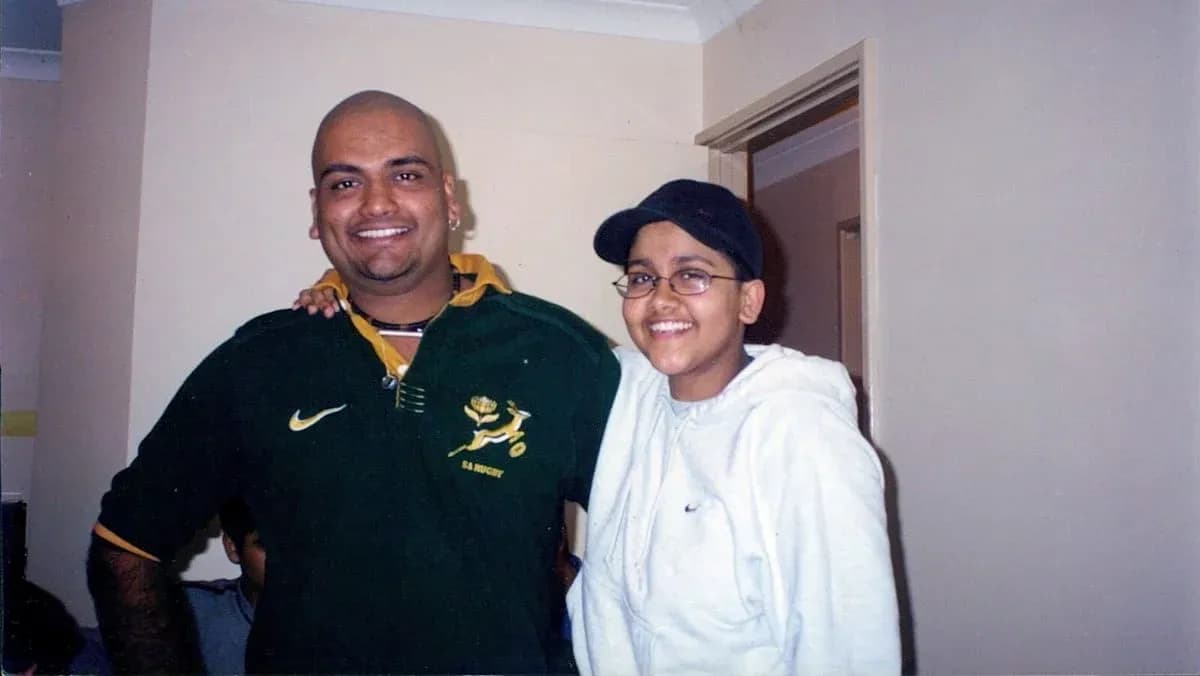
To the cricket world, he was the coach who had thrown himself into building the game in Malawi, a former Singapore international and SEA Games gold medal-winning coach. To his older sister Prema, he was still the “cool kid” from Neptune Court – the boy who never punched down, the first friend she ever had.
He was 48, living in Blantyre, Malawi’s second-largest city, when unknown assailants killed him at his home in May 2025. His car and wallet were taken. Little else, the family would discover, was clear.
“I was just in shock,” said 42-year-old Prema from Melbourne, where she now lives. “My father used to say the biggest curse is losing your child, and all I could think of was my parents. I didn't really care about myself.”
The thought looped in her head: How do we come back from this?
A family scattered, and a call from Africa
The Menon siblings had grown into adulthood like “orbiting satellites”, as Prema put it. She in Australia. Arjun in Africa, having moved to Malawi in 2020 to help lift a fledgling cricket community. Their younger sister stayed in Singapore.
The distance felt manageable, even ordinary, until that call.
Arjun’s father spoke to him daily and knew his son as a man rooted in his adopted home. The coach of Malawi’s national cricket team, he was, in his father’s words, “very well loved in the community”. He had never complained of feeling unsafe. He loved the place.
So when news filtered through that he had been attacked at 2am, the family clung to the idea that the attackers must have been strangers. Anything else was too hard to process.
Prema flew to Malawi, an 18-hour journey from Singapore to a landlocked country she barely knew. She stayed around 10 days – long enough to lay her brother to rest, not nearly long enough to understand why he had been killed.
‘They’re still investigating’
Grief quickly ran into bureaucracy.
With little knowledge of local systems, the family asked the president of Cricket Malawi – where Arjun had served as head of cricket operations – to liaise with police. Updates, when they came, were numbing in their sameness.
“They’re still investigating.”
Weeks turned into months. The words did not change.
The family turned to Singapore’s Ministry of Foreign Affairs, only to learn that Singapore had no diplomatic representation in Malawi. The nearest embassy sat in South Africa. MFA could help with liaison and practical matters like undertakers, but it could not investigate a death or file a police report on the family’s behalf.
Prema went wider. She approached the Singapore Police Force and several Members of Parliament. Singapore police said they had contacted authorities in Malawi and would provide assistance within the bounds of Singapore law if a request came from there. As of Aug 31, no such request had arrived.
Repeated queries from CNA to Malawi’s police went unanswered. MFA declined to comment.
For the Menons, the silence grew heavier than the initial shock.
“It is so hard for me to sit here and know that me, my father especially, my sister and my late mother suffered this sort of violation, and nobody has the answer for it,” said Prema, now an operations director at a non-profit organisation. “I just want someone to answer for this crime, the person who did it. They shouldn't be able to walk around like nothing has happened.”
Grief on pause, then a slow push forward
Six months after Arjun’s killing, another blow landed. In December, Prema’s mother died.
The hunt for answers, already exhausting, had to pause. The family was now grieving two losses, with one of them wrapped in mystery.
Only in July did Prema pick up the thread again, this time dialling Malawian officers herself. One officer told her he had sent a report to the Singapore mission months earlier. When she finally received it through MFA, the date told a different story: Jul 31, after her call.
The report itself was thin. No new leads. Just the familiar line that police were still investigating.
Then, in August, a flicker of movement. A new investigating officer informed her that CCTV footage and call logs had been checked. Nothing had surfaced.
It was not the breakthrough she wanted. But it was proof that the file had not been shoved to the back of a drawer.
Even so, she remains troubled by how little had reached them unprompted. The family had formally identified themselves to Malawi’s police through MFA, yet most of what they learned came from her own persistence.
She speaks of a maze without signposts – no clear sense of which department to approach, which door to knock on.
“I just think we need help. There's something missing here to get us to the next stage, and I don't think a private citizen can do it on their own.”
Turning to Instagram, and to others like her
In July, Prema did something new: she took the search public.
She started documenting the case on Instagram, laying out the timeline, the dead ends, the questions. The posts were part call for accountability, part survival mechanism.
“Right now, if you're unlucky enough to lose someone in a country without a Singapore embassy ... you figure it out as you go, through calls, emails, and a lot of trial and error, the same way I did,” she wrote.
Her point was not to blame any one person or agency. It was to highlight a gap – a system built for citizens living in familiar hubs, not for those who, like her brother, go off the beaten path to work and live.
As more Singaporeans fan out to places without embassies, she believes stories like hers will not be rare.
The social media account has become a form of therapy. A way to process not just the past, but the future that disappeared with Arjun.
“He was there from the very beginning. He's my first friend, your sibling,” she said. “It's very different from the loss of my mum because a loss of a sibling is like losing a part of your body. Like it's no longer there.”
The response surprised her. Her inbox filled up with messages from people whose lives Arjun had touched. Some sent five-minute voice notes. Others wrote about how a coach, a teammate, a friend had changed their path.
A legacy on the field, and beyond it
At the end of August, those memories spilled onto the field.
Friends organised a charity cricket and football tournament at Singapore Cricket Club in his honour. By Sep 14 evening, more than S$13,000 had been raised on Give.Asia.
Most of the money will go to Maoni Orphanage in Malawi and the Vivekananda Cultural Centre in Singapore – two places that mirror Arjun’s split life between his adopted home and his roots.
On paper, his sporting résumé is clear. Former Singapore national player. The coach who led Singapore to a gold medal at the 2017 SEA Games. The man who moved to Malawi to help build a national programme from the ground up.
But Prema wants the story to go deeper than medals and job titles.
She wants people to remember the way he lived: the intensity with which he loved, the instinct to befriend everyone, the refusal to punch down.
“Hindus, we believe that when your time is up, when your purpose is done in this world, you'll be called back. That's how we view it,” she said. “Sometimes I like to believe that, but when I hear these stories, it's very hard to believe because I feel like he has so much more to do.”
Arjun once told their father he wanted to buy a farm when he retired. That dream now belongs to the long list of things that will never happen.
What remains is a sister’s stubborn hope.
“Lastly, my hope is that as much as Arjun loved Malawi, I hope some of that love is returned,” she said.
For a man who poured himself into a country and its sport, the question hangs in the air: will the place he chose ever give him the justice he deserves?