Ashes Exile in 2027: The Decision That Changed Cricket
The north of England’s Ashes exile in 2027 can be traced back to a single decision: the late switch that took an Australia Test away from Southampton and handed it to Headingley in 2023.
That call, made under a now-abandoned system, has reshaped the map of one of cricket’s great contests.
A deal that changed a decade
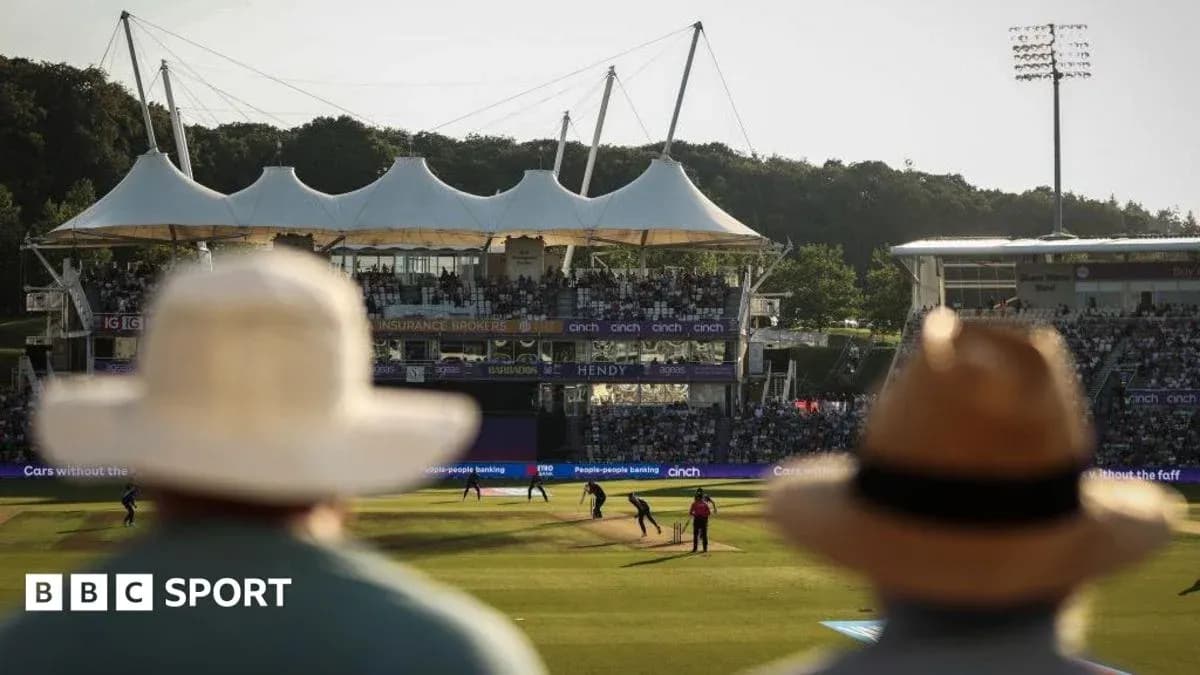
Hampshire’s Ageas Bowl was originally slated to host Australia in 2023. The venue had finally been lined up for a slice of Ashes history, only for the fixture to be moved to Leeds. Headingley, scene of Ben Stokes’ miracle in 2019, got another chapter. Southampton were left with a cheque.
Hampshire received more than £1m in compensation from the England and Wales Cricket Board (ECB) for losing that Test. The real pay-off, though, came later: an Ashes Test in 2027, guaranteed.
That promise, locked in after the 2023 reshuffle, is why there will be no men’s Ashes Test in the north in 2027. Old Trafford and Headingley, two of the most storied Ashes grounds of recent decades, both miss out while Southampton finally takes its turn.
Neither Hampshire nor the ECB has commented publicly on the detail of the agreement, but the consequences are now clear.
From bidding wars to rotation
The 2023 Ashes venues were announced back in 2018, during Colin Graves’ spell as ECB chair. Those matches were allocated under the old “competitive tender” model, in which grounds effectively bid for marquee fixtures with financial packages and hosting proposals.
It was a system that rewarded deep pockets and aggressive bids, and it piled pressure on counties to stretch their finances to secure the biggest games. It also left the ECB exposed to exactly the sort of late change that triggered the 2023 switch.
Graves, now Yorkshire chair and long associated with Headingley, has insisted he played no part in where the Ashes went.
“I always left the room when their recommendations were discussed by the board. I was not involved,” he told the Guardian.
Since then, the ECB has ripped up that approach. A rotation model now decides who gets what, running through to 2031. The 18 first-class counties and Marylebone Cricket Club backed the change, arguing it offered a more balanced, predictable spread of marquee fixtures.
The new system has to live with the legacy of the old one, though. The compensation and subsequent promise to Hampshire sit like a fixed block in the schedule, forcing other pieces to move around it.
Southampton’s rise, the north’s wait
Next year, the Ageas Bowl will stage a men’s Ashes Test for the first time. It is a landmark moment for Hampshire, whose ground has long been in the conversation for bigger occasions without quite breaking into the Ashes club.
At the same time, Old Trafford and Headingley, both used in the previous two home Ashes series, fall out of the men’s rota for 2027. The most northerly men’s Ashes Test in the upcoming series will be at Trent Bridge in Nottingham.
The northern strongholds are not completely frozen out. Headingley will stage the sole women’s Ashes Test next year, a significant fixture in its own right and another sign of how the women’s game is being woven into the traditional calendar.
Looking further ahead, the ECB has already committed to restoring the north’s place in the men’s Ashes from 2031. At least one Test in every home series will be played there, with Southampton set to host a men’s Test in every other Ashes.
The pattern is set: a southern newcomer now embedded in the rota, the north guaranteed a place in the long term, but forced to swallow a gap that stems from a decision made for the last Ashes, not the next one.
For fans in Leeds and Manchester, the wait for Australia’s return will feel longer than it looks on paper. For Southampton, 2027 will be the year the Ashes finally arrive – four years late, and at the end of a chain reaction that began with a single, decisive switch.