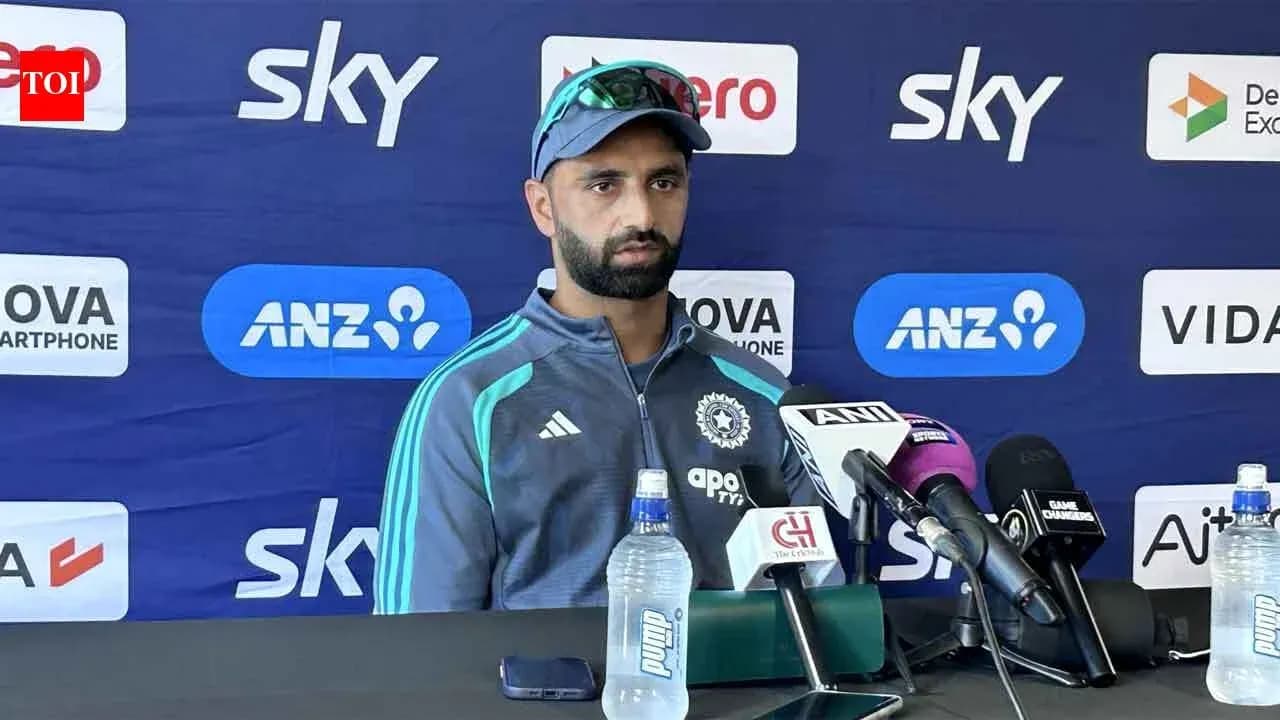
Auqib Nabi's Journey: From Ranji Star to New Zealand ODI
In a country obsessed with raw speed, Auqib Nabi cuts a slightly different figure. The Jammu and Kashmir quick knows the radar gun turns heads, but as he prepares for the fourth ODI against New Zealand at Bay Oval, he is clinging firmly to something less glamorous: his methods.
“Having pace is good but I back my skills,” he said on the eve of the Mount Maunganui game, his first international series outside Asia already offering a crash course in adaptation.
This tour has moved quickly for him. The series opened quietly: 0 for 33 in the first ODI, a five-wicket win for India under the DLS method, and not much for the highlights reel. No drama, no headline spell, just a debutant trying to find his feet in unfamiliar conditions.
The response came in the second match.
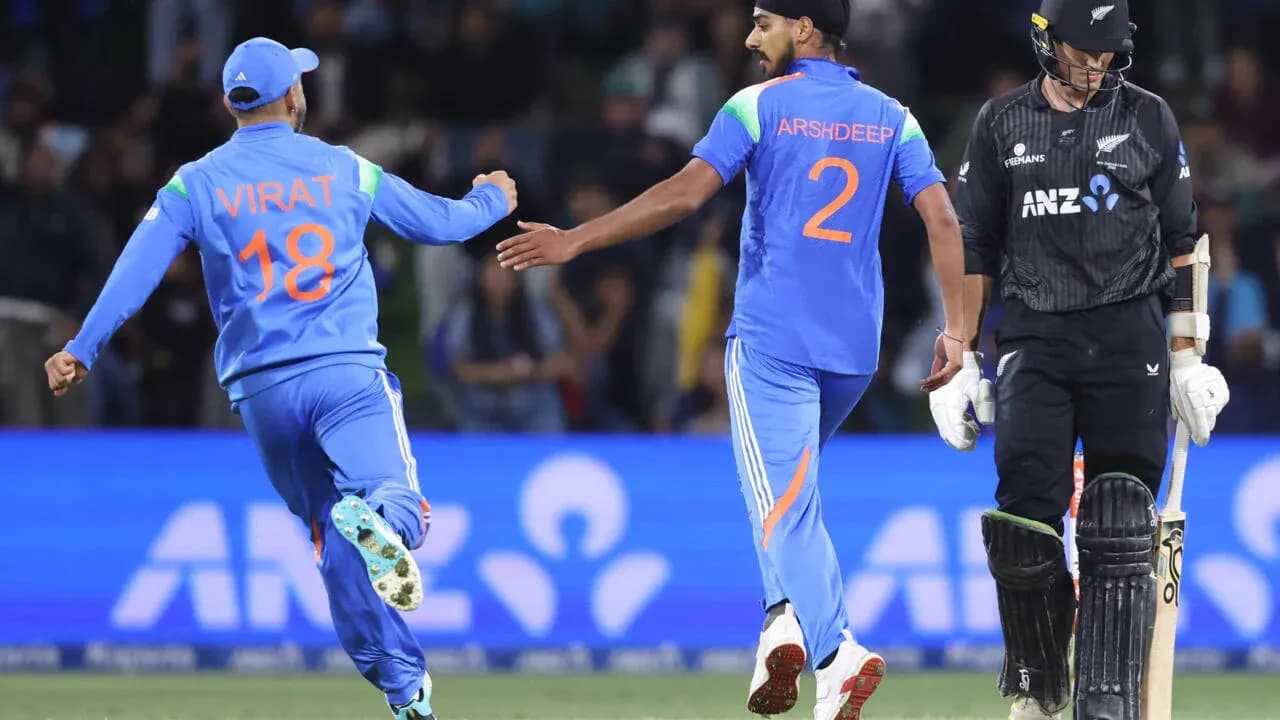
With New Zealand chasing and the game tightening, Nabi ripped out both openers, Will Young and Tim Seifert, to tilt a tense contest India’s way. Those two wickets framed a four-run win on DLS, and suddenly the “Baramulla Express” looked right at home on foreign tracks.
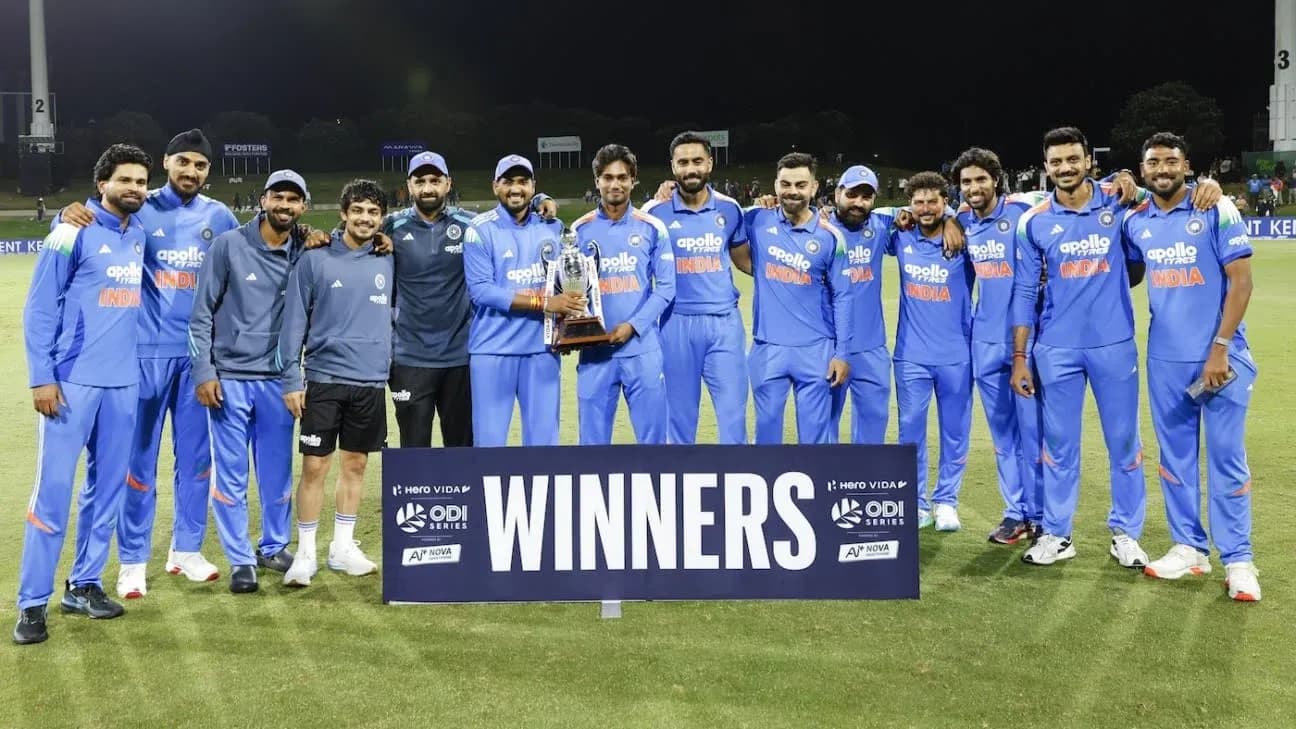
The third ODI in Hamilton never really got started, washed away by persistent rain. India still lead the five-match series 2-0, but for Nabi, the abandoned game meant one thing: more time to think about how to bowl in a country that demands subtlety from fast bowlers.
Cracking the New Zealand code
This is Nabi’s first trip to New Zealand. The postcard views and cool breeze may feel familiar to someone from the Kashmir valley, but the cricket is another matter.
“You need to rely more on seam here. Use scrambled seam because swing can be dealt with,” he explained, cutting straight to the heart of what separates these pitches from those back home.
He is learning quickly that it is not enough to hit the deck hard. On good batting surfaces, one loose over can undo half an hour of discipline.
“You need to bowl well no matter how good or flat the pitches are. When wickets are good, you need to bowl with discipline because you can go for runs,” he said.
There is a think-tank within the attack as well. Nabi spoke of regular conversations with fellow quicks Arshdeep Singh and Anshul about how to handle drop-in pitches, the kind that can look lifeless and then suddenly spring to life.
“We keep discussing amongst ourselves about plans for drop-in pitches. With Arshdeep and Anshul both,” he said, underlining that this is a young group trying to decode conditions together rather than leaning on a single seasoned campaigner.
The weather, at least, offers a small comfort. “Weather back home and here is similar. Opposition and level of cricket is different,” he noted. The ball feels familiar in the hand; the quality at the other end of the pitch does not.
From Ranji dominance to India blue
Nabi’s journey to this dressing room was not built on hype. It was built on hard spells on cold mornings in domestic cricket.
Across the 2024-25 and 2025-26 Ranji Trophy seasons, he collected 104 wickets, a staggering haul for a fast bowler from Jammu and Kashmir. The 2025-26 campaign was the breakout: 60 wickets in 17 innings at an average of 12.65, numbers that would stand out in any era.
Those wickets did more than pad a stat sheet. They powered Jammu and Kashmir to a maiden Ranji Trophy title, a landmark moment for a region long starved of such headlines. Nabi walked away with the Player of the Tournament award, his name suddenly central to every selection meeting.
He assumed the next step would be in whites.
“I was expecting a red-ball call-up before white-ball cricket, but this experience will also be very helpful. And then also staying with the Test team,” he said, revealing a fast bowler’s traditional dream: the red ball, the long spells, the grind.
The selectors, though, have handed him a white-ball audition first. If anything, it might sharpen him further for the day he does get that Test cap.
Pride, perspective and a point to prove
For all the talk of seam positions and drop-in pitches, there is a simpler emotion driving Nabi.
“Very happy to play for India. Khelna India ke liye bahut badi baat hai. Mera bhi wohi tha,” he said, slipping into the language of home to express what the India jersey means to him.
He has heard the conversations about facilities in smaller centres, about infrastructure and opportunity. His answer is blunt.
“Whenever people say about facilities, I always say do your best and things will fall in place,” the pacer said.
It is not bravado. It is the worldview of someone who has already dragged his state side to unprecedented heights and now stands at Bay Oval, ball in hand, trying to repeat the trick on a larger stage.
The pace is there. The nickname is there. The early wickets in New Zealand are on the board.
Now comes the real examination: can the “Baramulla Express” turn a promising start into a long, hard-running international career, built exactly the way he insists he will bowl tomorrow—on his own terms, with his own skills, and without blinking?