Indonesia Builds Bali International Oval for Cricket's Future
In the shadow of Bali’s volcanic ridges and postcard beaches, Indonesia is quietly building something far more permanent than a holiday memory.
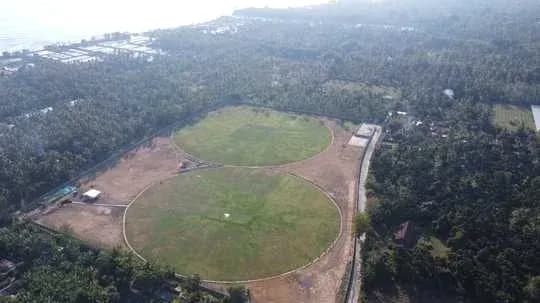
Cricket Indonesia has broken ground on the Bali International Oval (BIO) in North Bali, a two-oval complex designed to become the country’s flagship venue for international cricket and a year-round high-performance base. Not a pop-up tournament ground. A proper home.
Two full-sized turf ovals anchor the project, both already taking visible shape. The footprints are in place, centre-wicket blocks are emerging, and the bones of a serious cricket facility are now on the landscape. What comes next will decide how high Indonesia can climb.
The upcoming phase is the hard, technical graft that separates a decent venue from an elite one: wicket maturation, surface refinement, and the detailed work on drainage and irrigation that allows a ground to survive both tropical downpours and relentless heat. Specialist ground machinery is on the way, along with dedicated high-performance spaces, team facilities and broadcast infrastructure to bring the venue to the wider world.
At the heart of the complex will sit the Garuda National Cricket Academy, which will operate as the high-performance centre within BIO. This is where Indonesia’s senior and age-group teams will train, and where visiting international teams, academies, coaches and curators will be welcomed. For a country still emerging on the global cricket map, that kind of traffic matters. It means ideas, standards, and expectations flowing in and out of Bali all year.
Cricket Indonesia’s ambition stretches beyond national borders. The federation sees BIO as a potential high-performance hub for the entire Asia-Pacific region, a place where training, sports science, coach education, athlete recovery and tournament operations can live under one roof. If that vision lands, Bali stops being just a neutral tourist destination and starts becoming a strategic stop on the cricketing calendar.
The spark for this project can be traced back to January 2024, when the Asian Cricket Council held its Annual General Meeting in Bali and Indonesia was formally welcomed into the ACC family. Jay Shah, then ACC President, played a central role in those proceedings and, for local administrators, the message hit deeper than a simple membership badge.
“When the ACC came to Bali in 2024, the message I took away was bigger than membership. Inclusive leadership had opened a pathway for Indonesia. I felt our responsibility was to build the infrastructure that would allow our players to use that opportunity for generations,” says Abhiram Singh Yadav, chairman of Cricket Indonesia.
That word — “pathway” — now runs through every part of the BIO project.
The timing is no accident. Cricket is pushing into new markets and, with the sport confirmed to return to the Olympic Games, the stakes have changed. Countries that once flirted with the game now have a concrete target to sell to their young athletes.
BIO is being developed with that horizon in mind. Cricket Indonesia wants the facility to underpin an Olympic pathway for Indonesian players, turning what was once a distant dream into a structured route from local nets to global stages. The hope is that the same venue will also pull in international teams and development programmes, using Bali’s natural appeal to drive competitive cricket and high-level preparation.
“The Olympic return changes the imagination of cricket. A young Indonesian should be able to dream not only of international cricket, but of an Olympic pathway. Our infrastructure must be ready for that era,” Yadav says.
The ovals are still growing, the wickets still hardening, the machinery still to arrive. But the intent is already clear: when the next era of global cricket begins, Indonesia does not plan to be watching from the boundary rope.