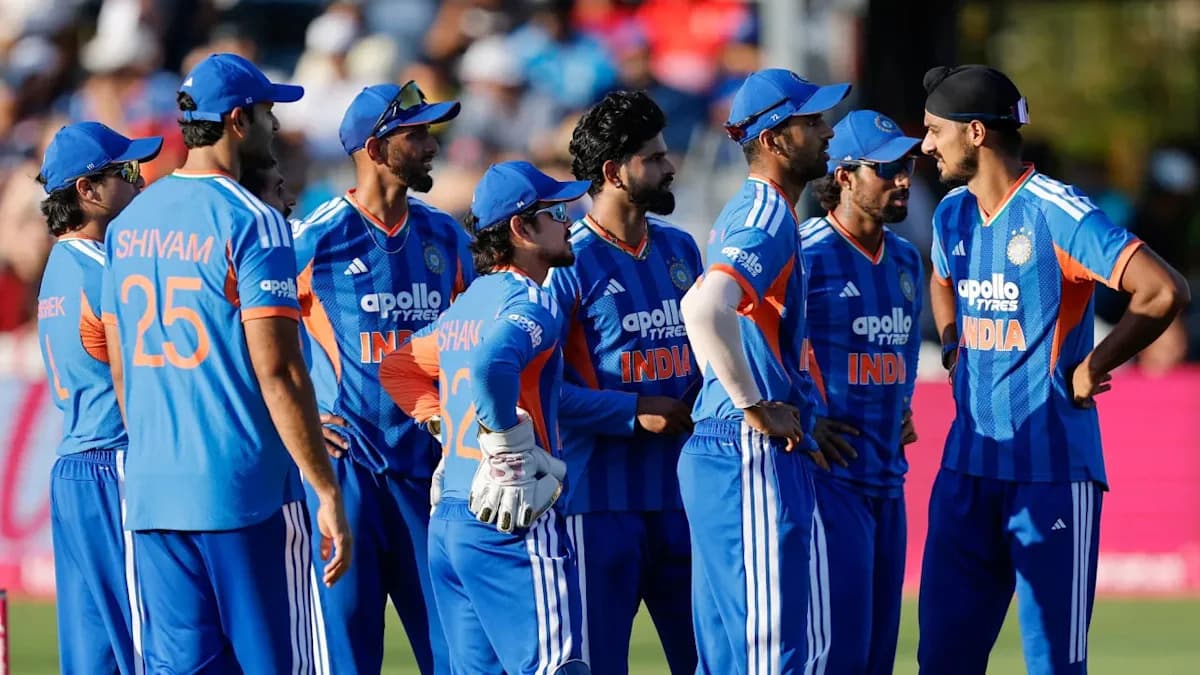
Bumrah’s Record Maiden Over Leads India to Victory Against Afghanistan
Jasprit Bumrah walked in under the Delhi lights and did what he so often does: he shut the game down before Afghanistan could even start it.
Ball in hand for the first over of the second T20I at the Arun Jaitley Stadium, Bumrah hit his length, hit his rhythm, and hit another milestone. Six balls, no runs. Another maiden. His 13th in T20I cricket.
In a format built for chaos, he continues to manufacture silence.
Bumrah’s quiet domination
That first over did more than just peg Afghanistan back. It rewrote a line in the record books. With maiden No. 13, Bumrah moved clear of Zimbabwe’s Richard Ngarava to become the bowler with the most maiden overs in T20Is among players from Full Member nations.
Ngarava’s 12 had stood as the benchmark. Bumrah went past it in his 98th T20I, a number that underlines just how long he has been operating at the sharp end of this format.
On the overall list, he now sits joint-fourth. Level with Thailand’s N Senamontree, who has also bowled 13 maidens but in just 59 matches. Ahead of them is Kenya’s SO Ngoche with 16, and out in front are Uganda’s F Nsubuga and Rwanda’s Muhammad Nadir, locked together on 19 maidens apiece.
The names above Bumrah tell their own story. Associate stalwarts who have built careers on discipline and craft. Yet among the global heavyweights, amid the glare of Full Member cricket and its relentless schedule, no one has squeezed out more runless overs than India’s spearhead.
In an era of bigger bats, shorter boundaries and ever-climbing run rates, Bumrah’s ability to still carve out maidens feels almost anachronistic. But it is also what makes him priceless.
India cruise as batters cut loose
Once Bumrah and the rest of the attack had done their job, India’s chase turned into a statement of intent.
Afghanistan’s 159 for eight, built under pressure, always looked light. Nitish Kumar Reddy, with figures of 3 for 24, and Arshdeep Singh, with 2 for 35, had already dragged the visitors back whenever they threatened to break free. Every time Afghanistan tried to accelerate, an Indian seamer found a way to break the stand or choke the scoring.
Then the batters arrived and tore into the target.
Abhishek Sharma set the tone with a blistering 39 off just 19 balls, peppering the stands with four sixes and two fours. His assault ripped the tension out of the chase before it could settle, turning 160 into a stroll rather than a scrap.
Sanju Samson then took over and stole the spotlight. His 22-ball 57 was pure T20 theatre: clean striking, fearless intent, and an innings that never allowed Afghanistan’s bowlers a moment to reset. Every time they missed, Samson punished. Every time they tried something different, he was already a step ahead.
At the other end, Ishan Kishan finished things off with calm authority. His unbeaten 38 from 23 balls, laced with three fours and two sixes, ensured there would be no late wobble. India surged to 163 for 3 with 31 balls still unused, a seven-wicket win that felt even more emphatic than the numbers suggest.
Series in the bag, eyes on the horizon
The victory sealed a 2-0 lead in the three-match series, with one game still to play. The batting looked ruthless, the new-ball bowling incisive, and the old constant — Bumrah’s control — remained intact.
On a night when India’s top order flexed its muscle, it was that first, flawless over from Bumrah that set the tone. Another maiden, another record, another reminder.
In a format obsessed with boundaries, India still lean on a bowler who makes dot balls feel like events. How much more damage can he do once the big tournaments roll around again?