Cape Town Sandpaper Scandal: Khawaja’s Claims Ignite New Controversy
The aftershocks of Cape Town’s sandpaper scandal are rumbling louder than ever, eight years on, and this time the fault line runs straight through the Australian dressing room.
Usman Khawaja’s explosive claim in his new book – that “all of us” knew about the plan to tamper with the ball in South Africa – has drawn a fierce response from a man who was in the room, but insists he was nowhere near the plot.
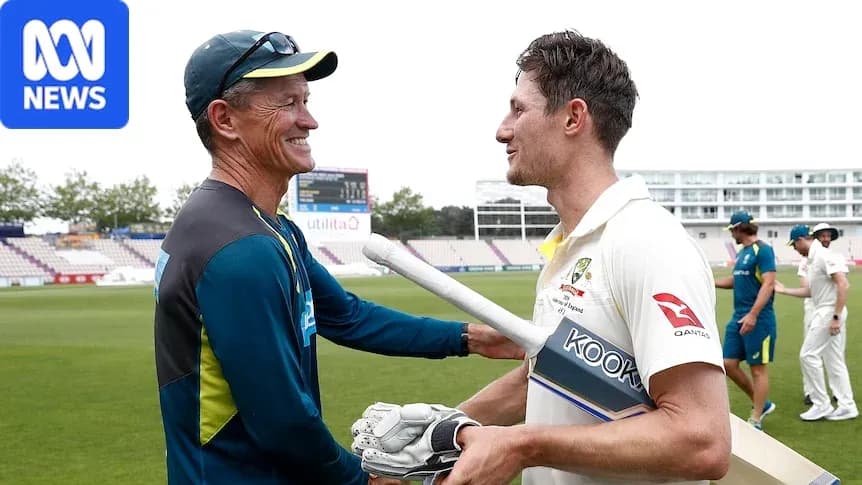
Graeme Hick, Australia’s former batting coach, has branded Khawaja’s broad-brush allegation “absolutely false”, reopening old wounds and dragging David Warner back into the public fight with Cricket Australia.
Hick hits back
Hick, who served on Australia’s coaching staff from 2016 to 2020, joined Mitchell Starc and former head coach Darren Lehmann in rejecting Khawaja’s version of events from the 2018 tour.
Speaking to the Sydney Morning Herald, the former England batter did not hide his frustration at being swept into the narrative.
“I have seen the various statements around the coaches and I'm very disappointed with the broad nature of them,” he said.
He then zeroed in on the line that has set off this latest firestorm.
“Khawaja puts it simply: ‘It was all of us. Not the batters, not the bowlers, not the staff. All of us’. To me, what Khawaja is implying here is absolutely false.”
Hick insisted he had no knowledge of any ball-tampering discussions in Port Elizabeth or Cape Town.
“In regard to any discussions around the ball-tampering in Port Elizabeth or Cape Town, I will say in true honesty that I did not hear or know anything.
“My first knowledge of all this was, like many, when it appeared on the big screen in Cape Town as I was sat on the outside balcony at the time.”
For Hick, the scandal remains something he watched unfold on a stadium screen, not a scheme he helped shape behind closed doors.
Warner backs Khawaja – then goes on the attack
If Hick hoped his intervention might cool the temperature, the opposite happened.
Khawaja’s fellow opener David Warner, one of the three players who carried the can in 2018 alongside captain Steve Smith and Cameron Bancroft, has publicly backed his former teammate’s account.
Responding to Khawaja’s revelations, Warner had already declared: “It's 100 per cent accurate what you've said. Now everyone knows the truth.”
Hick’s denial dragged him back into the fray.
Reading the coach’s comments, Warner took to social media again, this time not just defending Khawaja but taking aim at Cricket Australia and Hick’s very presence in the setup.
“Let's get the facts straight,” Warner wrote.
“Graeme Hick was only appointed because Cricket Australia was unwilling to pay Michael Di Venuto what he deserved.
“As players, we valued Michael so highly that we even offered to contribute from our own salaries to retain him.
“These discussions were taking place during the New Zealand tour. That alone speaks volumes about how highly we regarded him and how determined we were to keep him involved. Adds to why Graeme has spoken!!”
The implication was clear: in Warner’s eyes, Hick was never truly embedded in the heart of the team in the way Di Venuto had been, and that context matters when judging who knew what in South Africa.
A scandal that refuses to close
What began in 2018 as a disgrace played out in real time on a giant screen in Cape Town has become something else entirely: a long-running battle over memory, responsibility and truth.
Khawaja has chosen this moment to widen the frame, arguing the blame never belonged solely to three men. Hick, Starc and Lehmann have pushed back, unwilling to be recast as silent accomplices. Warner, freed from the constraints of an international career, is now firing from the sidelines with nothing left to protect.
The bans have long since expired. Careers have moved on. But the question at the heart of “sandpapergate” clearly has not: who really knew, and who is prepared to say so?