Chadd Sayers Challenges Cummins' Sandpapergate Denial
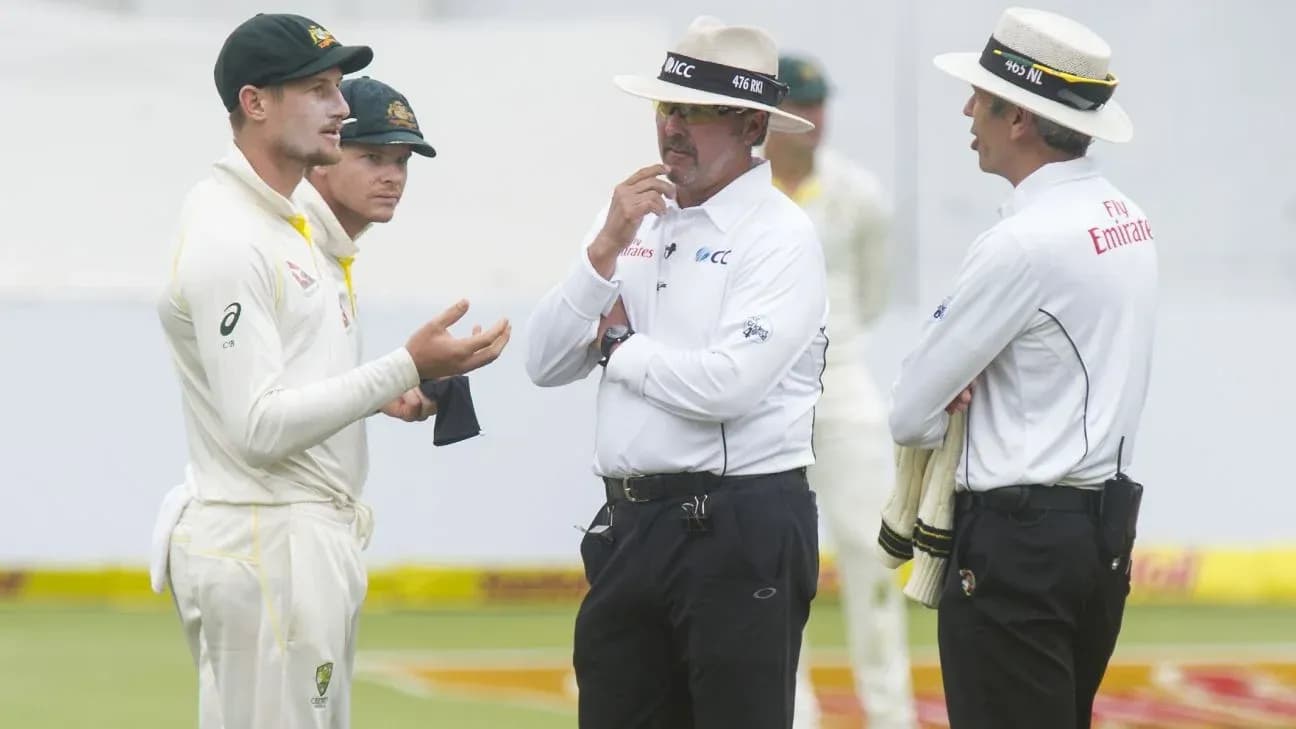
Chadd Sayers only played one Test for Australia. One cap, one game, Johannesburg 2018. Yet eight years on, his voice has suddenly become one of the most explosive in the long, bitter afterlife of sandpapergate.
Speaking on SEN radio ahead of the second ODI in Adelaide, the former seamer directly undercut Pat Cummins’ emphatic rejection of Usman Khawaja’s claims that “everyone” knew about the use of sandpaper in South Africa.
"I'm comfortable sitting here right now… that I believe that everyone in that side knew what was going on and what was being used," Sayers said. No hesitation. No softening. Just a clear statement that pushes the scandal back into open flame.
‘Everyone knew’ – and a meeting Cummins says he can’t recall
On Friday, Cummins fronted a 68‑minute press conference and drew a hard line. If Khawaja was saying the whole team knew about sandpaper, Cummins insisted, he was “100% wrong”. He also accused his former teammate of being “casual with each other's lives and reputations”.
Sayers has now walked straight into that space and planted his flag.
He recalled a lengthy team meeting in Cape Town after the ball-tampering was exposed, a gathering he estimates lasted “60 to 90 minutes”, where the idea of taking collective responsibility was discussed.
"After the occurrence in Cape Town we all sat in the change-rooms after that day's play, probably for 60 to 90 minutes, and just talked about what had happened and guess where to next," he said.
That detail cuts directly across Cummins’ claim that he could not remember any such meeting about a joint stance.
Sayers said he “vaguely” remembered the two players Khawaja mentioned in his book as not wanting to sign up to a collective position, but he refused to name them. He was careful on that front, but not on the central question: his belief that knowledge of the plan was shared.
"I think I've probably been portrayed in the media as taking Usman's side because I've spoken out and acknowledged that that was probably the truth, but I'm neutral in all this," he said. "I'm just trying to tell my side of the story and what I believe happened."
Port Elizabeth: the sandpaper, the plan, and the 12th man
Sayers’ most vivid recollections come from Port Elizabeth, where Cameron Bancroft was later revealed to have used sandpaper on the ball during the third Test.
"When he first became aware" of sandpaper being used? Port Elizabeth, he said, backing the now widely accepted timeline that it was used in two Tests.
"There was discussions in the changing-rooms about how were we going to get the ball to reverse, and what was going to be used," Sayers said.
"I just knew that it was going to be used, as I believe everyone else did. I guess the plan was that Cameron Bancroft was going to take that out, the ball was going to be dropped on the ground by the umpires and he was going to go about his business."
Then came the detail that places Sayers directly in the heart of the operation – not as a planner, but as part of the clean-up.
He said that once Bancroft had been spotted using the sandpaper, it was handed to him, the 12th man, to take off the field at Port Elizabeth.
"[The sandpaper] was given to me to take off, so that wasn't planned or anything, I was just the player who took the drinks out at the time."
For all the years of denials and narrowed responsibility, that image is stark: a fringe seamer, playing no part in the Test itself, asked to remove the incriminating strip from the scene.
Could the bowlers really not know?
One of the most contested questions since 2018 has been whether Australia’s fast bowlers knew how the ball was being manipulated. Sayers, himself a swing bowler, didn’t dance around that either.
"I would have thought as a team, when you're trying to get the ball to reverse, that everyone would buy in because if one little thing goes wrong in the field to the ball, it stops it from reversing straight away," he said. "So, yeah, as I said, I'm pretty confident to say that everyone knew."
That view lands squarely in the middle of a storm that has again pulled in David Warner and reopened old wounds about the original investigation.
Warner renews attack on CA investigation
While Sayers was challenging Cummins’ version of events, Warner was back on social media, sharpening his long-held criticism of Cricket Australia’s handling of the affair.
On Saturday he had claimed he was not aware that Josh Hazlewood, Nathan Lyon and Mitchell Starc had been interviewed as part of the 2018 inquiry. He has since slightly adjusted that line – but only to reinforce his central complaint that he was kept in the dark.
"Just to clarify 'As far as I am aware' was the POINT," Warner wrote on Instagram. "I was never told the bowlers had been interviewed or provided statements. That information would've been pretty useful when I was forced to make decisions back in 2018. Why weren't we given all the evidence by CA?"
He has previously labelled CA’s investigation “botched”. On Sunday, he pushed again at the idea of a “cover-up”, demanding to know why he and others weren’t shown everything the governing body had gathered.
The questions are no longer about whether sandpaper was used. That part has been confessed, punished and replayed endlessly. The real fight now is over who knew, who decided, and who has carried the can.
Cummins under fire for going at Khawaja
Sayers admitted he only watched the start of Cummins’ press conference, but even that was enough for him to bristle at the captain’s attack on Khawaja.
He said he "didn't like how he did go at Usman", a simple line that underlines the growing unease among some former teammates at how quickly this has turned personal.
Khawaja’s book has dragged the scandal back into the headlines. Cummins’ response tried to shut it down. Sayers has now re-opened it with specific, pointed memories from inside the dressing room. Warner, from the fringes of the current setup, is again accusing the governing body of holding back evidence.
Eight years on from Cape Town, the sandpaper itself is long gone. The stain on Australian cricket plainly is not.