Cricket Australia Concedes Shared Truth Unlikely in Sandpaper Scandal
Cricket Australia has effectively conceded that the game’s most infamous recent scandal may never have a shared truth.
Eight years on from the sandpaper Test in Cape Town, the governing body says the wildly different accounts now pouring out from former players show there is “very unlikely” to ever be an agreed version of events unless new, hard evidence emerges.
The latest flashpoint came on Sunday, when former Australia seamer Chadd Sayers backed Usman Khawaja’s explosive claim that the entire Test side knew about the ball-tampering plan.
“I’m comfortable sitting here … that I believe that everyone in that side knew what was going on and what was being used,” Sayers told SEN radio. He stressed he was “neutral” and “not taking sides”, but his recollection sits squarely with Khawaja’s.
It also cuts directly across the captain.
Sayers challenges Cummins’ account
Sayers, part of the 2018 South Africa touring squad and capped once in that series, disputed Pat Cummins’ assertion that there was no team meeting about collective responsibility after the scandal broke.
He remembers it clearly.
“We all sat in the change rooms after that day’s play, probably for 60 to 90 minutes, and just talked about what had happened and where to next,” he said of the aftermath in Cape Town. The conversation, he added, centred on “what had happened, where we stood with that, and how we were going to move forward.”
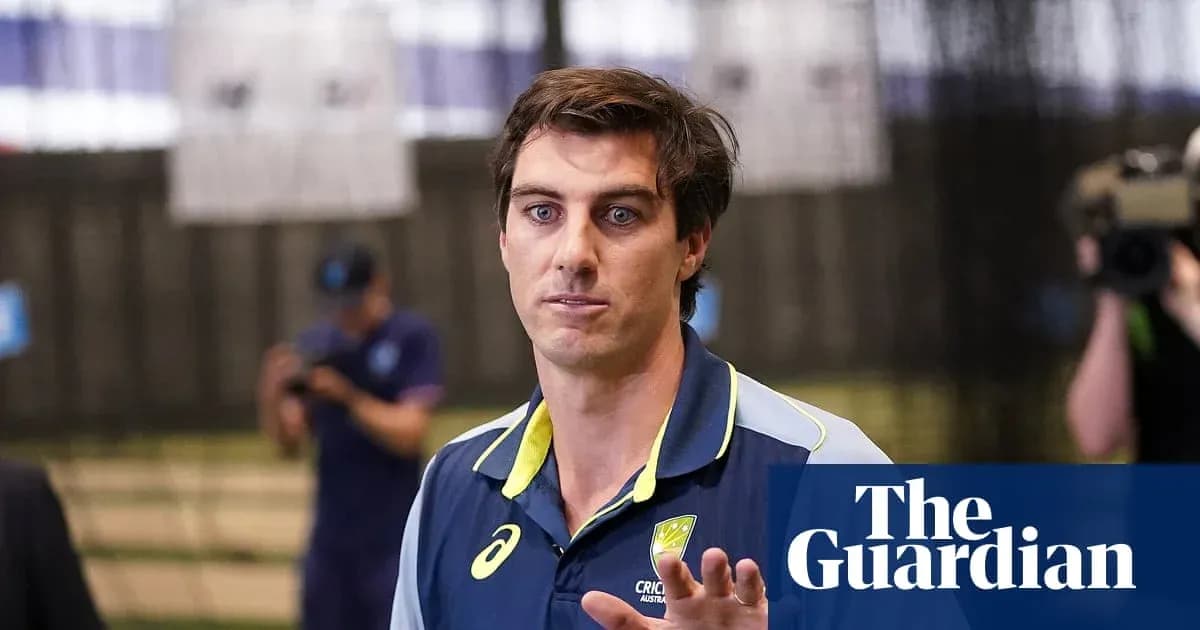
That is a very different picture to the one painted by Cummins, who on Friday dismissed Khawaja’s claims as “complete nonsense” and repeated that he had no knowledge of any plan to tamper with the ball.
Sayers also bristled at the tone of his captain’s response.
Asked about Cummins’ press conference, he admitted it “felt a bit awkward”.
“I didn’t like how he did go at Usman and got personal. I probably get why but I don’t think it needed to happen.”
For Sayers, the reopening of old wounds has brought its own strange relief.
“That series was supposed to be a happy one for me because I debuted the Test after,” he said. “But I guess when something like that happens it always gets drawn back to that conversation and not your debut.”
He described finally speaking openly as a weight lifted. “It’s been hard. Because you’ve got to tiptoe around it and not be able to tell the truth. So it’s a bit of a relief that it’s out.”
Yet he sees no clean way out of the mess.
“I don’t think it’s ever going to settle unless everyone agrees to what happened,” Sayers said. “So in that sense it’s probably not going to settle.”
Cricket Australia braces for more fallout
Cricket Australia responded on Sunday, adopting a measured but telling stance.
“We respect the right of those in South Africa in 2018 to share their version of what they believe happened on that tour,” a spokesperson said.
Then came the line that reveals where the organisation now stands.
“The significant differences in the views expressed continues to demonstrate that it is very unlikely an agreed version of events will be reached without relevant material evidence.”
Translation: unless new documents, footage or records surface, the official story will remain fractured, contested and bitter.
The scandal has roared back into public view on the back of Khawaja’s autobiography, in which he alleges the entire Australian team knew of the sandpaper plot and claims ball-tampering methods had been used previously.
Those claims lit the fuse. Cummins’ rebuttal, Sayers’ intervention and the re-emergence of David Warner have kept it burning.
Warner renews attack on CA
Warner, one of the three players banned in 2018 alongside Steve Smith and Cameron Bancroft, has again turned his fire on Cricket Australia.
On Saturday he accused CA of a cover up. On Sunday he doubled down, using Instagram to argue he was denied crucial information when he accepted his punishment for the Cape Town Test.
“Just to clarify ‘As far as I am aware’ was the POINT,” he wrote, referring to his earlier post. “I was never told the bowlers had been interviewed or provided statements.
“That information would’ve been pretty useful when I was forced to make decisions back in 2018. Why weren’t we given all the evidence by CA?”
His comments followed media reports confirming that bowlers were interviewed as part of CA’s original investigation. Warner’s question is blunt: why didn’t he know that then?
It adds another layer of mistrust between one of Australia’s most polarising modern players and the body that governs the game.
A scandal that refuses to fade
What began in Cape Town as a single act of cheating, caught by television cameras and punished with unprecedented bans, has become something larger: a running argument over who knew what, who has told the full truth, and whether the original investigation went far enough.
Khawaja says everyone knew. Cummins says that’s nonsense. Sayers says he’s relieved to finally say what he believes. Warner says he took the fall without seeing all the evidence.
Cricket Australia, stuck in the middle, now openly concedes that without new material proof, those stories are unlikely ever to align.
The scorecard from Newlands is fixed in history. The narrative around it clearly is not.