Dan Lawrence's Resilience Boosts England Against Pakistan
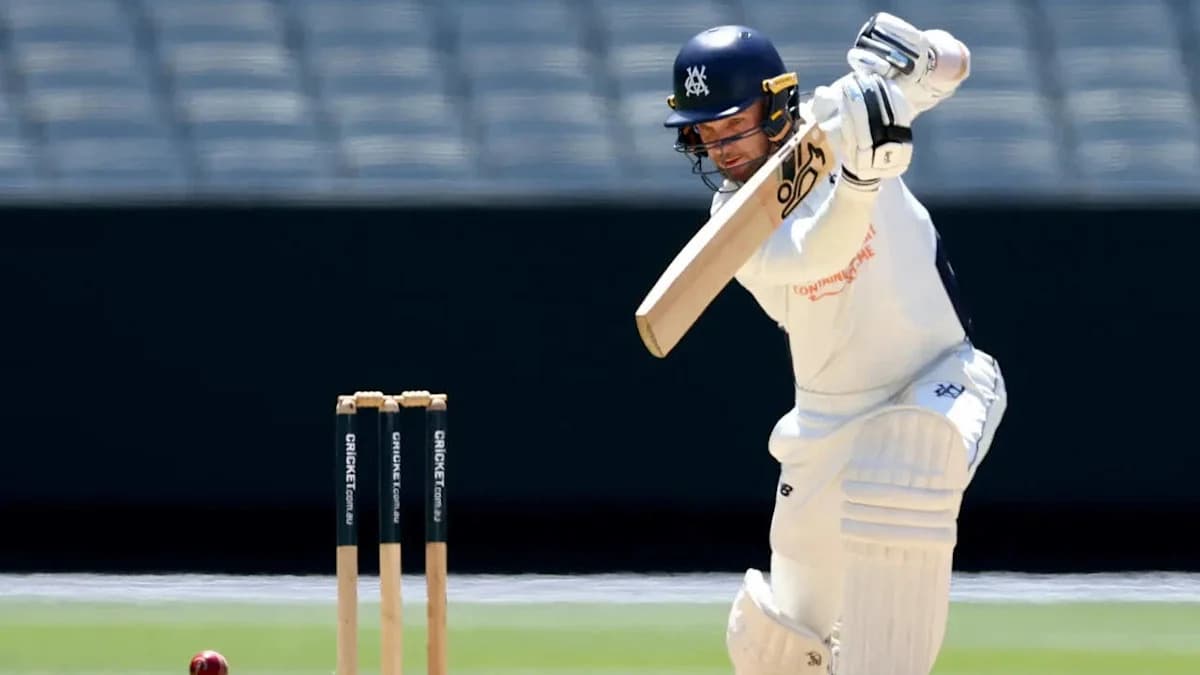
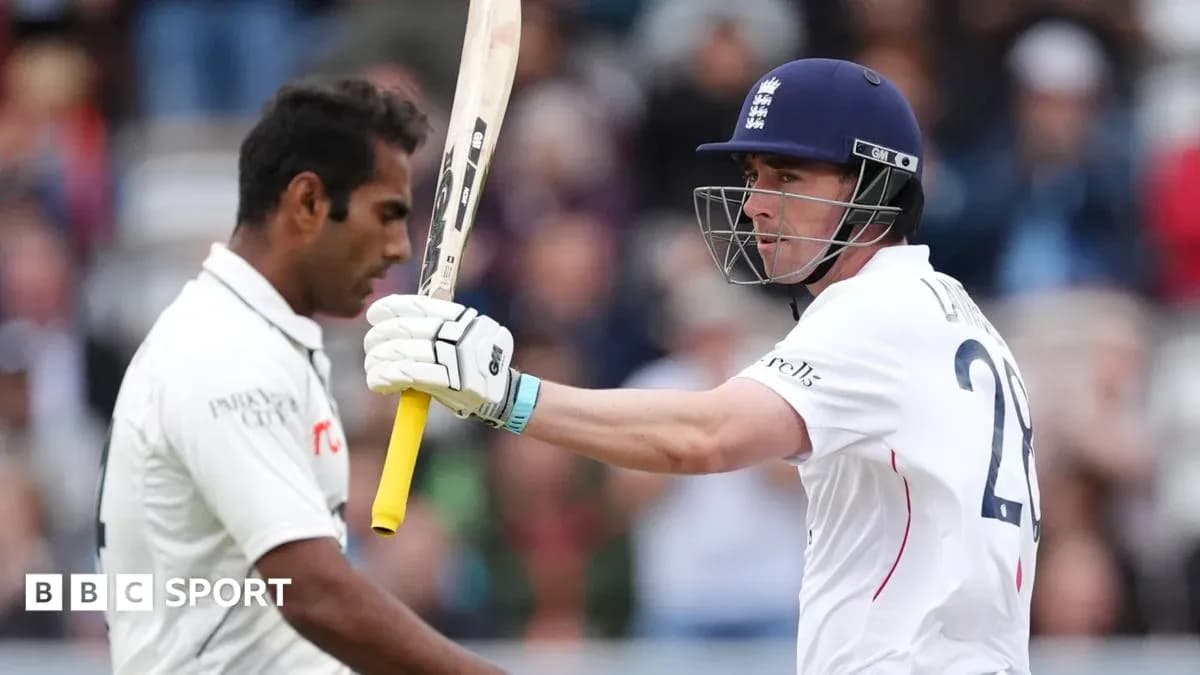
Dan Lawrence dug in, then punched back. On a day when Lord’s felt more like a laboratory for fast bowlers than a stage for batting, the 27-year-old right-hander walked off unbeaten, blooded but unbowed, with 50 to his name and England’s grip on this series tightening around Pakistan’s throat.
By the time the rain, the umpires and the light meters had finished arguing with common sense, England were 177-7 in their second innings, 357 runs ahead. On this treacherous surface, under low cloud and floodlights, that looks far more than a cushion. It looks like a verdict.
Lawrence stands tall in the storm
This is a new England side in more ways than one. No Ben Stokes. A reshaped attack. A batting order still being shuffled like a deck of slightly dog-eared cards. For Lawrence, these are the weeks that decide whether he’s a fringe name or a permanent ink entry.
He batted like a man who understood that.
Resuming on 81-3, England walked into a morning that never really arrived. The ball swung, then seamed, then misbehaved off a pitch that has already stirred muttering in the pavilion. Pakistan’s seamers, especially the ever-relentless Muhammad Abbas, seized the conditions and refused to let go.
Emilio Gay was the first victim of the day and the most unfortunate. Having fought hard to 30 overnight, he lasted four balls on Saturday. The fifth was almost unplayable: Abbas sent down a shooter that barely lifted, skidding through to pin him lbw for 31. Gay could do nothing. His chance to nail down the opener’s spot vanished with one ball that never bounced.
On the balcony, Joe Root shook his head. Gay trudged off, devastated. An average of 23 in his first summer as a Test opener tells its own story, but it does not show the conditions he has walked into. Nor does it change the brutal reality: someone will make way when Jacob Bethell returns from his knee injury, and right now it might be a straight duel between Gay and Lawrence.
Where Gay got the grubber, Lawrence got the opposite: balls that leapt, spat and thudded into his body. He wore them, adjusted, and stayed there.
Harry Brook joined him and, for a time, the pair produced something close to control. Their stand of 45 for the fifth wicket will barely register in the scorebook, but in context it was gold dust. Brook, usually all flowing drives and clean hitting, tightened his game, picked his balls, left well. Then Pakistan struck again.
Abbas found the edge, Muhammad Rizwan did the rest. Standing up to the stumps, Rizwan pulled off a superb take to remove Brook for 34, a dismissal that underlined how hard Pakistan’s seamers had worked to keep their side alive.
That might have been the moment for England to shut up shop. Lawrence chose a different route. After surviving the nastiest of the surface, he began to counter-attack, picking off anything overpitched, driving when width appeared, forcing Pakistan’s lengths to wobble. His fifty, his second half-century in as many Tests, came not as a flourish but as a statement: he can survive, and he can score, when others are flinching.
On this pitch, in these conditions, it was worth far more than the number suggests.
A farce in the drizzle
What should have been a gripping, extended examination of technique and temperament turned into a stop-start scrap with the weather. Only 24.5 overs were possible. The first ball was not bowled until 14:40 BST, and the afternoon dissolved into a pattern of brief passages of play interrupted by drizzle and deliberation.
By 17:08 the players were off for the final time. By 18:30, as the sun finally broke through and the sky looked more like June than November, the announcement came: play abandoned. Boos rang out from those hardy spectators who had stayed, staring at a bright outfield and wondering why at least another hour of cricket was being left on the table.
It felt farcical. It also handed Pakistan a sliver of respite they scarcely deserved.
Because the numbers are ugly for the tourists. They were skittled for 110 in their first innings, Awais top-scoring with 46 while Ollie Robinson and Jofra Archer tore through the rest with 4-11 and 3-26 respectively. Across three completed innings in this series, Pakistan have managed only 416 runs. Now they need at least 358 in conditions that have chewed up almost every batter who has walked out.
To make matters worse, there is real doubt over Imam-ul-Haq’s fitness after injury. Remove one of Pakistan’s most experienced openers from an already fragile top order and that target starts to look less like a chase and more like a mountain.
England’s new attack, old ruthlessness
If the batting still feels unsettled, the bowling does not. In the wake of Stokes’ retirement, England have quickly assembled a four-pronged pace attack that looks both varied and vicious. They have already exposed Pakistan’s technical frailties on surfaces more benign than this; on a pitch now scarred by three days of seam movement and uneven bounce, they will fancy themselves to run through the visitors again.
That is why every extra run on Saturday carried extra weight. Every blow Lawrence took to the ribs, every leave, every nudge through the cordon, pushed Pakistan a little further towards the brink.
The forecast for Sunday is far kinder. Blue sky, longer spells of uninterrupted play, and a ball that, if anything, might misbehave even more as the surface continues to break up.
England’s lead is already vast. The conditions are loaded in their favour. Pakistan’s batting has yet to show it can withstand this kind of examination.
Lawrence has done his part. Now the bowlers can smell a first series win since 2024. The only real question left at Lord’s is not whether Pakistan can pull off a miracle, but how quickly England will slam the door shut.