David Warner's Explosive Claims on Cape Town Scandal
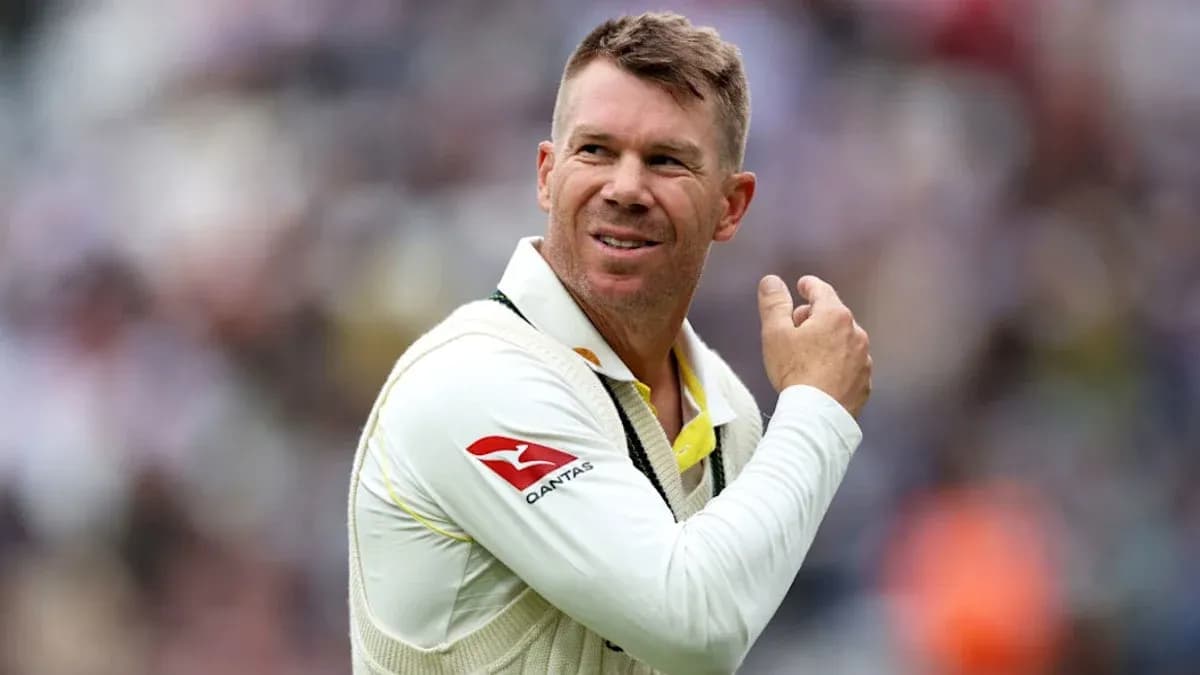
David Warner has lit another fuse under Australian cricket’s most radioactive scandal, claiming three of the country’s star bowlers were never even interviewed in the immediate fallout from Cape Town.
On Instagram, Warner alleged that Josh Hazlewood, Mitchell Starc and Nathan Lyon were not spoken to as part of Cricket Australia’s internal probe into the 2018 sandpaper affair. For a saga already dripping with distrust, it was an explosive accusation.
Two sources with knowledge of the investigation, cited by The Age, say the opposite: the trio were interviewed. That direct contradiction leaves the sport once again trapped between competing versions of a story it has never fully managed to bury.
Warner, Khawaja and a fractured dressing-room history
Warner has spent the past week publicly backing Usman Khawaja’s assertion that members of the Australian Test team knew about a plan to tamper with the ball in Cape Town. Pat Cummins, the current captain and then a member of that bowling attack, has flatly rejected that idea.
At the time, Cricket Australia moved quickly. Steve Smith, Warner and Cameron Bancroft were hit with heavy sanctions for their roles in the on-field cheating. Careers were derailed, reputations shredded, and the organisation declared the issue contained.
Warner now insists the process was skewed from the start.
“As far as I am aware, CA did not interview (them),” he wrote.
“If that’s correct, then how can CA push the idea that the bowlers didn’t know?
“It looks like they had decided who they wanted to blame from the very beginning, and ran a shoddy investigation to serve the purpose, and now they want to maintain the false narrative that the bowlers had no idea.
“That stinks of a cover-up.”
Those words cut straight to the heart of a long-running suspicion: that the trio punished in 2018 carried the can for a wider problem.
Khawaja, in his book Sabr, says he waited for his phone to ring, expecting to be interviewed as part of Cricket Australia’s inquiry. It never did.
He writes that his stance on “collective blame” cost him a voice in the process.
“I thoroughly feel that I didn’t get interviewed because of that, because they knew that I wanted to take it as a team, because they knew I was ready to tell the truth if I was interviewed,” he wrote.
“And I was waiting for my phone to ring. It just never rang, and then the penalties were given, and I couldn’t believe it.”
The Ethics Centre, the whispers and the wall of silence
Cricket Australia also turned to The Ethics Centre, commissioning executive director Dr Simon Longstaff to run a broader cultural review that stretched beyond the dressing room.
Longstaff says he spoke with a range of current and former players, staff, sponsors and other stakeholders. Very quickly, he heard the murmurs.
“We’re talking effectively about … good people who made bad decisions, so that’s where we looked,” he said on Nine’s Weekend Today.
Along the way, he said, came “whispers” that more people had known about ball tampering than the three sanctioned, and that the practice pre-dated Cape Town.
Once those suggestions surfaced, Longstaff felt compelled to test them. He says he put the question directly to senior figures he interviewed, giving them a chance to expand or amend their accounts.
“Nobody chose to make any alteration to their statement, so I was left with basically a blank wall,” he said.
“Some people saying one thing, others another, but not sufficient to be able to say there needs to be a further inquiry at that time.”
Longstaff recalled inviting several people to participate in the review, with some declining the offer. He could not remember whether Khawaja was among those approached directly, but stressed that players and officials had the opportunity to come forward.
“It looked at the whole of Cricket Australia, sponsors, supporters … past Test players to see what the comparison could be. Not everybody we invited to participate in our review chose to accept that invitation. They had the liberty not to.
“Anything they were to say was under strict conditions of confidentiality, which of course, we're bound to respect even to today.”
Cummins, credibility and a fresh fault line
The latest flare-up comes on the back of Cummins’ marathon 70-minute press conference on Friday, where he denied any knowledge that sandpaper was being taken onto the field in Cape Town. Longstaff watched that performance and described Cummins as “absolutely convincing in his sincerity”.
“That stands against Usman Khawaja's claim that everybody knew, so there's a clear contradiction there,” Longstaff said.
“If Cummins did not know, and I believe he didn't, then not everybody knew. But that leaves a different question.
“Was it that many other people did know, if not Cummins? And is Khawaja being sincere in his belief … that if not everybody, there was a considerably larger number (that knew). Now we just don’t know.
“There’s been consistent denials from the bowling team as a whole, and that stands in contrast now to what Usman Khawaja and David Warner are both asserting.”
That clash of accounts sits at the core of why the scandal refuses to fade. On one side, bowlers who have repeatedly denied prior knowledge. On the other, two senior players suggesting the circle of awareness was far wider.
For Longstaff, whose career has been built on untangling ethical knots, such a conflict rarely exists without cause.
“To that end, I think, although it’s so messy, there has to be some explanation which could be found,” he said. “I’ve spent a career looking into questions like this, and inevitably, when you find this kind of conflict of opinion, there is a reason behind it.
“It’s just a question of whether or not Cricket Australia wants to determine what that is.”
The bans have long since expired. The scorecards are filed away. Yet the central issue lingers: does Australian cricket truly want every part of Cape Town dragged into the light, or is this as close to the full story as it is prepared to go?