England's New Era Roars to Life with Bouchier's Stellar Performance
England’s new era did not creep into life. It roared.
On a flat Leicester pitch where 281 once looked a decent asking rate, England’s reshaped batting order turned it into a procession, hunting down Ireland’s 281-5 with 11.5 overs to spare in a six-wicket win that felt as much statement as scoreline.
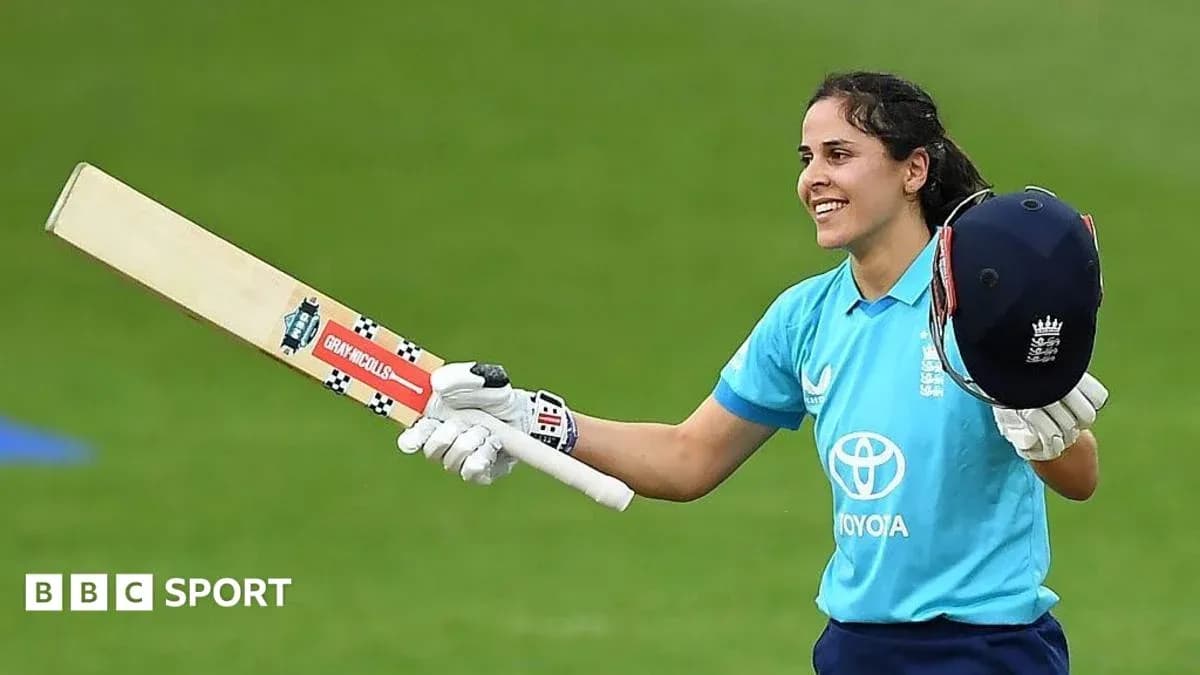
At the heart of it, finally, was Maia Bouchier.
Bouchier seizes her moment
For years she has hovered on the fringes of England’s white-ball plans, a familiar name without a permanent seat. On Tuesday at the Uptonsteel County Ground, she walked out as one of the senior figures in a top order stripped of Heather Knight and Tammy Beaumont, and with Nat Sciver-Brunt sidelined.
She left as the defining presence of England’s highest successful chase in women’s ODIs.
Bouchier’s 104 from 95 balls was not a blaze from ball one. She crawled to eight from her first 19 deliveries, feeling out the surface, the attack, the occasion. Then Jane Maguire dropped a couple of offerings in the sixth over, and Bouchier’s bat snapped into life. A flurry of boundaries, the shoulders relaxed, the feet moved. Suddenly the tempo of the chase belonged to her.
At the other end, Sophia Dunkley was already in full stride. Where Bouchier built, Dunkley bludgeoned. Her 47-ball fifty, the fastest of her ODI career, stripped any early tension from the chase and exposed the gulf between the sides once the ball softened.
By the end of the powerplay England were 72 without loss, Ireland’s new-ball threat spent, the fielders already chasing shadows. It set the tone for the rest of the evening: Ireland battling, England cruising.
The opening stand reached 143 before Dunkley, on 73 from 61 balls, miscued a return catch to Cara Murray. It was the only moment that resembled an opening for Ireland. The scoreboard, the pitch and the depth of England’s batting made sure of that.
New faces, same ruthlessness
Jodi Grewcock, on debut, never quite settled. Her nine came with the nervous energy of a player desperate to belong. Bouchier sensed it and took charge, farming the strike, dictating the pace, making sure the chase never drifted.
When the hundred came, it felt inevitable. When it ended, it felt careless.
On 104, Bouchier picked out long-on, a rare lapse in concentration with just 59 runs needed. Her frustration as she walked off said everything about her standards and her opportunity: this was a day to cash in, not simply contribute.
If there were any doubts about the finish, Alice Capsey and Freya Kemp shredded them.
Capsey, all intent and angles, and Kemp, swinging freely, hammered a 54-run stand from 38 balls that underlined England’s new-found depth. Kemp’s 36 from 22 was a burst of raw power, the kind that forces opponents to think not just about the XI on the field but the squad behind it.
Capsey, unbeaten on 41, stroked the winning boundary to seal a chase of 283 with 71 balls in hand. Five batters from last year’s World Cup semi-final XI were missing. The run rate barely noticed.
Ireland’s promise with the bat, problems with the ball
For Ireland, the frustration will be sharp. Their batting deserved more from the day.
Gaby Lewis and Amy Hunter gave them a platform that most visiting sides would take in England. After an early wicket, they settled, then prospered, adding 136 for the second wicket with a blend of calm accumulation and clean strokeplay.
Lewis, leading from the front, compiled 69 from 89 balls; Hunter matched her poise with 62 from 90. On a surface offering nothing extravagant for the bowlers, they controlled the middle overs and forced England’s attack into a holding pattern.
Without the rested Lauren Bell and Sophie Ecclestone, England lacked their usual bite. The middle overs drifted, the ball grew old, and Ireland’s batters cashed in.
Rebecca Stokell then changed the tone again. Her 54 not out from 48 balls was the most assertive innings of Ireland’s effort, a late surge that nudged the total from respectable towards competitive. She picked gaps, punished anything short, and ensured the innings finished with a flourish rather than a fizzle.
At 281-5, Ireland walked off believing they had something to work with. On many days, they would have been right.
But the same flat pitch that rewarded their discipline exposed their limitations with the ball and in the field.
Lines wavered, lengths drifted, and chances went down. Only Orla Prendergast threatened to resemble the kind of world-class challenge England’s top order will face next summer in the Ashes. Around her, the attack faded under the weight of relentless scoring, the misfields and dropped opportunities compounding the pressure.
Murray’s 3-58 gave the figures a veneer of respectability, but the damage had already been done by the openers.
Edwards’ blueprint takes shape
For head coach Charlotte Edwards, this was close to the ideal opening chapter.
No Knight. No Beaumont. No Sciver-Brunt. No Ecclestone. No Bell. A transitional line-up, on paper, should carry risk. Instead, it carried authority.
Dunkley and Bouchier, both on the fringes of the ODI XI in recent years, answered the most important question of the day: who will anchor this batting order when the legends are gone? On this evidence, both intend to be part of the answer.
Edwards knows sterner examinations await. The Ashes loom, and Ireland’s attack, spirited but raw, is not Australia’s. Yet players can only dominate what’s in front of them, and England’s top order did exactly that.
The series moves to Derby on Thursday with England 1-0 up and brimming with runs. Ireland, buoyed by their batting but bruised by the chase, must find a way to turn promise into pressure.
England have already shown what their new era might look like when it clicks. The real intrigue now is whether anyone can slow it down.