England Prioritizes Ashes Over Caribbean Test
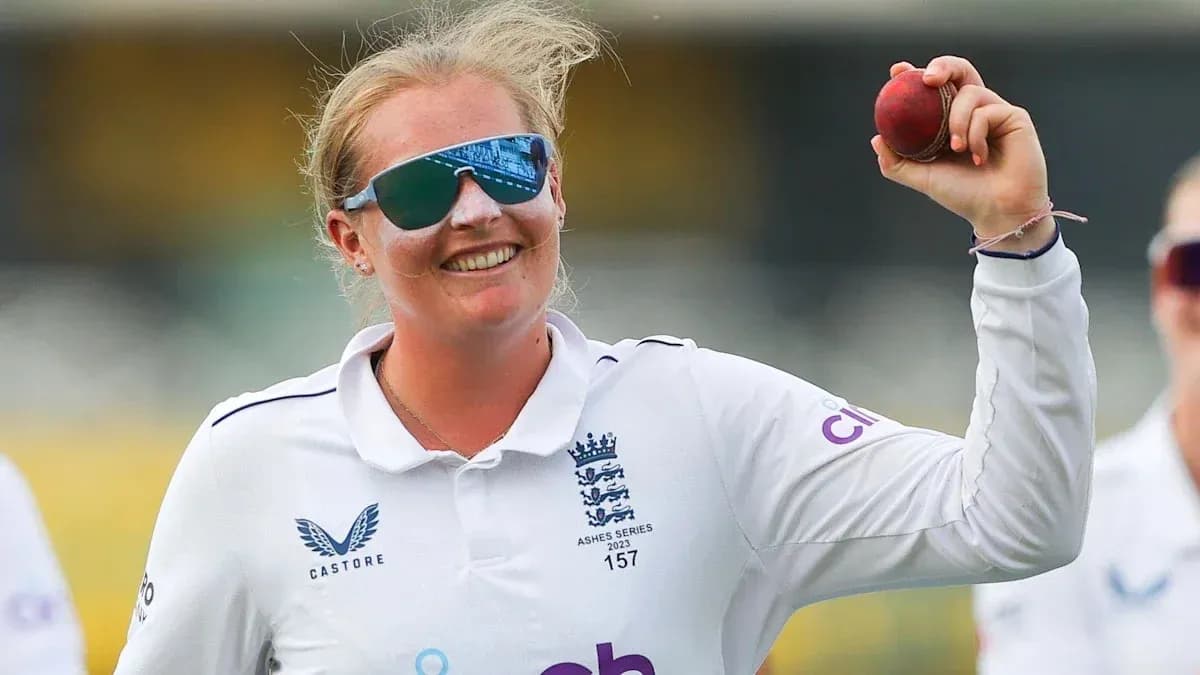
England’s women have ripped up their spring schedule and nailed their colours to a single mast: the Ashes.
The planned Test match in the West Indies in April is off. In its place, a bespoke red-ball programme at home and abroad, built entirely around one four-day clash with Australia at Headingley from 24-27 June – the only Test of next summer’s multi-format Women’s Ashes and worth four precious points.
This is not a cosmetic tweak. It is a full strategic pivot.
From Lord’s pain to Headingley plan
Nat Sciver-Brunt’s side have barely touched the red ball since being hammered by India at Lord’s – a bruising defeat that followed an innings loss to Australia in Melbourne in January 2025. Two Tests, two heavy beatings, and a glaring truth: England’s red-ball game has been starved of meaningful preparation.
The response is blunt. No long-format detour in the Caribbean. No compromise.
Instead, England will stage four red-ball matches in the UK as a tailored build-up to Headingley. One will be a three-day fixture against Australia A, a rare and valuable look at opposition colours before the real thing. The other three will be intra-squad “best v best” contests, designed to crank up internal competition and simulate Test intensity when the calendar offers almost none.
Before any of that, the squad heads east.
Bangalore boot camp
In January, England will run a dedicated red-ball training camp in Bangalore, a 10-day warm-weather block aimed at getting overs in legs and time in the middle away from the English winter.
“A 10-day warm-weather red-ball camp in India followed by four further matches in English conditions will provide Charlotte Edwards and her team with the appropriate game time to be ready for that challenge [of Australia],” said ECB chief executive Richard Gould.
It is a clear statement of intent. England expect to use 26 or 27 players across the camp and subsequent matches, a broad pool that reflects both the lack of red-ball opportunities and the need to stress-test depth before the Ashes points are on the line.
“Best versus best in English conditions provides a valuable opportunity for the team,” Gould added. “It also allows us to assess our strength in depth, give opportunities to more players and get a number of competitive multi-day cricket matches across a longer period into the wider group.”
The message is unmistakable: no one walks into that Headingley XI unchallenged.
West Indies left without a Test
The decision leaves the West Indies series stripped back to white-ball only: three T20s and three one-day internationals. For a region that has not hosted a women’s Test since 2004 – the only red-ball game West Indies women have played in 47 years – it is another bleak line in the record books.
The move arrives against a backdrop of financial strain. Cricket West Indies chief executive Chris Dehring recently told BBC Sport: “We would welcome any assistance of our much wealthier member boards. It is very expensive to host cricket in the Caribbean.”
That prompted suggestions the England and Wales Cricket Board might need to step in financially to get the Test over the line. Yet BBC Sport understands the ECB’s call to cancel is not tied to those money talks. Inside Lord’s, this is framed squarely as a performance decision – a deliberate choice to control conditions, opposition and workload in the run-up to the Ashes.
The cost is obvious: another missed opportunity for the women’s game to expand its Test footprint in a region that desperately needs it. The gain, from England’s point of view, is just as clear: time, structure and opposition tailored to a single, defining contest.
All roads lead to Headingley
So the equation is simple now. No long-haul Test in Caribbean heat. No unfamiliar pitches. Every meaningful red-ball ball England bowl before June will either be in Bangalore’s training nets or in English conditions, against their own best players or against Australia A.
It is a bold bet that controlled preparation will trump the value of an away Test. In a format England barely get to play, they have chosen quality and specificity over variety.
When Australia walk out at Headingley in late June, they will face an England side that has built its entire year around four days in Leeds.
If this gamble delivers the Ashes, it will look like sharp, modern planning. If it doesn’t, the question will hang over the summer: did England turn their backs on a rare women’s Test in the Caribbean for a plan that never quite caught fire?