England Sets Record ODI Total at Adelaide Oval with Banton's Stellar Performance
England walked off Adelaide Oval to a standing ovation and a number that will sting Australia long before a ball is bowled in reply: 6-355, their highest ODI total on Australian soil.
It was a statement innings. At times stylish, at times reckless, but relentlessly aggressive.
Banton’s coming-of-age knock
The backbone of it all was Tom Banton. For years he has been talked about as potential; here, he was the finished article.
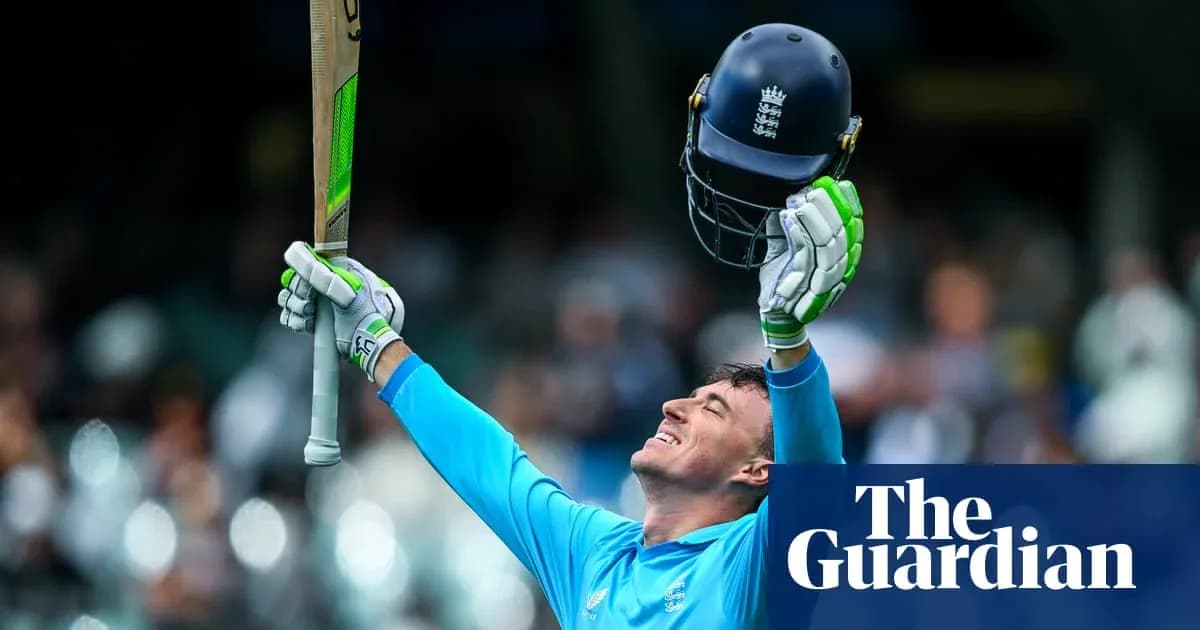
He eased his way in, then suddenly began to own the ground. His first ODI century against Australia – and only his second for England – arrived from 86 balls, and the celebration told its own story. Bat raised, grin wide, he looked more relieved than triumphant. This was a player who knew how much he needed a day like this.
Banton and Joe Root rebuilt and then surged. After early wickets, their partnership grew into a 144-run stand that changed the tone of the innings and the day. Root, typically measured, worked his way to 62 from 68, rotating the strike and letting Banton stretch out.
The end for Root came with a misjudged pull. Cooper Connolly finally broke the partnership when Root top-edged to cover, substitute fielder Liam Scott clutching the chance. England were 2-156 in the 28th over, platform laid, accelerator ready.
Banton simply kept going. He moved through the gears, picking off anything short, punishing width, and never letting Australia’s bowlers settle. When he finally miscued on 121 from 99 balls, he left to warm applause, his job emphatically done and England 4-212 in the 35th over with the innings primed for a late assault.
Brook’s rush of blood, Cox’s composure
Not everyone thrived in the chaos. Captain Harry Brook’s stay was brief and baffling. On five, he tried an audacious ramp, missed the plot entirely, and knocked the ball into his own stumps. Riley Meredith, drafted into the squad after Perth, claimed the wicket, but Brook had done most of the work for him. England were 3-175 and briefly checked.
Jordan Cox then walked in and played the kind of hand modern white-ball teams crave from the middle order. He took his time early, 28 from 28 by the 40-over mark, then flicked the switch.
The shots grew bolder. A reverse scoop skipped to the boundary, the sort of stroke that drains energy from fielders and bowlers alike. His partnership with Will Jacks rolled past 100 as England crashed through 300, the pressure mounting on an increasingly ragged Australian attack.
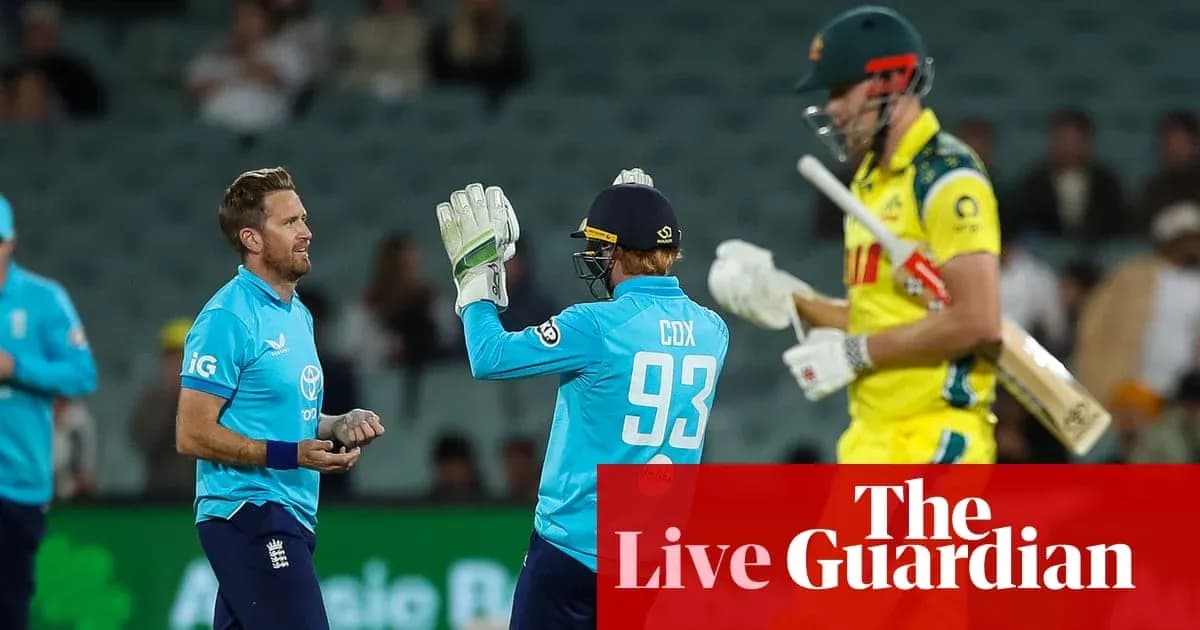
Cox’s dismissal, on 67 from 49, came just as he looked set to launch again. Bartlett offered width, Cox went big, and Renshaw produced a superb catch inches from the rope. It was a vital intervention at 5-314 in the 47th over, the kind of moment that can shave 20 runs off a total.
But England weren’t done.
Jacks and Atkinson light up the death
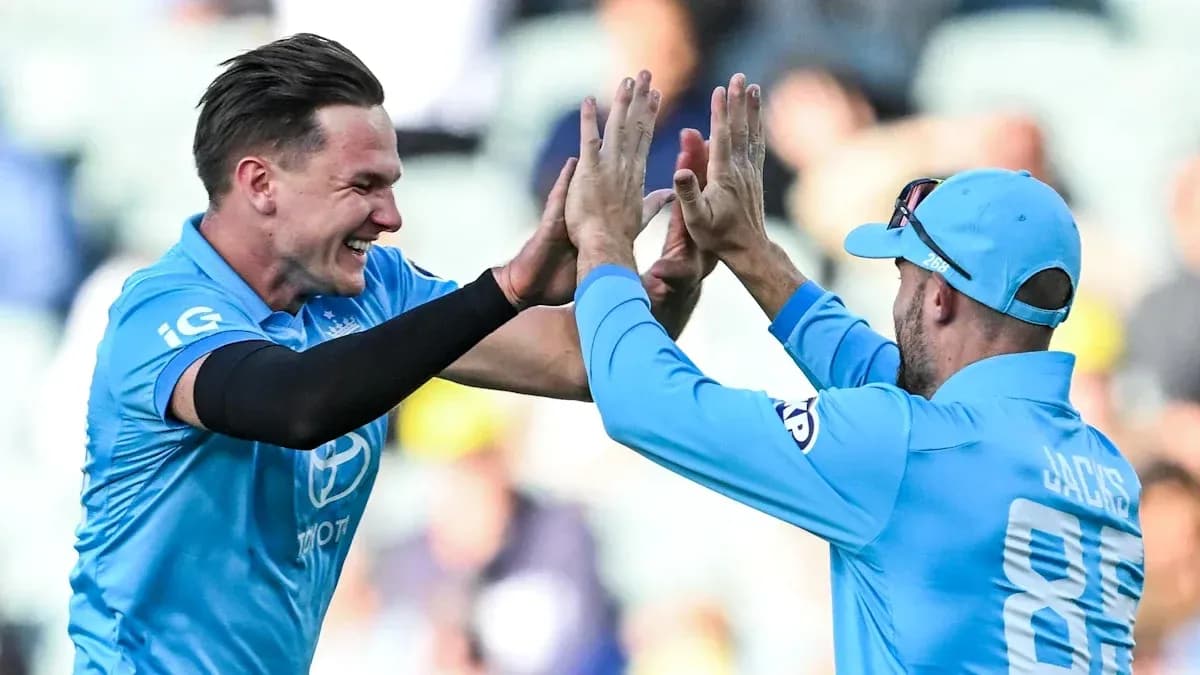
Will Jacks had been simmering, then he boiled over. By the time the final over arrived, he sat on 49 and England on 6-338. One nudge took him to a half-century from 40 balls – efficient, unfussy, vital.
At the other end, Gus Atkinson decided there was no time for subtlety.
First came a wild swing and a miss. Then came the clean hits. Back-to-back sixes in the final over turned a strong total into a daunting one. He finished with 13 from just four deliveries, the kind of brutal cameo that leaves bowlers staring at the turf and captains shaking their heads.
Jacks closed on 54 from 40, having earlier launched a huge blow into the members’ stands and kept the tempo surging through the final 10 overs. His partnership with Cox had already done the heavy lifting; his calm presence at the death ensured England never lost momentum.
Even the wickets that did fall barely slowed the scoring. Sam Curran’s brief stay ended on 14 from nine, Johnson claiming his first wicket with Connolly taking the catch. By then, England’s intent was obvious: every ball was there to be hit.
Australia’s bowlers toil under fire
For Australia, there were moments, but too few of them.
Connolly’s removal of Root, Meredith’s sharp strike to see off Brook, Bartlett’s short-ball ploy that eventually undid Banton with Cam Green diving forward to cling on – all felt like turning points at the time. None truly were.
Fielders chased leather. Zampa grassed a tough chance off Jacks that could have checked England’s surge. Inglis flung himself in vain as edges and scoops flew past. When Cox and Jacks were in full flow, it felt as if every over carried a boundary, every mistake was punished.
By the 40-over mark, England were 4-245 and just getting started. The final 10 overs turned a solid platform into a record.
A record to chase, and questions to answer
So Australia now face 356 to win, and not just any 356. This is England’s best ODI score in Australia, carved out on a ground that has seen its share of great white-ball innings.
They will need composure, power, and nerve to chase it. England, armed with runs, energy, and a batting card full of confidence, have already set the tone.
The numbers are clear. The question is whether Australia can live with them.