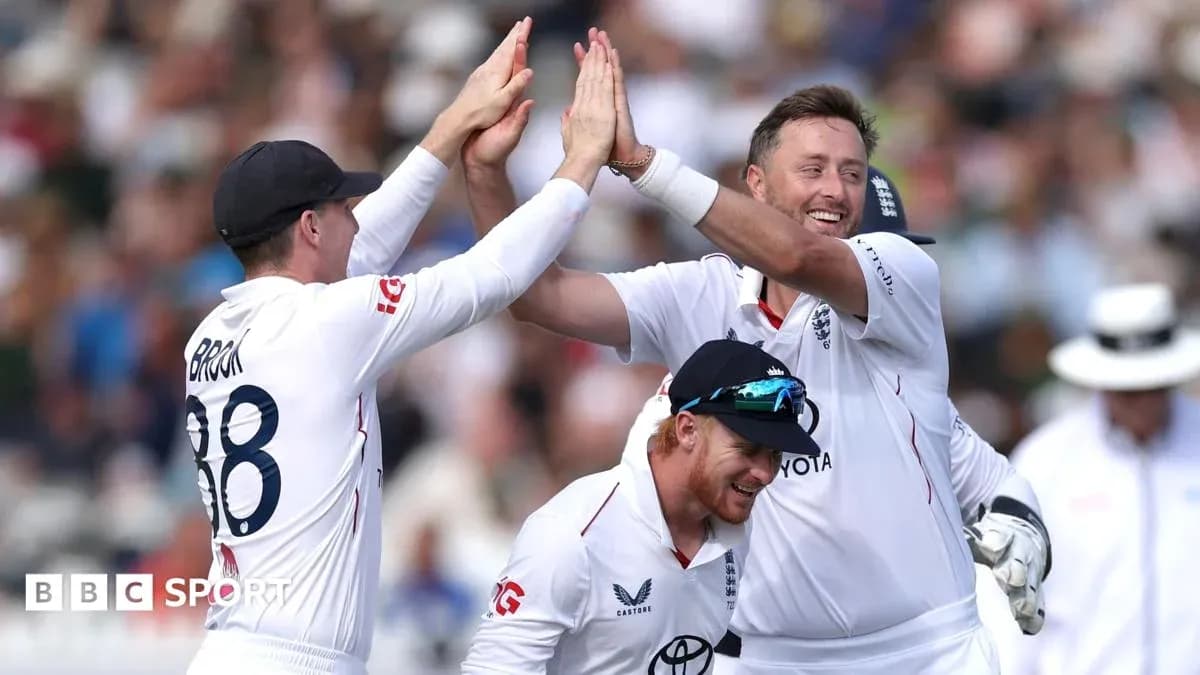
England’s seamers dominate Pakistan at Lord’s
By the close at Lord’s, the story was no longer about a delicately poised Test. It was about a pace attack hunting as a pack and a visiting side clinging on.
England’s four seamers – Ollie Robinson, Jofra Archer, Josh Tongue and Gus Atkinson – ripped through Pakistan for 110 and turned a competitive contest into a near stranglehold on the second Rothesay Test, and with it the series.
From the moment the tailenders walked out in the morning, England never really let go of the initiative.
Tailenders set the tone
Atkinson and Tongue began the day with England 248-9 and promptly behaved like men who had no interest in handing Pakistan a quick crack with the new ball. Their last-wicket stand, stretched to 47, dragged the total to 290 and subtly shifted the mood.
Those 42 extra runs on Friday morning looked handy at the time. By mid-afternoon, they felt enormous.
Conditions eased a touch from the first day, but Lord’s still demanded discipline. Hit that awkward length, find a hint of movement, and the ball did the rest. England’s attack did exactly that, over and over again.
Robinson and Archer tear into Pakistan
Pakistan were already shorn of opener Imam-ul-Haq, sidelined with a calf injury. His absence did not change the script. It simply meant one fewer batter to withstand the storm.
Archer took the new ball and turned the famous slope into a runway. His speeds in a ferocious opening burst touched 95mph, the average hovering around 90.7mph. The crowd sensed it, Pakistan’s top order certainly did.
Yet for all the plays and misses, particularly from Azan Awais, Archer had only Shan Masood to show for his menace in his first spell. The ball flew past the edge often enough to make it feel like a statistical anomaly.
At the other end, Robinson operated in another universe entirely. Barely scraping 80mph, keeper Jamie Smith standing up to the stumps for long stretches, he probed with surgical precision. Seam, swing, nagging length. No drama in the action, all the drama in the movement.
Pakistan’s batters found no release. Extras ended up as their second-highest scorer. That told its own tale.
Tongue, with his fuller length, chipped in with two wickets and maintained his remarkable series strike-rate – a wicket every 13.3 balls. Atkinson, curiously, remained the nearly man. He has only one wicket in three innings, and he was denied another when Awais successfully reviewed a caught-behind decision just as the players left for a brief rain break.
When the players returned, the game broke open.
Robinson and Archer came back refreshed and ruthless. Robinson nailed Saud Shakeel and Muhammad Rizwan with two sharp lbw calls, both confirmed on review, then forced Awais into a fatal mistake with a well-directed short ball. That took Robinson’s haul this summer to 19 wickets in three matches at a scarcely believable average of 8.84.
Archer finally got the figures his spell deserved. He smashed through Ali Usman and Muhammad Abbas, both bowled, to close out the innings. His record at Lord’s now stands in stark contrast to everywhere else: an average of 17 here, more than 30 elsewhere.
Pakistan’s 110 looked threadbare. England’s lead of 180 looked decisive.
Top-order wobble, Gay digs in
If there was a moment for Pakistan to claw back a sliver of hope, it came with the new ball in England’s second innings. They seized it briefly.
Ben Duckett played an ugly stroke, a loose drive spooned to mid-off. Jordan Cox, fresh from two half-centuries in the series, was pinned on the crease and trapped lbw, both wickets falling to Khurram Shahzad. England stumbled to 13-2. With a lead already sizeable, panic never really entered the equation, but the tempo changed.
Emilio Gay and Joe Root rebuilt. Not with flourish, but with care.
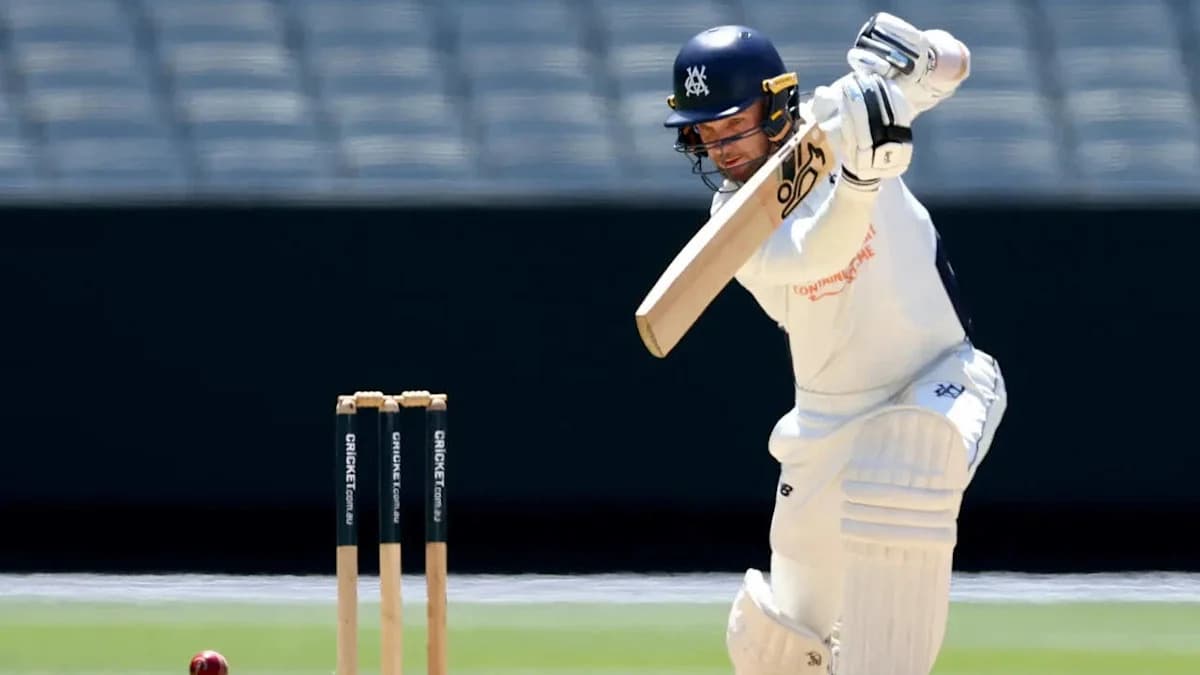
Gay, a left-hander under scrutiny with Jacob Bethell due back from a knee injury and the top order increasingly crowded, chose patience. He picked off the off side when the bowlers erred, left well when they didn’t. Root, as he so often does, appeared to have eased himself into rhythm.
Then came the familiar problem.
Mohammad Ali jagged one back, thudded into Root’s pad, and the captain’s review was more hope than expectation. Out. Again lbw to seam. It was the ninth time in seven Tests he has fallen that way, compared with only three such dismissals in his previous 39 matches. Whether the keeper is up to the stumps or back, the pattern is becoming hard to ignore.
Ali almost repeated the trick next ball. Harry Brook was given lbw first delivery to an almost identical delivery, only for an inside edge to rescue him on review. England’s vice-captain survived; the warning remained.
As the light faded, survival became the only currency. Gay edged Abbas short of the cordon, a nervous moment, but he reached the close on 30 not out. Brook joined him, 81-3 on the board and the lead swollen to 261.
Weather, dominance and what comes next
The forecast for Saturday is grim. A washout looms. Even so, England hold this match by the throat.
Pakistan have not passed 171 in three attempts on this tour. They have yet to bat 50 overs. Against an attack this disciplined, this varied, that record points one way.
England’s pace unit, assembled in the wake of Ben Stokes’ retirement from bowling, is still a work in progress. The opposition’s frailty should temper the hype, but across two Tests the numbers and the eye test agree: they have been outstanding.
Archer terrorising with pace at his favourite ground. Robinson dissecting line and length with almost cruel accuracy. Tongue hitting the stumps from a fuller length. Atkinson offering hostility and unlucky not to have more to show.
Up the order, though, the decisions are getting tighter. Cox has runs in the bank. Bethell is on his way back. Gay, under pressure at the start of the day, has carved out an opportunity he cannot afford to waste.
The series is there for England to finish. The only real question now is whether the weather delays the inevitable, or Pakistan can somehow find a resistance they have not yet shown.