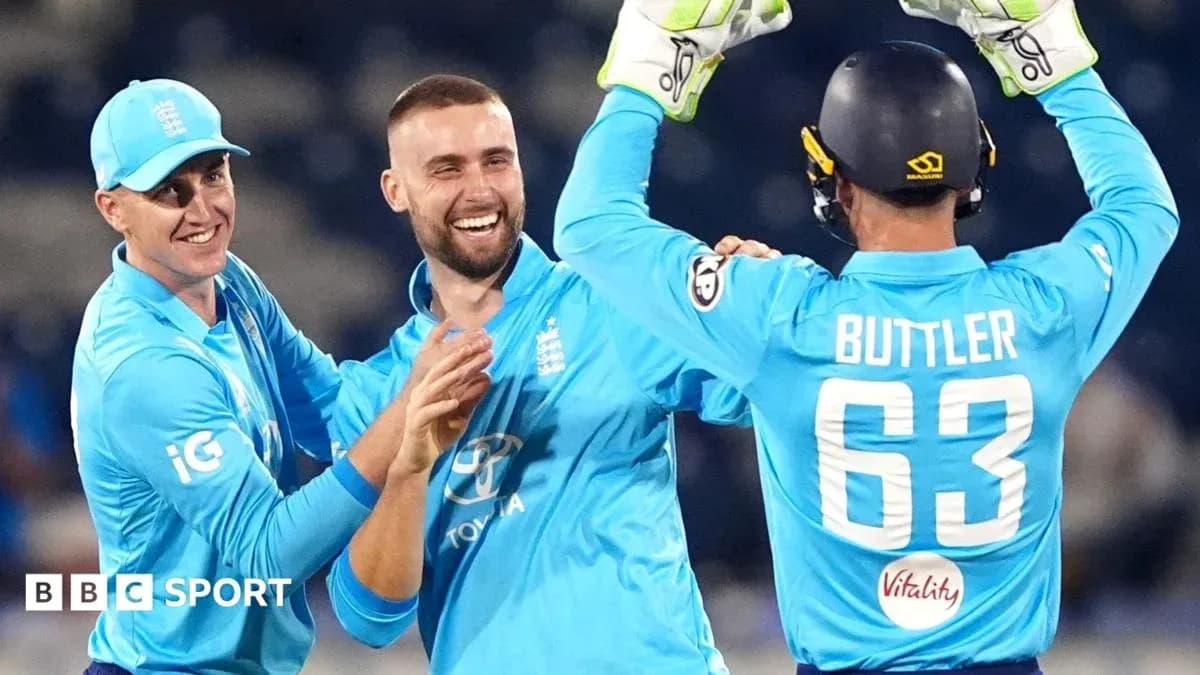
England Secures Gritty ODI Victory Over Sri Lanka
At Chester-le-Street, on a pitch that sapped pace and patience in equal measure, England found a different way to win. No sixes. No fireworks. Just hard, slightly scruffy cricket – and a ruthless all-round performance from Will Jacks.
The result was emphatic enough: an 89-run victory over Sri Lanka in the first Metro Bank one-day international, England’s 10th white-ball win over these opponents this year. The route there was anything but glamorous.
Runs without the roar
England’s 265 all out in 48.1 overs looked light in modern terms, especially on a ground that has seen its share of brutality. For the first time since 2019, an England side batting first in an ODI failed to clear the rope. Under Brendon McCullum, that feels almost like heresy.
Yet this was a day when restraint mattered more than range-hitting.
Harry Brook, captaining and anchoring, played the central hand. His 67 from 69 balls was measured, almost old-fashioned by his standards, built on placement rather than violence. He was the only man in the middle-order collapse to perish playing with intent, slicing a drive to deep cover after keeping himself in check for most of his stay.
Around him, Joe Root’s 44 hinted at control before a moment of quality from Sri Lanka’s debutant leg-spinner Sachindu Colombage altered the tone. Colombage, finding just enough turn on the slow surface, clipped Root’s off stump, then trapped Jos Buttler lbw for 31 and later beat Jamie Overton with a googly for eight. His 3-44 was the standout return in a much sharper Sri Lankan fielding display.
England’s innings wobbled badly. From 182-3 they slumped to 211-7, losing 4-29 and threatening to waste the platform Brook and Root had set. Again, this was the kind of situation where previous England sides under McCullum might simply have swung harder and accepted the consequences.
Jacks chose another route. Coming in with the innings fraying, he curbed his instincts and stitched the tail together. His unbeaten 46 from 46 balls was not a highlight-reel knock, but it was exactly what England needed: busy, selective, and increasingly assertive as partners ran out.
When the time finally came to take a risk, he did. Eighteen runs came from the 47th over as he tried to squeeze every last drop from the innings. At the other end, Asitha Fernando used late reverse swing to rip out Jofra Archer and Josh Tongue, having already trimmed Tom Banton’s bails for 10 in the powerplay. England were done two overs early, but they had something competitive on a tacky surface.
It looked par. Nothing more.
Sri Lanka blink with the bat
Par turned out to be plenty.
If Sri Lanka’s fielding had sharpened, their batting went the other way – timid, uncertain, too often stuck between survival and strokeplay. On a pitch demanding commitment to either, they found neither.
England’s bowlers sensed it quickly. They hit the surface hard, dragged pace from the ball and refused to feed width. Wickets came regularly, not in a single devastating burst but as a steady squeeze that never really loosened.
At the heart of it all stood Jacks.
Already England’s saviour with the bat, he became their finisher with the ball. His off-spin has grown from a part-time option into a serious white-ball weapon, and this was the clearest evidence yet. He removed Kusal Mendis, Sri Lanka’s captain and key batter, then accounted for Charith Asalanka, the other major pillar of their middle order. Each dismissal tightened the noose.
Once the main resistance was gone, Jacks tore through the tail. He ended with career-best figures of 5-22, a haul that underlined his rising importance in both white-ball formats. On a day when express pace and extravagant swing were secondary, his control and nous broke Sri Lanka’s chase.
Dunith Wellalage, with 45 from 36 balls, was the only Sri Lankan to truly fight the conditions, striking cleanly and briefly threatening to rattle England. His innings, though, was an isolated act. Around him, the scoreboard stalled, then crumbled. Sri Lanka were bowled out for 176 in 37 overs, a long way short and never seriously in the contest once the top order cracked.
A quieter kind of revival
This was not the swaggering England that blew sides away in their white-ball pomp. They were bowled out again – the 12th time that has happened since McCullum took charge last year – and the opposition, once more, was not elite.
Yet the manner of the win matters. England have spent too long looking like a team that only knows how to dominate. Here, they adapted to a slow, awkward surface, absorbed a collapse, and found a way to manufacture a defendable total. Then they bowled like professionals, not entertainers.
Jacks, in particular, now feels central rather than peripheral. His influence grows with every outing: power at the top, intelligence in the middle, and genuine wicket-taking threat with the ball. For a side reshaping itself ahead of a World Cup in a year’s time, that kind of multi-dimensional cricketer is gold.
England have already beaten Sri Lanka earlier this year and turned over India in July. Now they stand one win away from a third consecutive ODI series victory, with the chance to seal it at Headingley on Thursday and close the three-match contest at The Oval on Sunday – the final act of a wildly erratic English summer.
It has not always been pretty. At Chester-le-Street, it didn’t need to be. The question now is whether this grittier, more adaptable England can carry that edge into the two months of white-ball cricket that await overseas.