England Prioritizes Women's Ashes Preparation Over Caribbean Test
England have torn up their spring Test plans in the Caribbean and built a bespoke red-ball runway to the Women’s Ashes instead.
The April Test in the West Indies is off. In its place: a tightly controlled block of long-format cricket at home, a specialist camp in India, and a clear message that everything now bends towards one target – beating Australia next summer.
Ashes, not Antigua
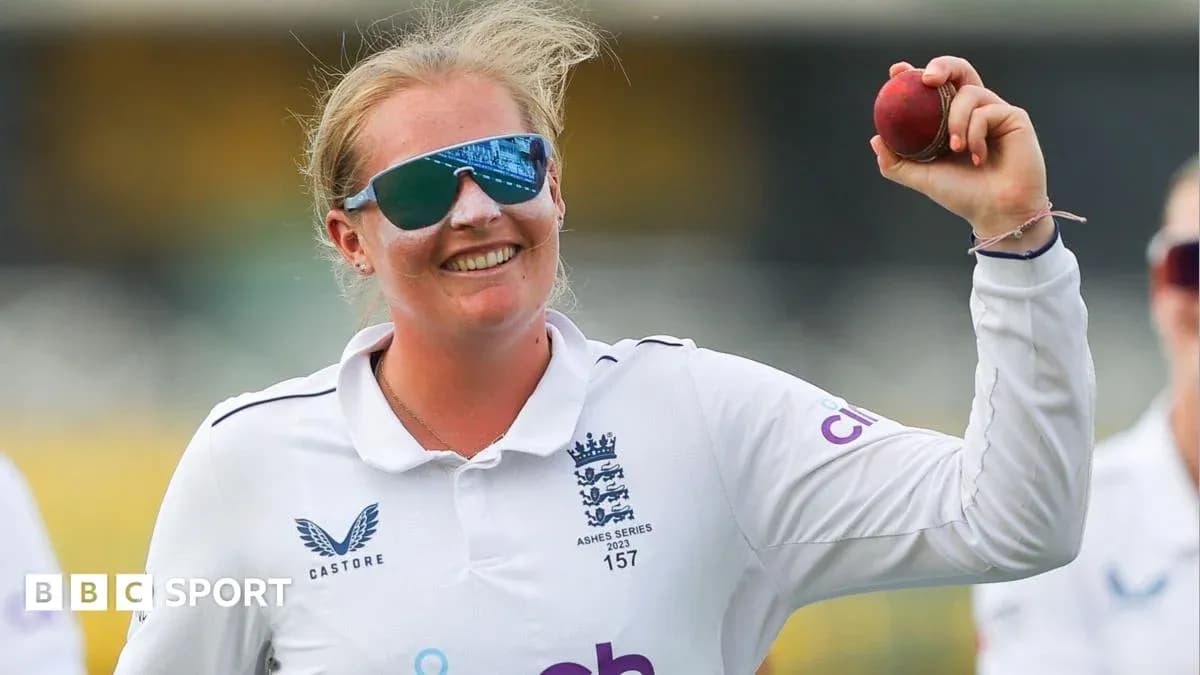
Nat Sciver-Brunt’s side have barely touched the red ball since being thrashed by India at Lord’s, their only Test outing since an innings defeat to Australia in Melbourne in January 2025. For a team trying to crack the hardest code in the women’s game – how to outlast Australia over four days – that lack of mileage had become impossible to ignore.
Next summer’s Ashes Test, worth four points in the multi-format series, lands at Headingley from 24-27 June. It is the hinge on which the whole campaign can swing. England want to arrive there hardened, not undercooked.
So the tour to the Caribbean has been reshaped. No Test, just three T20s and three one-day internationals. The red-ball work will happen elsewhere, on their terms.
A new red-ball blueprint
The plan is unapologetically intensive.
In January, England will take a dedicated red-ball training camp to Bangalore for 10 days of warm-weather work. That is the technical foundation: time in the nets, long spells for bowlers, batters learning to bat deep again rather than in 20-over bursts.
Then comes the real examination back home. England will play four red-ball matches in the UK ahead of the Ashes Test. One will be a three-day fixture against Australia A, a rare chance to test themselves against the depth of the old enemy. The other three will be intra-squad “best v best” games, designed to strip away comfort and expose players to genuine pressure.
England expect to use 26 or 27 players across the camp and those matches. This is not just about the XI who walk out at Headingley. It is about building a squad that can withstand injuries, loss of form, and the relentless intensity of multi-format cricket against Australia.
ECB chief executive Richard Gould spelled out the thinking: a 10-day red-ball camp in India, followed by four more matches in English conditions, gives Charlotte Edwards and her staff “the appropriate game time” to be ready for Australia. The phrase that jumps out is “best versus best in English conditions” – an internal trial by fire to sharpen standards and reveal who truly belongs in the Ashes cauldron.
It also gives England a rare chance to probe their depth properly. Multi-day cricket exposes flaws that white-ball formats can hide. Who can bowl long, accurate spells on a flat pitch? Who can bat through a session when the ball stops doing anything? Those questions decide Ashes series.
West Indies left on the sidelines
The decision lands heavily in the Caribbean.
West Indies have not played a women’s Test since 2004. One red-ball match in 47 years. This cancellation means that wait goes on, and with it another missed opportunity to grow the longest format in a region that once defined Test cricket.
CWI chief executive Chris Dehring had already laid bare the financial strain, saying they would “welcome any assistance of our much wealthier member boards” and stressing how expensive it is to host cricket in the Caribbean. It had been suggested the ECB might need to step in to make the Test viable.
Yet BBC Sport understands the ECB’s move is not tied to those financial discussions. Inside Lord’s, this is being framed squarely as a performance call: strip the schedule back, avoid a one-off Test in unfamiliar conditions, and instead build a controlled programme that gives England the best possible shot at the Ashes.
That distinction matters politically. It does little, though, to soften the sporting reality for West Indies: another year, another gap where women’s Test cricket should be.
All roads to Headingley
For England, the trade-off is clear. Less variety in the calendar, more precision in preparation.
They will still get their white-ball work in the Caribbean with three T20s and three ODIs. But the heart of their year is now set: Bangalore in January, four red-ball matches in the UK, and then Australia at Headingley in late June.
No excuses, no complaints about lack of red-ball practice, no talk of being “underprepared” for the longest format.
If this gamble pays off, England will walk out at Headingley as a side that has lived with the red ball for months, not just brushed past it. If it doesn’t, the questions will be sharper: with such a deliberate, tailored build-up, how much more can they really do to close the gap on Australia?