England’s Fast-Bowling Cartel Dominates Pakistan
LONDON – On a grey Lord’s afternoon, Jofra Archer allowed himself a rare glimpse of a long future.
“I could play until I'm 40 at this rate,” he said, half a joke, half a statement of intent.
For a fast bowler whose career once seemed chained to the treatment table, it felt like a line loaded with meaning.
England’s new pace cartel
This three-Test series against Pakistan has quietly ushered in something England have craved for years: a fully loaded fast-bowling cartel. For the first time, Archer, Ollie Robinson, Josh Tongue and Gus Atkinson all share the same dressing room, the same ball, the same burden.
The early returns are savage.
Pakistan were routed for 171 and 135 in an innings defeat at Headingley. At Lord’s, they fared even worse. Bowled out for 110 inside 38 overs on the second day, they walked off with England already 261 runs ahead and utterly in control of the match and the series.
The pressure told from the first session. The speed, the angles, the relentlessness. England did not so much attack as suffocate.
Archer the spearhead, Robinson the strangler
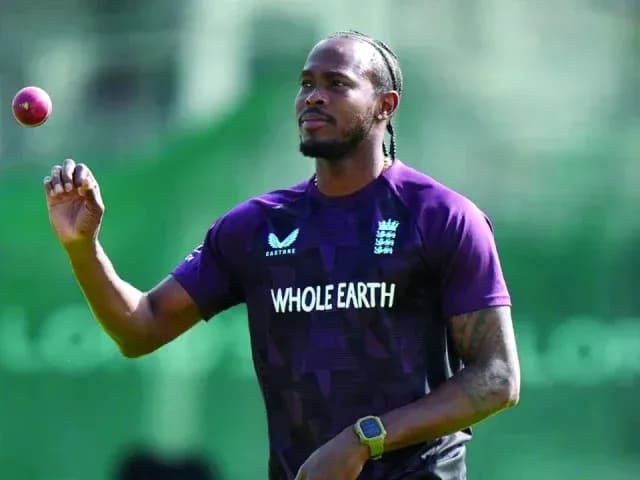
Archer, 31 now and bowling as if the last few years never happened, hit 94 mph and averaged 90.7 mph in a blistering opening spell. Shan Masood went. Azan Awais, on debut, was given a harsh education. The radar was on, the hostility unmistakable.
He finished with 3-26, a return that flattered Pakistan more than it did him.
At the other end, Robinson – his captain at Sussex – went to work like a man tightening a vice. Thirteen overs, four maidens, four wickets for 11. Barely a bad ball. Barely a release of pressure. If Archer was the thunder, Robinson was the slow, unyielding storm that follows.
“It's really nice having the extra seamers in the line-up. I could play until I'm 40 at this rate,” Archer said, the grin never far away but the point crystal clear.
“Each day it will be someone else's turn. Everyone was relentless, everyone wants wickets and it feels like no-one is ever going to be overworked because everyone shares the overs out.”
That is the heart of it. This is not the old model where one quick drags a broken body through 25 overs a day. This is a rotation in real time, within the match, not just between them.
“If someone is feeling tired you can just tell Rooty and get swapped out,” Archer explained. “You get fresh, then, you come back again. You don't have to do too much because someone is going to back you up until you find your feet again.”
The speed gun and the smile
For all the menace of his spell, Archer’s response to the numbers on the big screen was typically deadpan.
Clocked at 94 mph, consistently above 90, he shrugged.
“Nah, the speed gun isn't working properly,” he said. “I saw some of them as I went back, it was nice to see but I've had times where I've felt better and never really had the speeds to show for it.
“I don't know who is up in the box working it but thanks, I'll take it.”
The quip masked a more important truth: this was the Archer England fell in love with in 2019. Rhythmic, violent, repeatable. The action flowed, the ball flew, and Pakistan’s top order flinched.
England tighten the grip
By the close, England’s dominance had spread from ball to bat. They reached 81-3 in their second innings, a position of almost obscene comfort given the state of the game.
Emilio Gay held firm with a gritty, unbeaten 30, ignoring the chaos that had engulfed Pakistan’s batting. It was not pretty, but it was precisely what the situation demanded – time at the crease, runs on the board, a lead that swelled with every nudge.
Rain threatens to intrude on Saturday and could yet slow England’s push for a second straight crushing win. The forecast is heavy, the clouds already gathering over the old pavilion.
But the scoreboard tells its own story. A 261-run lead. A Pakistan side bruised and bewildered. A fast-bowling quartet that looks built to last.
If this is what England’s new era of shared workload and shared hostility looks like in its infancy, how much damage can Archer and company do over the next nine years?