Harpreet Brar: The Constant in Punjab Kings' Changing Landscape
Harpreet Brar has lived through almost everything Punjab Kings have thrown at a cricketer. A rebrand. Seven captains. An assembly line of overseas stars. A churn that rarely stops.
Through it all, one thing has barely moved: a tall left-arm spinner from Moga, quietly outlasting the noise.
Since his IPL debut in 2019, no Punjab Kings spinner has taken more wickets. That statistic jars when you remember he has played only two full seasons out of seven. In a franchise defined by flux, Brar has been the constant they keep forgetting to use.
The night that changed everything – and didn’t
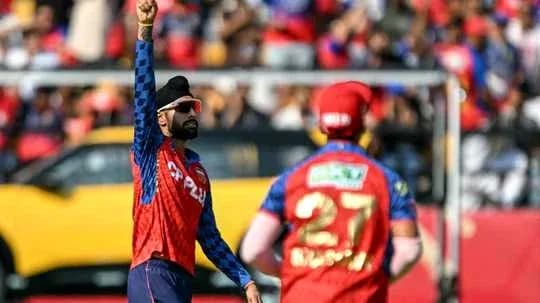
For most fans, his career condenses into one unforgettable night. RCB. A young Brar, still largely anonymous, ripping through a modern batting royalty list in the space of a few deliveries.
- Virat Kohli.
- Glenn Maxwell.
- AB de Villiers.
Kohli and Maxwell fell off consecutive balls, de Villiers followed soon after. A triple-strike that should have launched a different kind of career. It still follows him around.
“Yes, they asked me in another interview ten minutes ago,” he laughs now.
Maxwell has fallen to him three more times in the IPL since. Kohli, once more. The ‘victims’ column is a who’s who: Rohit Sharma, Yashasvi Jaiswal, Abhishek Sharma, Vaibhav Sooryavanshi. The list is long, the respect is real.
For Brar, though, one name sits apart.
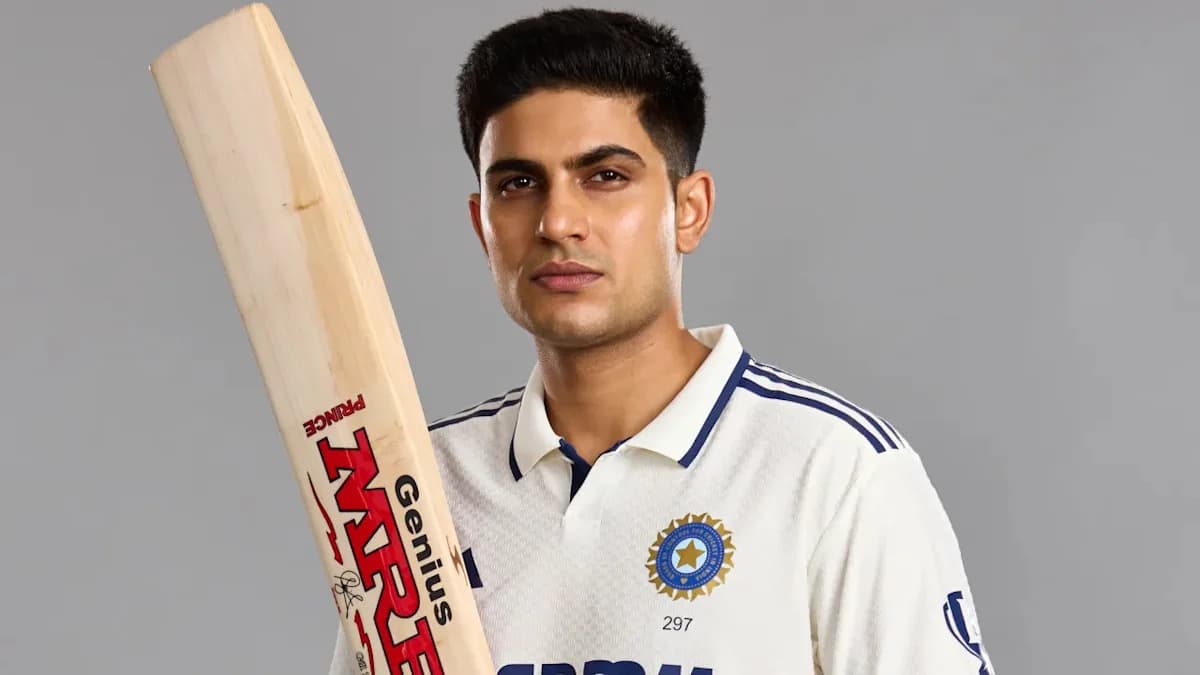
“After Virat paaji, there’s no batsman whose aura is such that their wicket can be remembered,” he told Cricbuzz. “But still, I haven’t yet dismissed Shubman Gill in the IPL… mostly everyone else.”
Then comes the sting.
“I would definitely like to take Gill’s wicket in my career. But for the last 3-4 years, whenever there’s a match against him, I am not playing.”
A bowler in the age of the Impact Player
That line keeps looping back. Not playing. Not picked. Not in the XI.
In IPL 2026, Brar appeared twice. Once in April, once in May. That was it.
The first outing: 0 for 25 in four overs in a 222 v 228 run-fest against Rajasthan Royals – a tidy spell in a game gone mad. The second: 2 for 35 against RCB, removing Jacob Bethell and Devdutt Padikkal, two of only four wickets to fall in another 222.
On the face of it, those numbers, layered over his previous seasons, should have earned him more cricket. Instead, his job description has been quietly rewritten by the Impact Player rule.
In the old template, Brar was the ideal modern all-round option: frontline spinner, No.7 bat, balance to the XI. Now, the rule has sliced that role in half. His batting has almost vanished from the equation, and his selection rests on a spreadsheet of match-ups and surfaces. On flat pitches, teams lean towards more batting or an extra quick. The left-arm spinner becomes a luxury, not a default.
“Sir, main na sirf kaam hi kar sakta hu (I can only work on things),” he says when asked about his batting. The frustration is there, but so is the realism.
“The way cricket is going on now, there is the Impact Player (rule), because of which I have gone down one spot further (in the batting order). If I play, there’s only Arshdeep (Singh) and Yuzipaaji (Chahal) after me. Because Marco Jansen also bats. Even if Azmatullah (Omarzai) plays, he will go above me.”
Then he lays out the harsh maths of his role.
“In the future, whenever the Impact Player rule stops, and I wish it happens… because if our batting comes first, I will not be in the team. If bowling comes, I will be in the team. If the total is more, the pacer plays. This is how it is.”
A rule under fire, a player stuck in limbo
That wish is not entirely fanciful. The Impact Player clause came up in a Captains’ Meeting before the 2026 season. Big-name players have pushed back against it. Franchises will be formally asked for feedback. Early signals suggest the rule will stay for at least one more year.
For Brar, that is one more year of living on the edge of selection.
“Personally, Impact Player is not good for me because I want to play all games,” he says. “Every player wants to play more. So yeah, I have been working on my batting – I have been doing that for eight years. But I am not getting enough chances.”
The irony is brutal. Punjab’s spin usage has shrunk to almost a historical low. In 2026, they bowled spin for just 18.7% of their overs – the least in the league – and took only 14 wickets with it, also the fewest. Across their history, that spin share is joint-lowest for a season.
Contrast that with their best years. In 2014 and 2025, the two seasons they reached the IPL final, spin delivered its highest share of their wickets: 33% and 32% respectively. When Punjab have been at their best, their spinners have been central. In 2026, with Chahal as the lone guaranteed spinner and little backing around him, Brar’s opportunities evaporated.
A career that refuses to stand still
His reputation outside the IPL tells a very different story.
Since 2023, no spinner has taken more wickets than Harpreet Brar in the Syed Mushtaq Ali Trophy. He has also stepped into the red-ball world, making his Ranji Trophy debut last season and immediately leading Punjab’s wicket charts.
Yet the IPL’s bench time has created a strange vacuum. He has not played any professional cricket since May.
To fill that gap, Punjab Kings pulled him into an off-season camp last month with a small group of players. No crowds, no cameras, just long days with strength and conditioning staff and assistant coaches.
“I worked on plenty of things in detail,” he says. “How can I get better… how can I bowl better?”
The emotional whiplash remains real.
“When you do well for your team, and suddenly, you are not in the first XI for the next game. Dukh lagta hai (it hurts) but as a cricketer, team always comes first, which is our motto. We must go as per the demands of the team. But it doesn't mean that if I am not playing, I’ll just sit and feel low.”
Ponting, Iyer and uncomfortable questions
Inside the Punjab setup, Brar has gravitated towards Ricky Ponting and Shreyas Iyer, two men who have seen every side of elite cricket.
“They are very similar kinds of people. And they are very practical people,” he says. “If I have a question in mind, I will go and ask them. They will always answer it in the right manner.”
He makes a point of catching them alone, away from the huddle. Those conversations are not just about grip or field placements. They are about selection, about why he is out of the XI, about what exactly he must do to get back in.
For a player in his late twenties, those are not easy questions to keep asking. He asks them anyway.
Chasing cricket across continents
The hunger for game time has pushed him beyond India’s domestic circuit.
His wife works as a doctor in the United Kingdom, which naturally pulls them there after the IPL. For most players, that stretch is holiday time. For Brar, it doubles as a scouting trip.
This year, he turned up in club cricket in the UK. New grounds, new weather, new batters. Same motive.
If there is a chance to bowl, he will take it.
“Even when you go for some free time after the IPL, say for a vacation… even if matches are on the weekend, I want to play and stay associated with the game whenever I have free time,” he says.
Last year, that same restlessness took him to the edge of the India Test dressing room. During England’s tour, he was in Birmingham when the national team trained there. He had a number in his phone that could change his day, maybe his career: Shubman Gill.
He sent a message to the India captain, asking if he could join practice.
“He said, ‘Yes, you can come,’” Brar recalls. “So, I managed to practice with the team. I think Shubman himself didn't come that day. It was optional practice. But I practiced with the rest and really liked it. Also, it’s always great to meet your own people on foreign soil!”
It was a fleeting window, but it told him something. He could belong there.
Red ball, new horizon
For now, he is back where it all began, playing in the state T20 league in Punjab, returning to the white-ball craft that made his name. The bigger test, though, sits a little further down the calendar: a second Ranji Trophy season.
In an era where the Impact Player rule can reduce a specialist T20 spinner to a part-time option, red-ball cricket offers him something more stable. A different route to relevance. Another way into the national conversation.
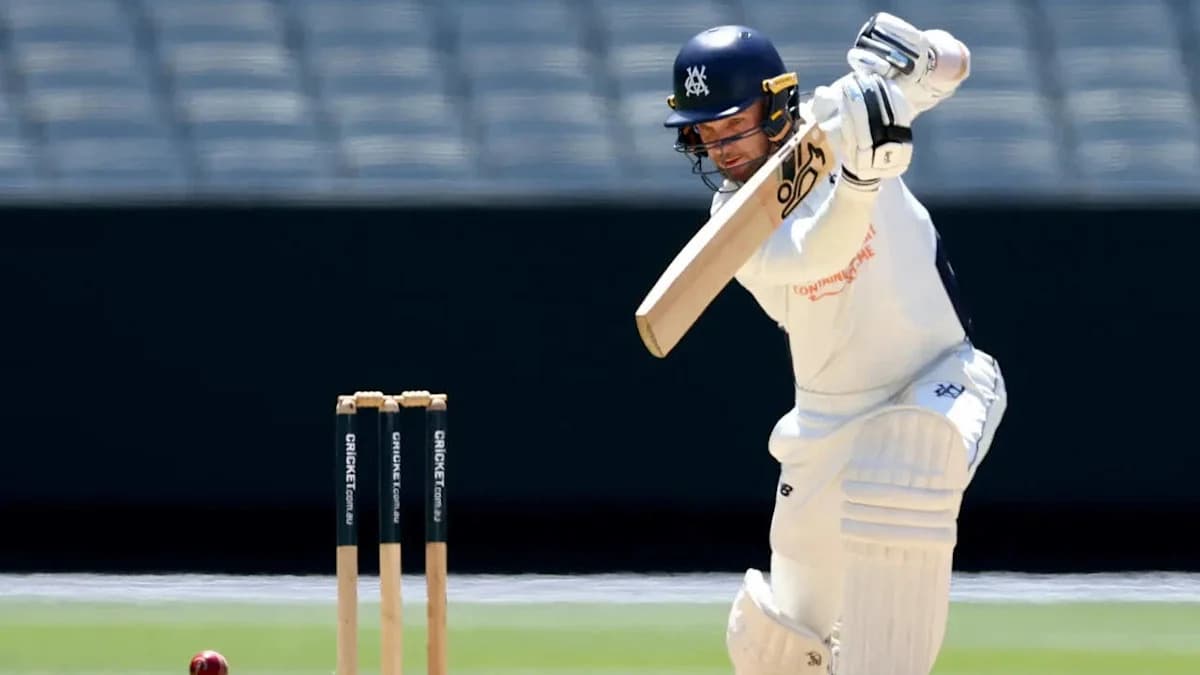
His first Ranji season, in 2025-26, could hardly have gone better. Twenty-three wickets at 21.26, the highest tally for any Punjab bowler. Among those wickets, a few more big names were added to his scrapbook. KL Rahul, for one, will remember the delivery that screamed past his defence and crashed into middle stump.
Those are the kinds of spells that selectors notice. They are also the kind that fuel belief.
“Personally, I feel I can play Test cricket for India,” Brar says. “And for that, I am willing to put in all the hard work needed and will even exceed that in the future.”
So the left-armer waits, works, and bowls – in Mohali, in Birmingham, in club games, in empty nets. A constant in a team that keeps changing, a specialist in a format that keeps rewriting its rules.
If the Impact Player era has squeezed his role, red-ball cricket might yet reopen the door. And somewhere down the line, perhaps on a different kind of pitch, that long-awaited duel with Shubman Gill may finally come with a wicket attached.