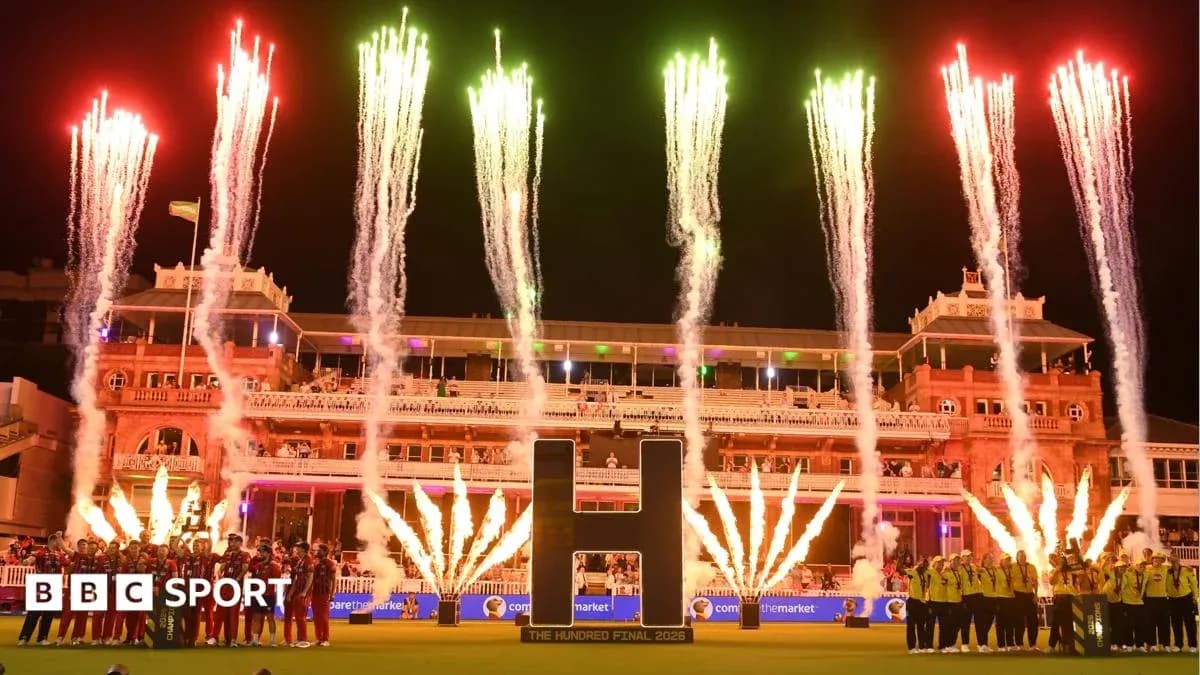
The Hundred: Richard Thompson's Defense of English Cricket
Richard Thompson knows English cricket is creaking at the seams. He also believes the strain is worth it.
The England and Wales Cricket Board chair has doubled down on The Hundred, insisting that the competition’s impact on an already bloated schedule is a “price worth paying” for the financial security it has brought the game.
The squeeze of The Hundred
Since its launch in 2021, The Hundred has muscled its way into the heart of the English summer. This year, there were just two days between the tournament final and the first Test against Pakistan at Headingley. For an international side that once ring-fenced preparation time, that gap felt alarmingly tight.
Bowler Josh Tongue called it “crazy scheduling”. Thompson doesn’t deny the chaos. He accepts it.
“Sacrifices have got to be made,” he told Sky Sports, as he set out the ECB’s position with unusual bluntness. The message was clear: the calendar is under strain, but the money matters more.
Last year, the ECB sold stakes in the eight Hundred franchises, raising more than £500m. That cash has been spread across the professional and domestic game. Some counties have wiped out long-standing debts. Others have poured funds into grounds and facilities they could only dream of upgrading a few years ago.
“If we can take all of the debt out of the game, which we have, make a generation [of counties] which can reinvent themselves, that is a price worth paying,” Thompson said.
For now, the ECB insists The Hundred will not grow in length. The number of days it occupies in the calendar, Thompson stressed, will not increase. The competition is locked into a protected window in July and August, with international cricket cleared out to maximise star power and broadcast appeal.
That protection comes at a cost. England can no longer pull players out of The Hundred for Test preparation. The turnaround is brutal, the margin for error tiny.
“We were criticised that The Hundred finished and two days later we were playing a Test match at Headingley,” Thompson said. “Imagine if that becomes one day – that can’t happen.”
A calendar at breaking point
The Hundred does not exist in isolation. It sits on top of a domestic structure already groaning under the weight of fixtures: the County Championship, the T20 Blast, and the One-Day Cup.
The 50-over competition has been pushed into the shadows, often functioning as a second-team tournament while first-choice players disappear into The Hundred. It is a demotion that still stings traditionalists and county loyalists.
“We are having to crowbar so much cricket in,” Thompson admitted.
Yet he pointed to the financial logic driving these choices. Only four countries, he said – England, South Africa, India and Australia – have carved out a dedicated window for their flagship short-form tournament, a move he argues “can pretty much guarantee the financial success of their game”.
The Hundred, in other words, is not just another event. It is the centrepiece of the ECB’s economic model, even if it twists the rest of the schedule into uncomfortable shapes.
Standards under scrutiny
While the debate over fixtures rumbles on, Thompson faces another uncomfortable storyline: questions about the professionalism of England’s men’s team.
Those concerns flared again when bowler Brydon Carse was left out of the side for the second Test against Pakistan. Carse had been briefly arrested on suspicion of being drunk and disorderly while on duty with Durham. He was de-arrested, but investigations by both the police and the Cricket Regulator are ongoing. Images on social media showed him in handcuffs, surrounded by police officers.
Thompson did not hide his frustration at the broader pattern.
He described the continued questions around the squad’s professionalism as “enormously” disappointing and delivered a pointed reminder of what playing for England should mean.
“When you play for your country you are judged by far higher standards,” he said. “What comes with wearing those three lions comes with respect, responsibility and pride.
“Unless you live and breathe those qualities there is a problem.
“Every player has to understand the responsibility that comes with playing for England.”
The ECB chair is trying to hold two lines at once: defending a tournament that warps the calendar while demanding higher standards from those who represent the national side. The money from The Hundred has bought English cricket time and stability. The question now is whether the game can use that breathing space to fix its culture and its schedule before the strain finally shows on the field.