Imran Khan's Legacy and the Lord's Test Controversy
At Lord’s, on a warm London afternoon, the story briefly stopped being about swing, seam and scoreboard pressure.
During lunch on day one of the second Test, while players ate and analysts dissected the morning’s play, Sky Sports aired an interview that had nothing to do with England’s top order or Pakistan’s new-ball plans. On screen were Suleiman and Kasim Khan, the sons of Imran Khan – Pakistan’s World Cup‑winning captain turned prime minister, now three years into a prison term he insists is unjust.
Behind the scenes, the stakes were suddenly far higher than a session lost to rain or a misjudged declaration.
A threat that never reached the dressing room
It emerged that the Pakistan Cricket Board had raised the prospect of cancelling the Lord’s Test – and even the rest of the three‑match tour – if Sky went ahead with the broadcast. The concern centred on the political sensitivity of airing Imran’s sons speaking about their father’s treatment and security, and criticising the UK government’s response.
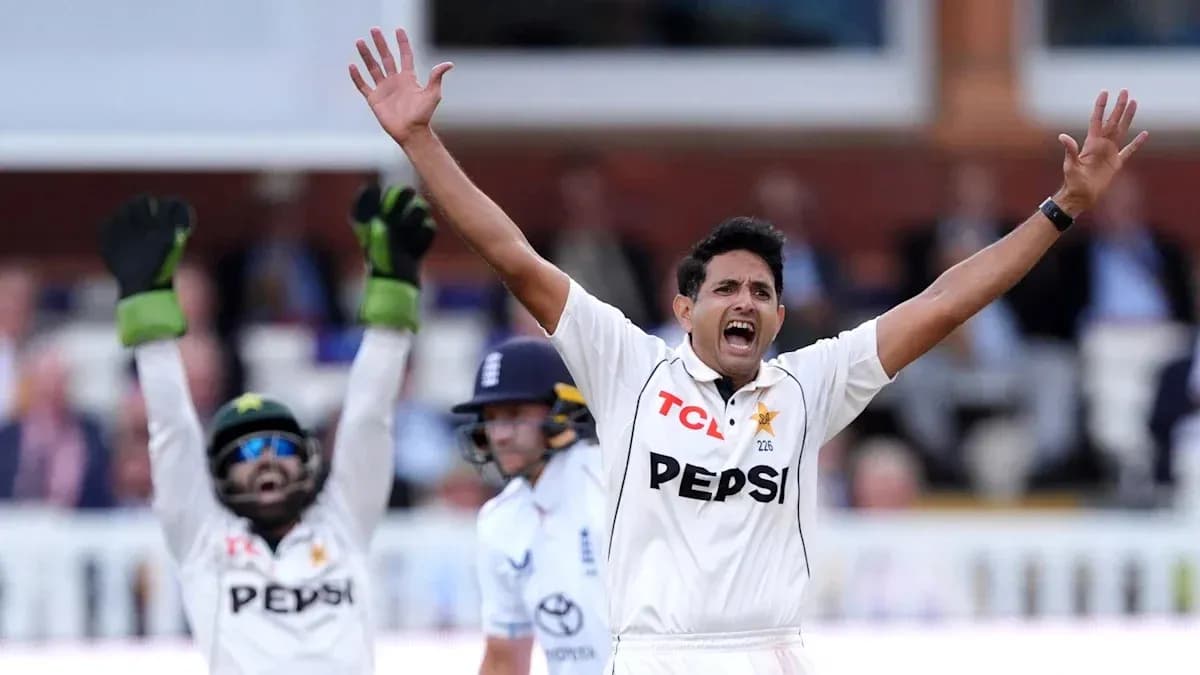
A version of the interview did go out. The players walked back through the Long Room, down the pavilion steps and onto the field as if nothing had happened.
According to head coach Sarfaraz Ahmed, for them, nothing had.
“I don't know anything. I'm just focusing on the match,” he said at the close of the second day, when the dust around the controversy had begun to settle but the questions had not. Asked directly about the lunchtime segment, he replied: “You're talking about the interview? We don't know about the interview.”
Was there ever a chance Pakistan would refuse to return after the interval on day one? Sarfaraz brushed it away.
“All are OK. We were having lunch at that time.”
The message was clear: whatever discussions raged in boardrooms and government offices, the dressing room stayed locked on the cricket.
Politics at the edge of the boundary
The interview itself, conducted by former England captain Michael Atherton, gave Suleiman and Kasim a rare platform. They voiced fears over their father’s safety and criticised what they see as an inadequate response from British authorities.
Before it aired, Sky received a complaint about the plan to show it. With tension rising, the England and Wales Cricket Board did not treat it as a routine broadcast issue. The ECB sought advice from the UK government, consulting the Foreign, Commonwealth and Development Office before the segment was allowed to run.
In Pakistan, the match is being shown on public broadcaster PTV, which takes Sky’s pictures. PTV chose not to air the interview at all, a decision that underlined how politically charged Imran’s situation remains back home.
The PCB’s chairman, Mohsin Naqvi, also serves as Pakistan’s interior minister, a dual role that means any friction between sport and state is never far from the surface. The possibility of a Test being pulled over a lunchtime interview was a stark reminder of that overlap.
Once the interval ended, though, the game moved on. The tourists resumed play, the Test rolled through to the end of the second day, and England closed 81-3 in their second innings, 261 runs ahead and in control of the match. Sky, for its part, is understood to have received no further complaints about the interview on Friday.
Imran’s shadow and a volatile history
Imran Khan, now 73, remains a towering figure in Pakistan’s cricketing imagination. A 21‑year international career, the 1992 World Cup triumph, the aura of the all‑rounder who reshaped an era – his legacy stretches far beyond the boundary rope.
His later turn as prime minister from 2018 to 2022, followed by a series of corruption cases he denies and his subsequent imprisonment, has dragged that legacy squarely into the heart of Pakistan’s political turmoil. The game he once led is now brushing against the consequences of his fall.
This is not the first time an England–Pakistan Test has found itself at the mercy of forces bigger than bat and ball. In 2006, at The Oval, accusations of ball tampering escalated into a full‑blown crisis. Pakistan refused to take the field after tea on the fourth day. The match was adjudged forfeited, the only such instance in Test history. A contest that should have been remembered for cricket alone became a case study in mistrust and breakdown.
Lord’s did not reach that point. The threat stayed hypothetical, the players returned, and the game continued. But the episode added another layer to a relationship that has never been simple.
Tours, tension and what comes next
England are due back in Pakistan in October for a one‑day tri‑series involving the hosts and Sri Lanka. It will be their fourth separate visit in four years, a remarkable burst of engagement after a 17‑year gap fuelled by security concerns.
That recent flurry of tours has been framed as a sign of trust restored, of cricket helping stitch together what politics and security fears had once torn apart. Yet the events at Lord’s show how fragile that equilibrium can be when broadcast decisions and political sensitivities collide.
For now, the Lord’s Test moves towards its conclusion with England firmly on top and Pakistan chasing a way back into the match. The numbers on the scoreboard are clear. The fault lines off it are less so.
When England land in Pakistan again in October, the question will linger: can cricket keep walking this tightrope without slipping back into the kind of chaos that once left a Test abandoned and a rivalry scarred?