India vs Pakistan: The Rivalry at Dubai International Cricket Stadium
India and Pakistan will walk out at the Dubai International Cricket Stadium on September 5 knowing every crack, every patch of grass, every deceptive patch of dew. The rivalry is fierce enough on its own. The venue only sharpens the edge.
Dubai has become the beating heart of the women’s game in this part of the world. It staged the entire 2024 Women's T20 World Cup and now carries the full load of the 2026 Women's Asia Cup, all 15 matches under its distinctive ring of lights. This is no passing stop on the circuit; it is a ground shaping reputations.
A Ground That Remembers
Nineteen women’s T20Is have already been played here. Most came in that 2024 global tournament and in the Namibia–UAE bilateral series a year earlier, but the numbers now carry real weight.
Chasing sides have won 11 of those 19 games. That split is not a quirk. Once the sun drops behind Dubai Sports City and the moisture creeps onto the outfield, bowlers fight a different battle. The ball turns slick, fingers lose their bite on slower balls, and suddenly totals that looked imposing at the halfway mark start to feel 15 runs light.
India know exactly how to use that shift. Pakistan know exactly how painful it can be.
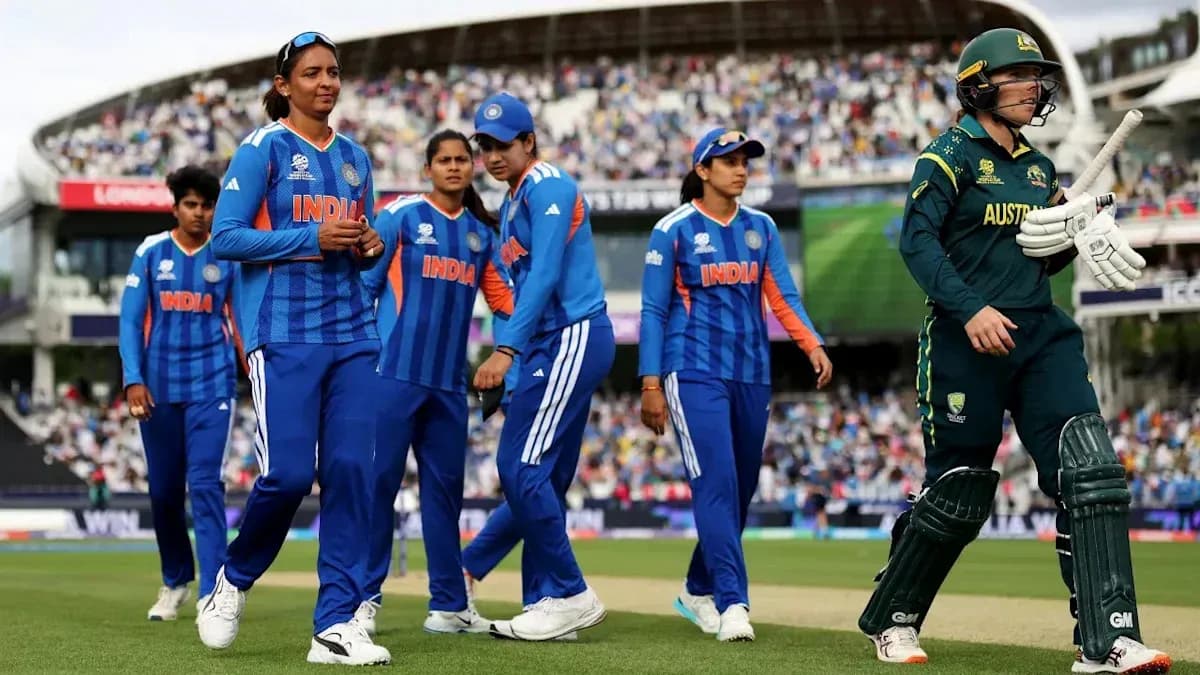
The last time these two met here, in October 2024 during the T20 World Cup, India eased to a six‑wicket win. Pakistan also carry a more brutal statistic: they hold the record for the lowest women's T20I total at this stadium. India, in stark contrast, own the highest. The gap between those extremes sums up the gulf in comfort levels on this surface.
A Stadium Built for Big Nights
Dubai International Cricket Stadium holds around 25,000 spectators, a compact cauldron when full. Opened in 2009 in the heart of Dubai Sports City, it stands as the permanent home of the ICC’s headquarters, but its real authority comes from what has unfolded in the middle.
Under lights, the ground feels made for T20. The ring of LEDs, the tight amphitheatre, the white ball skidding through the air. Bowlers get something early, then the game changes.
Pitch With Two Faces
On paper, the pitch is “balanced.” In reality, it moves through distinct phases.
New-ball quicks enjoy the opening exchanges. There is bounce to work with, enough pace to keep batters honest, even if conventional swing rarely plays a starring role. Hit the deck, use the short-of-a-length channel, and there are rewards.
Then the surface begins to dry and slow. This is where the spinners come to life.
Across all T20Is at the ground, slow bowlers have claimed more wickets than the pacers. The ball grips, holds in the pitch, and turns just enough to force errors. Through the middle overs, captains who trust their spinners tend to control the tempo.
And then the dew arrives.
Evening fixtures in Dubai often flip on that single factor. Spinners who dominated the first innings can suddenly struggle to land their variations, seamers lose control of their cutters, and batters who survive the initial adjustment phase can cash in. That is why chasing teams hold that 11–8 edge in women’s T20Is here. It is not a trend; it is a pattern.
Chases, Records and a West Indian Statement
The highest successful run chase at this venue belongs to West Indies. During the 2024 Women's T20 World Cup, they reeled in England Women’s 141, a target that looked competitive until Hailey Matthews and Qiana Joseph dismantled it.
Both struck half-centuries, both imposed themselves on conditions that often favour restraint. The chase underlined a truth about Dubai: once set, top-order batters can dictate terms, especially under lights with a wet ball in the bowlers’ hands.
India’s Batting Blueprint
India Women currently sit atop the scoring charts at this ground. Their 193 for 5 against Hong Kong in the 2026 Women's Asia Cup group stage is the highest team total in women’s T20Is at Dubai, surpassing their own previous mark of 172 for 3 from the 2024 World Cup.
At the centre of those numbers stands Smriti Mandhana.
Her 124 off 64 balls against Hong Kong is not just the highest individual score at the stadium; it is the only century recorded by a woman in T20Is at this venue. She mixed timing with brutality, threading gaps and clearing ropes in equal measure. The next best here, Anneke Bosch’s unbeaten 74 for South Africa Women, sits a long way back.
Mandhana has turned Dubai into her personal stage. Across five matches, she has piled up 212 runs at an average of 42.40, including that hundred and a fifty. No one else comes close in volume. Laura Wolvaardt runs second with 181 runs from five innings at 45.25, a mark of her consistency but still short of Mandhana’s dominance.
With Pakistan next on the schedule, the Indian opener walks into a venue where she already owns the narrative.
Spin, Skill and a Seven‑Wicket Masterclass
If Mandhana defines the batting story in Dubai, the bowlers have their own hierarchy.
South Africa’s Nonkululeko Mlaba leads the wicket charts, with 11 scalps in five innings. Her left-arm spin has repeatedly exploited that gripping middle phase of the pitch, highlighted by a standout 4 for 29 against West Indies during the 2024 Women's T20 World Cup.
Yet even Mlaba’s record has been overshadowed by a single spell of genius.
Sri Lanka’s Chamari Athapaththu, better known globally for her hitting, produced scarcely believable figures of 7 for 5 against India Women on September 2 in this very Asia Cup. Seven wickets. Five runs. On a ground where batters often cash in late, she tore through India’s order and rewrote the bowling record books for the venue.
That performance also dragged her within two wickets of Mlaba’s overall tally. One more outing like that and the leaderboard will change hands.
India vs Pakistan: A Rivalry Framed by a Ground
So the stage is set.
India arrive as the side that has conquered Dubai’s high ceiling with the bat, owning both the top two team totals and the only century. Pakistan come in with scars, from the lowest total on the board to that six‑wicket defeat in 2024.
The pitch will start hard, then slow. The spinners will circle. The dew will lurk in the background, waiting to tilt the contest once more in favour of the chasing side.
Mandhana has runs in the bank here. Mlaba and Athapaththu have shown what is possible with the ball. The records are already etched into the stadium’s history.
On September 5, India and Pakistan will try to bend those numbers to their will. The question is simple: does Dubai write another familiar chapter, or is this the night the script finally breaks?