India Wins U-19 Asia Cup in Last-Ball Thriller Against Pakistan
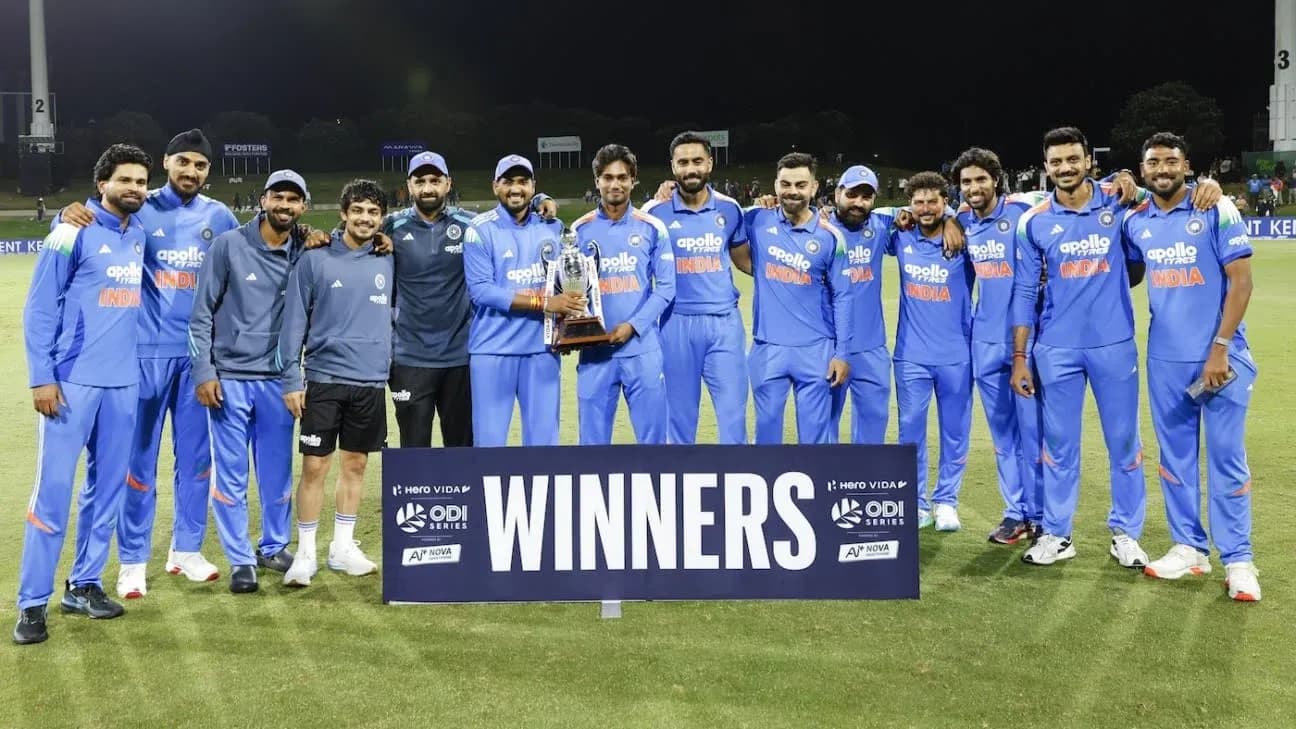
India’s next generation pulled off a heist for the ages in Al Amerat, snatching the Under-19 Asia Cup from Pakistan’s grasp with a last-ball boundary that will live long in junior cricket folklore.
Chasing a daunting 338, India looked gone. Finished. When the ninth wicket fell, they still needed 29 runs in less than three overs. Pakistan’s players were smiling, the dugout relaxed. The script felt written.
Mohit Ulva tore it up.
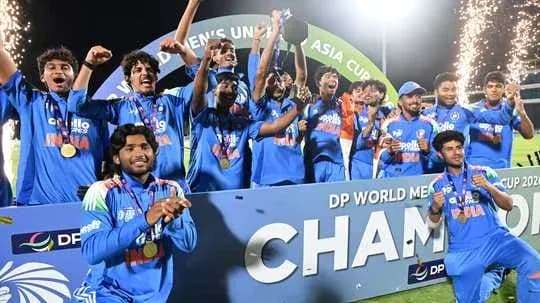
With three needed off the final ball, Ulva threaded a boundary to spark bedlam. Teammates sprinted onto the field, some in disbelief, some in tears, all of them piling onto the final-wicket hero who had turned a lost cause into a title-winning epic.
A chase that refused to die
India’s pursuit began in a low gear. The openers took their time, wary of the scale of the target and the pressure of a final. Aaryavir Sehwag, who would end the tournament as its standout performer, was the first to break free.
He didn’t just survive; he dominated. Sehwag produced his fourth fifty-plus score of the competition, timing the ball sweetly and setting the tone with authoritative strokeplay. Yet, just when he looked set for something monumental, his innings stalled and ended, leaving India with a platform but not the security they craved.
Lakshaya Raichandani took the more patient route. His half-century arrived, but it took him 72 balls to get there. The scoreboard kept moving, but not fast enough. The asking rate crept up, then surged. India needed a spark, not just solidity.
Pakistan sensed it. They chipped away, taking wickets often enough to keep India on edge. Every time the chase seemed to settle, another breakthrough yanked it back into doubt.
Then came a surge.
Anvay Dravid and Raichandani finally cut loose, peppering the boundary and dragging the chase back into the realm of possibility. Their partnership rattled Pakistan, the field spread, the bowlers searching for answers. The mood shifted.
And then, in the space of two balls, it flipped again.
Both set batters fell off successive deliveries. The heart of the chase was ripped out. The Pakistan players roared; India’s dressing room fell silent. At that point, the trophy looked destined for green hands.
Manal Chauhan’s counterattack
India refused to accept the script.
Manal Chauhan strode out and immediately changed the tone. No time for rebuilding, no room for caution. He counterpunched. Boundaries flowed, risks were taken, and Pakistan’s grip on the game loosened, then slipped.
Chauhan farmed the strike, watched partners depart, and still kept India in the contest with fearless hitting. Every clean strike deepened the tension. Every run brought the equation into range.
When Chauhan and Ulva finally came together, the equation still looked brutal. Yet they batted as if oblivious to the pressure, hammering anything loose and forcing Pakistan’s fielders onto their heels. The death overs became a blur of desperate dives, urgent sprints, and anxious glances at the scoreboard.
Even so, Pakistan had one last push.
The ninth wicket fell in the 48th over. India’s lower order, stretched to its limit, finally cracked. Pakistan, defending 338 in a final, would have backed themselves from there every single time.
Ulva had other ideas.
He launched the penultimate over with a four and a six, ripping the contest wide open again. Suddenly, the equation shrank, the noise rose, and Pakistan’s bowlers felt the weight of the moment.
Eight needed off the final over. One wicket in hand. A title on the line.
Ahmed Hussain held his nerve as best he could, dragging the game deep, denying the boundary ball, forcing Ulva to calculate every stroke. The over tightened, the drama peaked.
Three required off the last ball.
Ulva swung, connected, and sent the ball racing to the rope. The boundary didn’t just win a match; it detonated a celebration. India’s entire squad burst onto the field, engulfing the final pair in a chaotic, joyous pile. A chase that had looked doomed became a champion’s statement of defiance.
Pakistan’s batting brilliance, and the collapse that hurt
Earlier, Pakistan had done almost everything right with the bat.
Usman Khan once again delivered on the big stage, compiling a classy century in the final. He anchored the innings, controlled the tempo, and gave Pakistan the perfect base. His composure allowed those around him to swing freely.
Abdul Qadir took full advantage. His 54-ball 80 was a spectacle, a whirlwind of power hitting that repeatedly cleared the ropes — eight times in all. Every blow seemed to sap Indian energy, every six a reminder of the mountain that would later stand before the chasing side.
When Qadir fell, skipper Farhan Yousuf took over. He hammered a half-century of his own, ensuring the momentum didn’t dip. At 299 for 3 after 44 overs, Pakistan were cruising, the prospect of 350 or beyond very real.
Then the innings unraveled.
From a position of absolute strength, Pakistan stumbled. Wickets tumbled, the fluency disappeared, and the final six overs yielded only 38 runs for the loss of six wickets. India’s bowlers, who had taken punishment for much of the day, suddenly found discipline and control at the death.
Those closing overs didn’t just trim the total. They cracked open a door that had seemed firmly shut.
In a final decided on the very last ball, that late-innings collapse carried a heavy price. Pakistan had dominated long stretches of the day. India, somehow, walked away with the trophy.
On nights like this, at this level, you don’t just find future internationals. You find players who know how to win when the game screams that they shouldn’t.