Irfan Pathan's Four-Word Taunt After India-Pakistan Clash
Irfan Pathan needed just four words to capture the mood of another ruthless Indian performance against Pakistan.
“Aaj Sunday hai kya?”
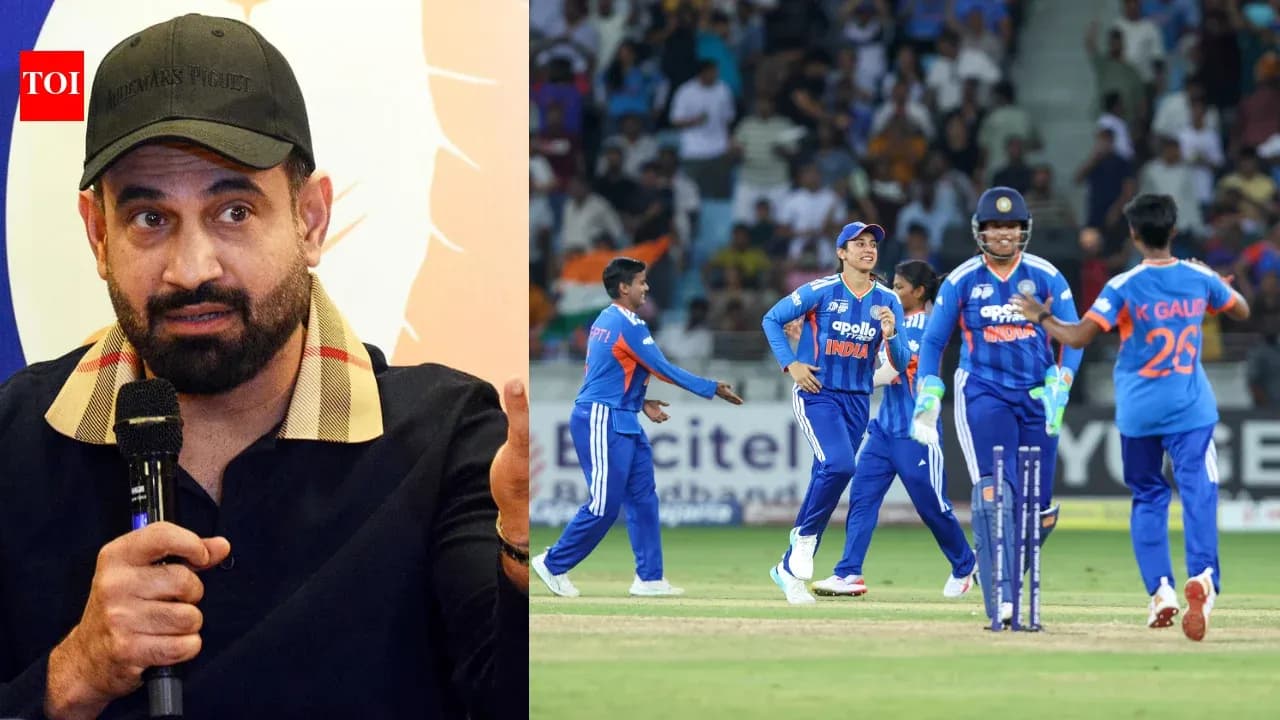
The former India all-rounder hit send on X minutes after Harmanpreet Kaur’s side crushed Pakistan by seven wickets in the Women’s Asia Cup 2026, and the post exploded across social media. It wasn’t just a quip. It was a deliberate echo of a taunt that has become part of the modern India–Pakistan rivalry.
Last year, after India beat Pakistan’s men in three T20Is on three consecutive Sundays, Pathan had repeatedly needled the neighbours with, “Sunday kaisa raha padosiyo.” The line stuck, turned into a meme, and now, with another lopsided result in India’s favour, he reached for the same nerve.
This time, it was the women who gave him the perfect punchline.
Spin twins rip through Pakistan
For a brief flicker, Pakistan looked settled. 27 without loss in just over four overs. The ball was coming on, the openers Muneeba Ali and Shawaal Zulfiqar finding gaps, nudging India onto the back foot.
Then Harmanpreet turned to her spinners. The match turned with her.
On a surface offering grip and sharp turn, India’s young spin pair, Shree Charani and Prema Rawat, tore through Pakistan’s batting with a maturity that belied their age. Charani, just 22 and bowling left-arm orthodox, strangled the innings with figures of 3 for 7 from four overs. Rawat, 24, matched her for menace, taking 3 for 9 in her four.
The numbers were brutal. Pakistan, from 27 without loss, folded for 55 in 18.1 overs – their lowest total in T20 cricket.
The collapse was staggering. Once the openers departed – Muneeba for 13, Shawaal for 14 – panic replaced purpose. From 27 for no loss, Pakistan crashed to 36 for 6 after 10 overs, losing six wickets for just nine runs. Every dot ball tightened the noose; India sent down 78 of them in an innings that never recovered from the first crack.
Shafali Verma, often talked about for her batting, chipped in with 1 for 10 from three overs, adding another layer of pressure. Deepti Sharma finished the job with 2 for 5 in 3.1 overs, cleaning up the tail and ensuring Pakistan never even flirted with respectability.
By the time the final wicket fell, the contest had turned into a procession.
Harmanpreet’s landmark day, India’s statement win
If the bowling display was ruthless, the occasion carried its own weight. Harmanpreet Kaur walked out as the first international captain – man or woman – to lead India in 150 T20Is. It is a landmark that speaks to longevity, resilience, and the central role she has played in the rise of India’s women’s cricket.
Her team responded in kind.
Chasing 56 was never going to test India’s batting order, but there was still a job to be done. Shafali Verma made 12, Smriti Mandhana added nine, and Pratika Rawal scored four. All three fell, but none of the dismissals shifted the balance of the game. The target was too small, the gulf too wide.
Harmanpreet ensured there would be no drift. She stayed unbeaten on 18, controlled, assured, and then finished the game in style, launching the winning six straight down the ground. Deepti Sharma, calm at the other end, remained not out on 12 as India cruised home in just 8.4 overs.
It was not just a win. It was another emphatic reminder of where the power lies in the Women’s T20 Asia Cup.
India have now beaten Pakistan in seven of their eight meetings in the tournament’s history. Pakistan’s solitary win looks more like an outlier with every passing edition, as India continue to set the standard in regional competition.
So when Pathan typed, “Aaj Sunday hai kya?” it fit the script perfectly – a familiar taunt for a familiar result. Another India–Pakistan clash, another one-sided affair, and another reminder that, for now, this rivalry in women’s cricket is being written almost entirely in India’s colours.