Japan's Rising Cricket Profile: A Strategic Frontier
Japan has never pretended to be a cricket powerhouse. Not yet. But it has quietly become one of the sport’s most strategic frontiers – and the International Cricket Council knows it.
This is a country that has already shown the world how to host: the Olympics in 2021, the World Aquatics Championship, the World Athletics Championships, and now the Asian Games. Cricket’s global governors can see the obvious play – tap into Japan’s organisational muscle and turn it into a serious staging post for the game.
“So part of our longer-term strategic planning with Japan is how do we work with them to build up their capabilities to host larger ICC events,” says William Glenwright, the ICC’s GM – Development, “and potentially one day… there might be an opportunity to host or co-host a Youth World Cup or something as part of a bigger plan.”
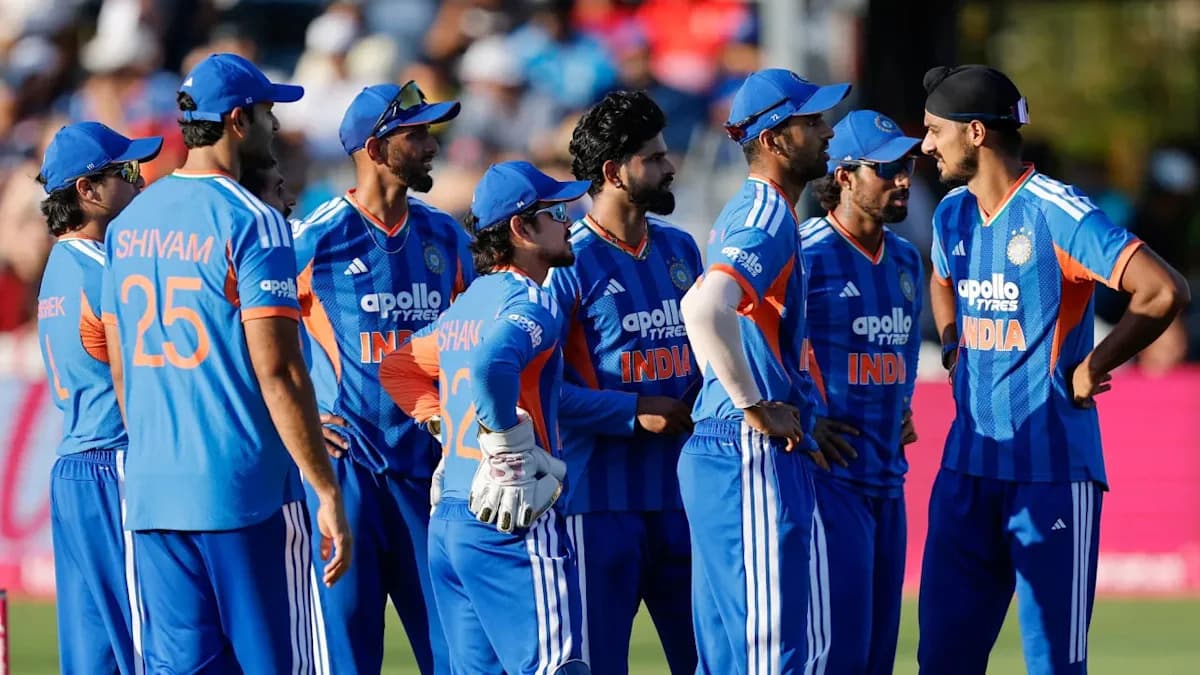
That “bigger plan” has just been given a very public push: India have agreed to play Japan in a T20I, a full world champion touring the side ranked 41st. On paper, it is a mismatch. In reality, it is a statement.
“India's tour of Japan is so important,” Glenwright explains, “because not only does it build, obviously, the capability of the cricket team, but it builds the broader capabilities of the organisation around meeting the demands that come with hosting world champions. And it's important that the administrators of Japan Cricket Association (JCA) be exposed to that, because if we aspire to bring major ICC events to Japan, then they need to have that capability.”
This is about more than a one-off fixture. It is about validation.
“Having a full member and the world champions playing any associate member is hugely important to us from a cricket perspective,” he says. “And then there's the other element of that, which is – what does it mean for the country of Japan and cricket's significance in Japan? And that's the ripple effect of a fixture like this, because it reflects a growing confidence in the game and in the full members' belief in the abilities of our associate members to host full members in major international cricket.”
Results that demand attention
The romantic story would be empty without numbers. Japan are making sure it isn’t.
On the men’s side, the schedule has thickened and the win column has begun to swell. In 2022, Japan played seven games, winning five and losing two. In 2023, they played eight, splitting them four wins and four defeats. The real leap came in 2024: 25 matches, 18 victories, six losses and one abandoned. In 2025, they played 11 (six wins, five defeats), and in 2026 so far, 10 matches have brought eight wins and just two losses.
These are not empty victories either. During this stretch, Japan have knocked over Kuwait (ranked 23rd), Bahrain (27th) and Papua New Guinea (22nd). Each result nudges the perception of what Japanese cricket is – and what it might become.
The women’s trajectory has been just as telling, and arguably more dramatic. In 2022, Japan’s women lost all four of their matches. A year later they played 16, winning four and losing 12. In 2024, the balance flipped: 10 wins and four defeats from 14 games. In 2025, they played 11, winning seven and losing four. This year, five matches have produced three wins and two losses.
Those records are not the work of a novelty side making up the numbers. They are the profile of a program learning fast.
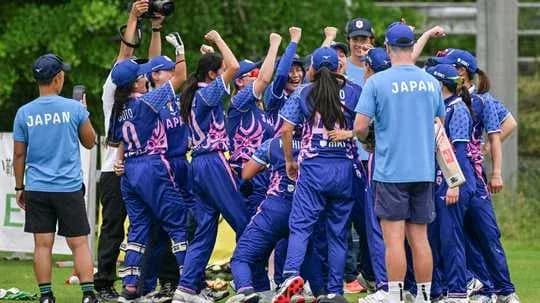
Mai Yanagida, captain of Japan’s women’s team, feels that shift every day.
“Yeah, Japan is not a cricket nation like India,” she says, “but I think over the last few years, or 10 years, I think the awareness of cricketers and the popularity of cricketers has increased. So hopefully there'll be a lot of crowd and people will watch us play. And hopefully, yeah, we'll compete with one of the top nations.”
On Friday morning (IST), that hope becomes a reality. Japan open their Asian Games campaign against India.
“Facing India is just unreal”
For Yanagida and her teammates, this is not just another fixture. This is the dream made tangible.
“Facing India is just unreal. And it's very exciting,” she says. “Of course, we've never played against them before. They are one of the top nations. We were watching the Asia Cup, we were following them. They just won the tournament. I know that all the players are top-class players. It can be intimidating. But it's more like an excitement to watch them and see them play and share the field with them.”
They have studied India closely – tracking the Asia Cup, following the WPL, watching how the best in the world go about their craft. Now they get to stand opposite them in a multi-sport arena, under the Asian Games banner, with the ICC watching closely.
For the governing body, this tournament is not simply about medals. It is a live laboratory for development.
Asian Games as a launchpad
The Asian Games sit under the Asian Cricket Council, but for the ICC they unlock doors that the Olympic Games cannot.
“For a number of reasons,” Glenwright says. “Firstly, because the Olympic Games is limited in size, as it is for all sports, the Asian Games or the regional games allow more of our members to participate in a multi-sport event. And secondly, that unlocks all sorts of funding from governments, from Olympic committees and from sponsors, in addition to the increased competitive opportunities that it provides.”
The benefits are already visible on the ground in Japan.
“On account of the Asian Games, we now have, or Japan Cricket now has, a second international cricket ground available to them. So there's one in Sano, and there's now one in Nagoya,” Glenwright explains. “So that means we have two international-standard facilities in Japan, which means all of a sudden, the capability and potential for Japan to host major ICC events, where by and large you need at least two international facilities, changes now, and it brings Japan into the equation.”
Two grounds. Two genuine, international-standard venues. For a developing cricket nation, that is a game-changer.
There have been whispers, of course. Concerns raised by the Asian Cricket Council about aspects of the Asian Games venue – not the playing surface, but the supporting infrastructure: changing rooms, media areas, athletes’ spaces. The ICC, though, is adamant that the cricket itself will not suffer.
“The ground itself, we have no concerns with. We held a World Cup qualifier there earlier this year. The reports are that the pitch and the outfield are excellent. We wouldn't have held a World Cup qualifier there if we weren't confident in it,” Glenwright says. “I know there have been some concerns expressed by the Asian Cricket Council, who manage the Asian Games, around athletes’ enclosures, like the changing rooms, the media areas, and the like.
“I believe they are being addressed. And the last update that we had is that they were being addressed. But in terms of the pitch itself and the outfield, the cricket facility, we're very confident that it's going to be a great facility that reflects the importance of this event and the members participating in it.”
A nation tuning in
The growth is not only on the field or in concrete and grass. It is also on screens.
For the first time, the ICC live-streamed select matches on YouTube and Facebook in key emerging markets, and Japan responded. Across platforms in the country, streams drew more than 1.1 million views.
On YouTube, non-English language feeds across Japan and Indonesia recorded 201,000 views. Japanese-language streams accounted for 58 per cent of that total – 118,000 views – with the remaining 42 per cent split between Hindi and Urdu. On Facebook, non-English feeds across the same two territories pulled in 252,000 views, and Japanese content delivered 70 per cent of those clicks.
Those numbers matter. They tell broadcasters and sponsors that Japan is not just a development project; it is a market.
Put it all together – the rising results, the expanding calendar, the new facilities, the growing digital audience, and now a marquee clash with India – and Japan no longer looks like a curiosity on cricket’s fringes. It looks like a country edging into the game’s mainstream.
The question now is not whether Japan can host cricket. It is how soon the sport dares to hand it something truly big.