Javagal Srinath: From Fast Bowler to Everyday Commuter
On an ordinary day in Bengaluru, one of Indian cricket’s great fast bowlers simply blended into the crowd.
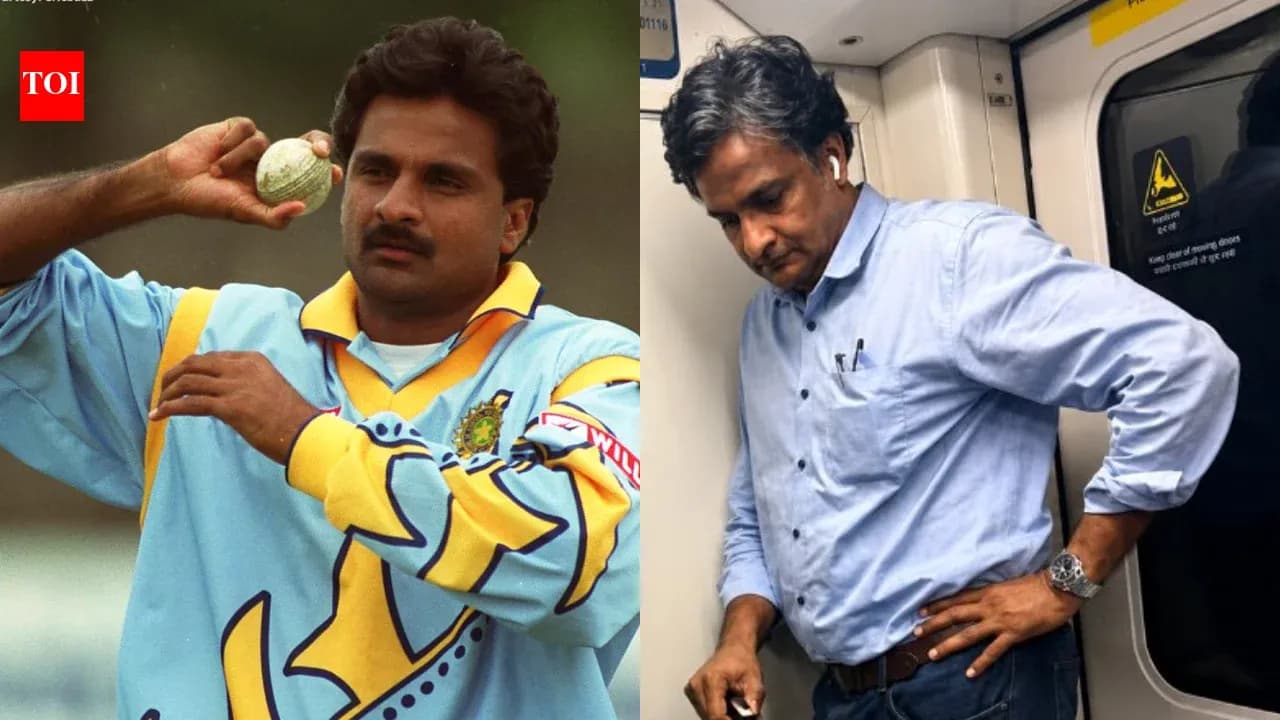
No flashbulbs. No security cordon. Just Javagal Srinath, a trolley bag by his side, standing inside a Namma Metro coach like any other office-goer heading across the city. The photograph that captured this moment has raced across social media, not because of drama or spectacle, but because there is absolutely none.
For a generation that remembers him thundering in with the new ball, the image lands with quiet force.
From ‘Mysore Express’ to Metro regular
Srinath was once the spearhead of India’s pace attack, the man expected to bend his back on unforgiving pitches in the 1990s. Nicknamed the “Mysore Express”, the Karnataka quick became a central figure in an era when India still searched for a reliable fast-bowling core.
His numbers underline that role: 67 Tests, 229 ODIs, and years spent carrying the burden of expectation every time India played overseas. He was among the most recognisable faces in Indian cricket.
Yet it is not a yorker, not a spell under lights, not a World Cup memory that has dragged him back into public conversation this week. It is a fleeting, almost mundane frame: jeans, a light-blue shirt, a Metro pole in hand, a trolley bag parked beside him. Nothing in that picture screams “former India star”. That, in many ways, is the point.
The contrast between the man he once was on television screens and the man he chooses to be in everyday life has struck a chord. The “Mysore Express” is now just another commuter on the Namma Metro, and fans can’t seem to get enough of that ordinariness.
‘This is Srinath’: fans recognise an old trait
Once the photo surfaced online, the reaction was instant and almost unanimous. Cricket followers did not sound surprised. They sounded affirmed.
“This is Srinath,” many wrote, treating the image as proof of a personality they felt they already knew. Users recalled spotting him around Bengaluru on previous occasions, moving without fuss or fanfare, no entourage trailing him, no one clearing a path.
The conversation quickly widened to a familiar theme in Indian cricket circles: the understated public lives of Karnataka’s finest. Names like Rahul Dravid, Venkatesh Prasad and Anil Kumble appeared in comment threads, as fans drew a line through an entire generation of players from the state.
One widely shared sentiment captured that mood, describing how Kumble, Srinath, Dravid and Prasad represented a unique era of Karnataka cricket, and how their success sat comfortably alongside “absolute humility and grace”. The viral Metro picture became another exhibit in that long-running argument that greatness does not need a spotlight to validate it.
For many, the image served as a small reminder that sporting fame does not have to harden into celebrity culture. It can just as easily dissolve into a quiet train ride home.
A familiar face in unfamiliar settings
This is not the first time Srinath’s everyday routines have broken through the noise of social media.
An earlier photograph, shared by a fan, showed him at Mysuru railway station, a bag slung over his back, waiting like any other traveller for his train. That picture too drew admiration, the simplicity of the scene sitting in stark contrast to the pressure-cooker life he once led in India colours.
The Metro shot has followed the same path. The exact date of the Bengaluru image remains unclear, and it has not been independently verified, but that hasn’t slowed its spread. The frame appeared online, began to circulate, and soon turned into a talking point across cricket timelines.
In both images, the pattern is identical: a familiar face, stripped of context, moving through public spaces without ceremony. The response tells its own story about what fans still value.
Still in the game, just in a different role
Srinath may no longer be steaming in with the new ball, but he has never really left cricket behind.
After hanging up his boots, he stepped into the role of ICC match referee, trading the adrenaline of the middle for the authority of the match official’s seat. It is a very different vantage point, yet it keeps him close to the rhythms of the sport that defined his life.
For many Indian fans, though, he remains frozen in memory as the fast bowler who shouldered the bulk of India’s pace responsibilities through the 1990s. That is why a single, routine Metro journey can still ripple across social media. The sight of him in such an ordinary setting collides with the image of him in full flight, ball in hand, leading India’s attack.
The latest photograph does not show him surrounded by autograph hunters or basking in nostalgia. It shows a man, a bag, and a city he calls home.
In a cricket culture increasingly obsessed with stardom, that might be the most powerful picture of all.