Jersey Cricket's Bold Roadmap to ODI Status and World Cup
On a small island in the Channel, they are talking about the biggest stage in world cricket as if it belongs to them.
Not as a fantasy. As a plan.
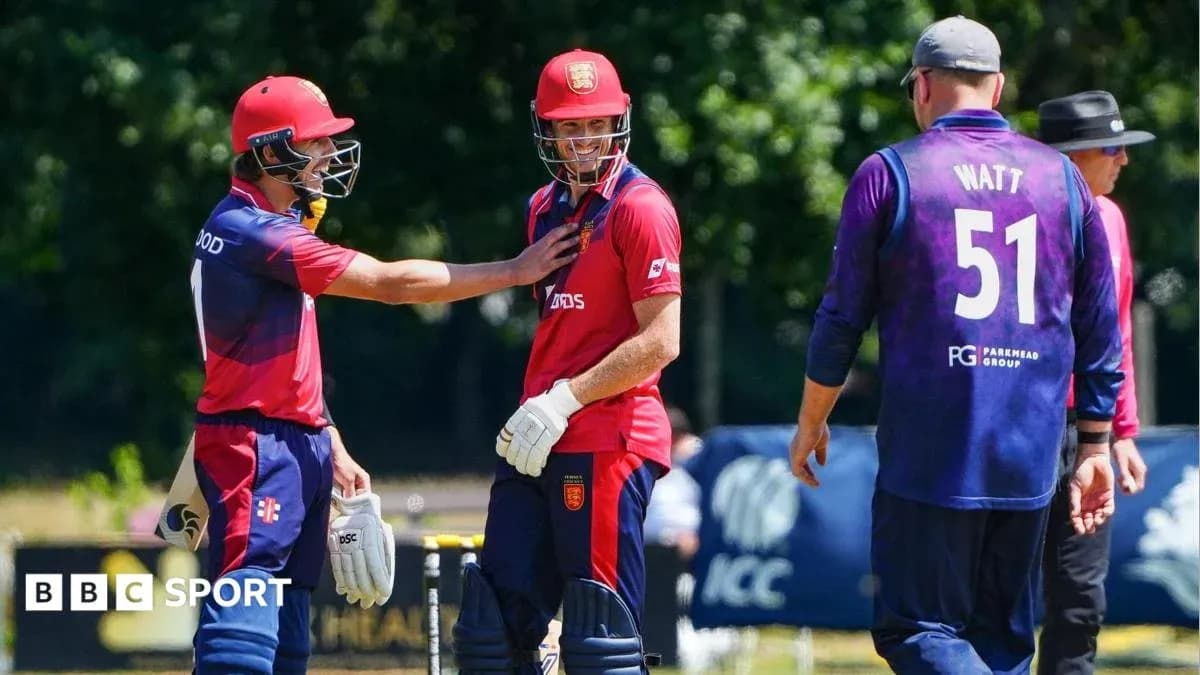
Jersey Cricket has set out an unapologetically bold roadmap to 2029, with one clear headline: earn One-Day International status and reach a World Cup within the next three years with the men’s side – and build a long-term route for the women to follow.
This is not blind ambition. It is born from near misses and growing scars.
From heartbreak to hard targets
Jersey came agonisingly close to this year’s T20 World Cup, only to fall just short in qualifying. That disappointment has not dulled their intent. If anything, it has sharpened it.
Right now, they sit top of ICC Challenge League A with five matches left. Next month, the men’s squad travels to Kenya for the final round of fixtures knowing the equation is brutally simple: finish in the top two and the door to the 2027 Cricket World Cup creaks open.
A top-two place would send Jersey into the 2027 Cricket World Cup qualifier play-off. Perform well there and the prize is ODI status. Go one step further, finish in the top four of that event, and they move into the final qualifying tournament for the World Cup in South Africa, Zimbabwe and Namibia next autumn.
This is the path. Narrow, unforgiving, but clearly mapped.
“Achieving ODI status is one of our goals through the next iteration of our strategic plan,” said Jersey Cricket chief executive Sarah Gomersall, outlining the scale of the challenge rather than shying away from it. “I think we can get to a World Cup in the next three years with the men and, longer term, with the women as well.”
Taking aim at Europe’s elite
Jersey’s men are currently ranked 29th in the ICC T20 rankings. The women sit 32nd. On paper, those numbers place them on the fringes of the global game. On the field, the story feels different.
“We can sustain ourselves up there with the very, very best in Europe,” Gomersall insisted, pointing to regular battles with Scotland, Ireland and the Netherlands. Jersey are not just making up the numbers in those fixtures; they are “holding our own and each time we play them we’re learning, we’re improving”.
That is the crux of Jersey’s belief: exposure, education, evolution.
There is also the prospect of a new European nations competition on the horizon, potentially featuring Italy, Scotland, Ireland and possibly the ECB. Jersey want to be in that conversation, not as a novelty invite but as a credible, competitive presence.
“Jersey players collectively can compete at that level,” Gomersall said. The message is clear: they do not just want a seat at the table. They want to prove they belong there.
An island that grows its own
Unlike many emerging cricket nations that lean heavily on diaspora talent, Jersey’s strength is unapologetically homegrown.
“All Jersey’s talent comes from the island,” Gomersall pointed out. That reality shapes everything. If the island does not produce its own players, there is no safety net.
So the strategic plan leans heavily into infrastructure: academies, training systems, facilities and a junior pathway that Gomersall believes is “one of the best… in Europe”.
The aim is simple and relentless – keep the pipeline flowing. Keep youngsters playing. Keep them improving. Keep them loving the sport.
“The more cricket you play the better you get,” she said. In Jersey’s case, that volume of cricket is not just about development; it is about survival at the level they aspire to reach. The next World Cup squad, in their vision, will not be imported. It will walk out from local clubs, schools and age-group sides that already dot the island.
Women on the brink
If the men’s route is clearly defined through the ICC’s 50-over pathway, the women’s side is fighting its own battle for elevation.
Twice in succession, Jersey’s women have finished one step away from the top tier of European qualifying for a T20 World Cup. One place off. Twice.
That kind of frustration can drain a programme or drive it. Jersey are banking on the latter.
“We’d like to see them breaking into the top 25 of the ICC rankings and holding their own in that position,” Gomersall said. Consolidation is as important as the breakthrough. She wants the women’s team to sustain their place in Division Two – or whatever the equivalent tier becomes in the ICC pathway – and then build from there.
The optimism is not blind. It is rooted in what she calls “genuinely exciting” potential within the current squad and, crucially, among the juniors.
There is a new generation of girls for whom cricket is not a second choice. It is the sport.
“We’ve got a new group of players… where they’re choosing cricket as their first choice sport,” Gomersall said. On an island where people can play almost anything, that shift matters. Participation is not just ticking a box; it is reshaping the future of the national team.
Dreaming big, planning harder
Jersey’s plan is not subtle. They want a World Cup. They want ODI status. They want both the men’s and women’s sides to be fixtures in Europe’s upper tiers.
“We have to dream big and we have to think we have a place at a World Cup in the T20 format,” Gomersall said. It is a line that could easily be dismissed as romantic if it were not backed by a clear pathway, a defined structure and a track record of almost getting there.
The next few months will show how close they really are. Kenya awaits. Challenge League A reaches its climax. The margins will be thin, the stakes enormous for a team from an island whose entire player pool could barely fill a modest county ground.
But the ambition is not shrinking to fit the size of the place.
If Jersey do break through – if ODI status comes, if a World Cup ticket follows – it will not be an accident. It will be the product of an island that decided its ceiling was higher than anyone else assumed, and then set about proving it, one game, one age-group session, one long-haul qualifying campaign at a time.