Kagiso Rabada Focuses on Upcoming Bangladesh Series Amid Sandpapergate Controversy
Kagiso Rabada isn’t interested in relitigating someone else’s scandal. Not now, not with Bangladesh arriving at the Wanderers and South Africa sitting on top of the Test world.
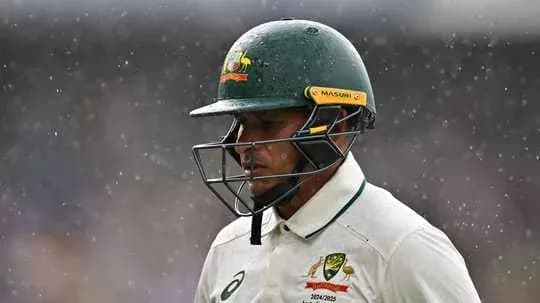
Usman Khawaja’s autobiography, “Sabr”, has dragged Sandpapergate back into the spotlight, this time with a fresh accusation: that three South Africa players were also tampering with the ball during that incendiary 2018 series. Rabada, the leading wicket-taker in that contest with 23 at 19.26, was always going to be asked whether the storm in Australia had reached his doorstep.
It hasn’t. Not if he can help it.
“My take on it is we’re not concerned about what they have to deal with,” he said in Johannesburg. “It’s not our topic to deal with. It’s obviously an Australian topic. I don’t see where we get involved in that.”
He wasn’t pushed on whether Khawaja’s claim was believable. He wasn’t asked if his own performance felt tainted, or whether the dressing room had spoken about the allegation. The question was broader: had he seen the “blowback” in Australia, and what did he make of it? Rabada knocked it away with the same economy and force he brings with the ball.
The real fire is on the other side of the Indian Ocean.
Khawaja’s book, released on Tuesday, has turned old embers into a fresh blaze. Cricket Australia’s original investigation ring-fenced the guilt to three men: captain Steven Smith, vice-captain and chief architect David Warner, and Cameron Bancroft, the man caught on camera with sandpaper in his hand and a TV audience watching in disbelief. Smith and Warner were banned for a year, Bancroft for nine months. The rest of the dressing room walked away officially clean.
Khawaja has now kicked that door back open. “It was all of us,” he told Nine. “Not the batters, not the bowlers, not the staff. All of us.”
Those words forced Pat Cummins, who played in that series and now captains Australia, into a hastily arranged press conference in Sydney. He didn’t dance around it. “When [Khawaja] says we all knew, if by that he means we knew sandpaper was going out on the field, he’s 100% wrong,” Cummins said, dismissing the allegation as “complete and utter nonsense”.
The denials have done little to quiet the noise. Australia have lost four of their last seven Tests, including two in South Africa last month, and pressure always hunts in packs. Now it has poor recent results to go with an unresolved moral stain. Calls for a new investigation are getting louder, and more pointed.
Not everyone is inclined to give Khawaja the benefit of the doubt. “I haven’t read his book, nor am I interested in his claims or remarks,” one figure said. “I hope he has evidence for what he has said.”
Underneath it all lies a cultural split over ball-tampering that has simmered for years.
“Australians play hard but fair,” an Australian said over dinner in Cape Town this week. “That’s why this came as such a shock.” The implication was clear: Sandpapergate cut at the core of how Australians like to see themselves on a cricket field.
South Africa’s relationship with the same offence has been far more pragmatic, almost indifferent. When Faf du Plessis was pinged for using the zip of his trouser pocket against Pakistan in 2013, there was no national inquest. When Vernon Philander was nailed in Galle in 2014 for scratching the ball with his nails, the country barely flinched. When Du Plessis again crossed the line in Australia in 2016, using sugary saliva from a sweet to work the ball, outrage was largely outsourced to the ICC.
These were straightforward cases of ball-tampering. No sandpaper, no cloak-and-dagger plot, but breaches all the same. Cricket South Africa did not pile on. They left it to the global body to deal with their players, and then moved on.
The cameras that caught Bancroft in Cape Town belonged to SuperSport, South Africa’s host broadcaster. Why, then, have South African offenders never been exposed at home? A former senior SuperSport figure offered a neat answer when asked: “Because they don’t do it at home.” It sounded glib. It also sounded unconvincing.
For Rabada and his teammates, the priority is simpler: keep the drama elsewhere.
South Africa host Bangladesh at the Wanderers from Sunday, a series that comes with the comfort of status. They are ranked No. 1 in the world, defending the World Test Championship crown they lifted at Lord’s last June, and fresh from a 2–1 dismantling of Australia that included Rabada racing to 350 Test wickets in fewer deliveries than anyone in history.
For a side that went 20 months without a home Test before October, this feels like a different universe. England arrive for three Tests in December and January. A once-starved fanbase suddenly has a full summer to gorge on.
Rabada knows exactly what that stage means to him. “Playing for South Africa is a blessing; it’s a gift,” he said. “It’s something not a lot of people get to do. Each and every day I have the opportunity to represent my teammates and myself is me continuing to live my dream.” The Bangladesh series, he added, is another chance to “show how healthy cricket is”.
That health has been hard-earned. The journey to No. 1 was jagged, not smooth. “It feels really good to be the No. 1 team in the world,” Rabada said. “After going through all the ups and downs it pays off to keep at it, to keep playing for the badge and not give up. It’s not always plain sailing.”
Australia found that out the hard way last month. They struck first, winning at Kingsmead, and for a while the old scars of inconsistency threatened to open up again for South Africa. Rain chewed up most of the first two days at St George’s Park, but the home side still found a way to square the series. Then came Newlands, and a ruthless innings victory that sealed one of the most gripping Test contests South African crowds have seen in a generation.
Now Bangladesh walk into a Wanderers dressing room that feels settled, confident and unbothered by someone else’s ghosts. The ball will swing or it won’t. The pitch will misbehave or it won’t. The only marks Rabada seems interested in leaving are on the stumps and the record books.