Louis Pretorius secures century as South Africa narrowly beats Namibia
Six runs went missing in Windhoek on Tuesday. Louis Pretorius knew exactly where he’d left them.
He had been on 94 against Zimbabwe at the Namibia Cricket Ground, charging towards a first senior international hundred, when the story twisted. Teammates kept getting out, the strike dried up, the frustration grew. Pretorius walked across his stumps, exposed leg and middle, and lost them both. Bowled around his legs for 94 off 51. Century gone, innings soured.
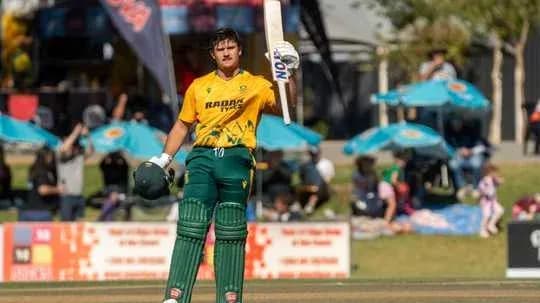
On Friday, on the same ground against Namibia, he went back to collect what the game had taken away. He found those six runs waiting for him, and then found one more.
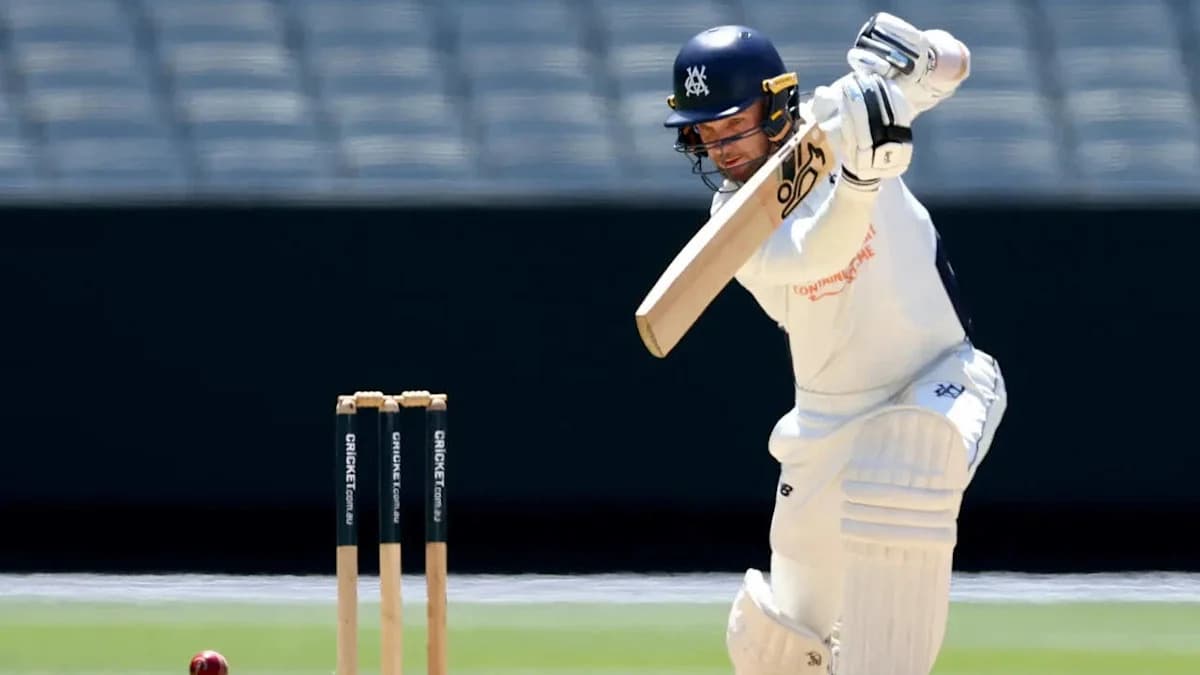
Pretorius thundered 101 off 53 balls, a statement innings loaded with power and intent. More than two-thirds of his runs came in boundaries, with eight sixes and a flurry of fours. Seven of those sixes soared straight, in the V, where he plundered 60 off just 19 deliveries. When he wasn’t hitting down the ground, he was carving and clubbing square of the wicket, dragging the field around like a reluctant dance partner.
There was nothing delicate about it. The romantic myth of left-handers – all Gower silk and Lara grace – doesn’t quite fit here. Pretorius belongs to the Graeme Pollock and Graeme Smith school: more blacksmith than butterfly. He hits, he heaves, he hammers. And he’s gripping to watch.
He moves like a regular club cricketer, but the ball keeps disappearing as if no one told it he’s meant to be mortal. That’s part of the charm. “Young Lou” – a nickname first thrown into the public domain by Quinton de Kock, another left-hander with a taste for violence – bats as if he’s doing it for every ordinary player who ever dreamed of a day like this.
On this night, though, he wasn’t even the most fluent scorer in his own team.
Esterhuizen lights the fuse
Connor Esterhuizen, a right-hander with far less fuss and even more tempo, tore into Namibia’s attack from the other end. Where Pretorius bludgeoned, Esterhuizen flowed.
He peeled 88 off 40 balls at a strike rate of 220.00 – almost 30 points faster than Pretorius. The pair ripped open the contest with a stand of 156 off 70 deliveries, the kind of opening partnership that leaves bowlers staring at the scoreboard in disbelief. They were still going in the 12th over when the alliance finally cracked.
Esterhuizen, having made the extraordinary look routine, lost shape for once. He lashed at Jan Balt, aiming for another boundary, and paid with his leg stump. It was a dismissal that echoed Pretorius’ fate from Tuesday: one stroke too many, one fraction of a second too late.
Later, Esterhuizen described Pretorius as “super laser-focused and always looking to get at the opposition” and himself as “sometimes a bit of a nervous wreck out there.” It was a neat contrast, but Pretorius didn’t buy into the idea that he was the senior man carrying the show.
“Connor made it a lot easier for me, and when he lost his wicket I could take charge as the leader in the middle and try to capitalise,” Pretorius told the host broadcaster. His method was simple, and it hasn’t changed since that 94. “T20 is a game of fine margins and high-risk cricket shots. So when you’re in form you have to ride that wave as long as you can because it can change very quickly. I came with the same approach [as on Tuesday]: try to get to that 15-balls [faced] mark. I knew the rest would take care of itself.”
For a while, it did. South Africa surged to 228/4, the first total over 200 in the tournament’s six matches. It looked imposing. It looked done.
It wasn’t.
Namibia refuse to wilt
Namibia don’t scare easily. Not on their own turf, not in front of their own people, and not when the chase looks steep enough to crush most sides before the first over.
Louren Steenkamp and Jan Frylinck walked out with 229 to get and treated it like a problem to be solved rather than a mountain to be admired. They counter-attacked, then controlled, then counter-attacked again, stitching together an opening partnership that dragged the game away from South Africa’s comfort zone.
The pair put on 119 off 65 balls, silencing any thoughts of a procession. Frylinck, yet another bruising left-hander in a match full of them, was brutal. He smashed 72 off 36, bullying anything short, punishing anything in his arc. South Africa’s bowlers, who had watched their batters feast, suddenly felt the pressure of a chase very much alive.
The turning point came in the 11th over. Frylinck pulled Andile Simelane towards the square-leg boundary, aiming once more to clear the rope. Tony de Zorzi patrolled the fence, judged it, hopped, caught, skipped back inside the rope, and completed a smart, nerveless dismissal. Namibia’s charge lost its spearhead.
Steenkamp’s platform began to feel fragile. The innings needed a new anchor, and Gerhard Erasmus stepped into the role. He tried to nurse the chase home, finishing 30 not out off 26, but the rhythm Namibia had built with Frylinck at full throttle never quite returned.
Ruben Trumpelmann’s cameo – 21 off 10 – briefly reignited belief. The ball flew again, the crowd lifted again, and South Africa’s fielders glanced nervously at the scoreboard again. Namibia kept swinging, kept running, kept the equation just close enough to sting.
They closed on 217/3. Eleven runs short. Agonisingly close, yet still on the wrong side of the line.
Lessons in a narrow escape
The scorecard will show a South African win by 11 runs and a Pretorius century that stitched the night together. It won’t fully capture how tight it felt in the field.
“It was a bit closer than we wanted, but we’ve learnt to not take anything for granted in this game,” Bjorn Fortuin told the host broadcaster. “A win’s a win and we did some good things, but there’s a lot to work on going into that last game.”
He’s right. South Africa leave Windhoek with the runs they wanted, the result they needed, and a reminder that in T20, dominance with the bat doesn’t guarantee a quiet evening in the field.
Pretorius has his hundred now. The six runs that slipped through his fingers on Tuesday have been reclaimed, with interest. The question is what he and this South African side can build on top of it when the next tight finish comes calling.