Manoj Prabhakar: The Tireless All-Rounder of Indian Cricket
There was a phase in Indian cricket when one man was asked to do the game’s most punishing double shift. Manoj Prabhakar would take the new ball, bend his back for spell after spell, then walk back out under the same sun to face the opposition’s quickest, freshest fast bowlers. Not once or twice as a tactical gamble, but as a way of life. He opened both the batting and the bowling in 20 Tests and 45 ODIs. No safety net. No hiding place.
It was a role that felt improbable when his career began.
Prabhakar debuted for India in 1984 and then spent years on the margins, hovering in that frustrating space between promise and permanence. He was good enough to be remembered, not yet consistent enough to be indispensable. His route back did not come through a sudden flash of brilliance at international level, but through a domestic season so dominant that the selectors simply ran out of excuses.
In 1988-89, for Delhi in the Ranji Trophy, Prabhakar produced numbers that shouted for attention: 532 runs at an average of 76 and 39 wickets in a title-winning campaign. Those weren’t just all-rounder’s contributions; they were season-defining. A career-best 229 not out against Himachal Pradesh underlined his batting heft. In the quarter-final against Orissa, he ripped through the opposition with 6 for 65 and 4 for 42, a ten-wicket match haul that tilted the tournament. In the final against Bengal, another four-wicket burst helped Delhi close the door.
By then, the signs had been visible for a while. Back in the 1983-84 Ranji Trophy final, Delhi trusted him with an opener’s job against a heavyweight Bombay side featuring Sunil Gavaskar and Dilip Vengsarkar. Prabhakar responded with 122 in the second innings, a statement knock in a pressure game. Five days later, he made his ODI debut against Sri Lanka and returned miserly figures of 2 for 16 from 10 overs. He could shape games with bat and ball. India just needed to decide what they wanted him to be.
The answer, eventually, was: everything.
Prabhakar’s domestic surge forced India’s hand. He was recalled for the 1989 tour of Pakistan, a series that history remembers as Sachin Tendulkar’s grand entrance. In the shadows of that teenage phenomenon, Prabhakar quietly rebuilt his own story.
He struck 5 for 104 in Karachi, then 6 for 132 at Faisalabad. Against Pakistan, on their pitches, in the age of Imran Khan, Wasim Akram and a young Waqar Younis, Prabhakar suddenly stood as India’s new-ball spearhead. He never terrified batters with pace; that was not his method. He swung the new ball, leaned on cutters, varied his pace and, as his career moved on, learned to coax reverse swing from the old ball. Craft, not raw speed, kept him relevant in an era of fast-bowling giants.
The real value came when the bowling ended and the pads went on.
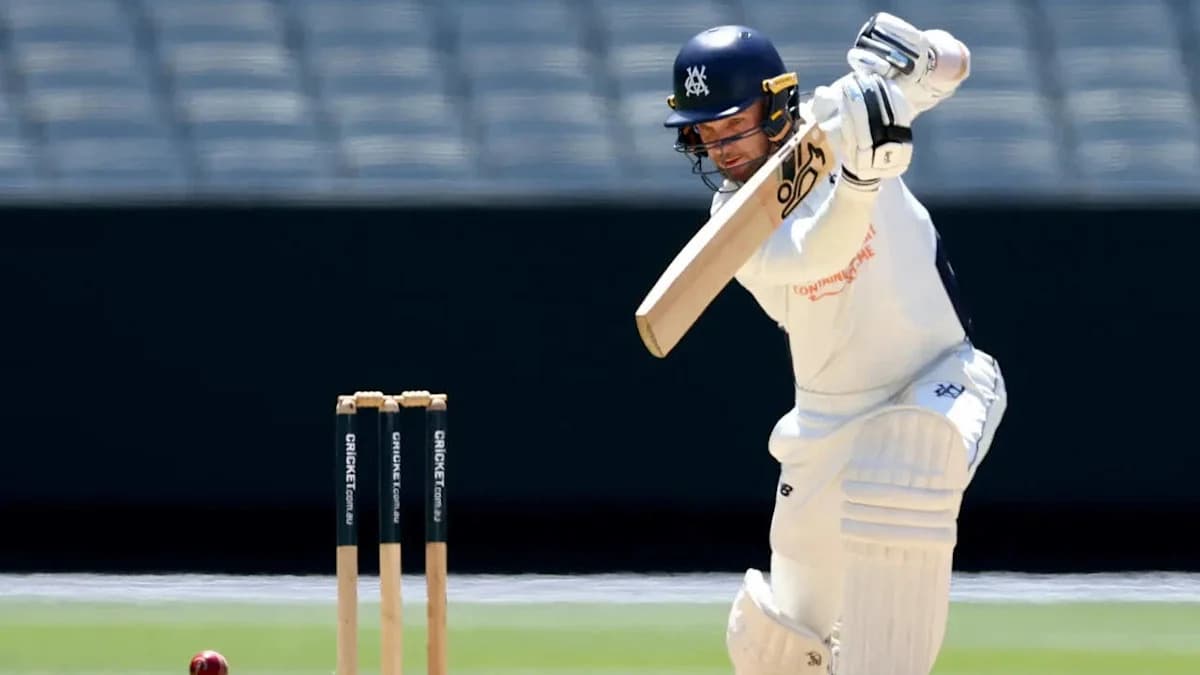
Prabhakar grew into a genuine opening option with the bat, a role that demanded stubbornness more than sparkle. On India’s 1990 tour of New Zealand, with Richard Hadlee operating in familiar, seaming conditions, Prabhakar dug in for 268 deliveries to score 95 at Napier. It was an innings of occupation, not exhibition. Later in the series at Auckland, he carried his bat for an unbeaten 63, sharing an unbroken 149-run opening stand with WV Raman to save the Test. His job was clear: take the shine, take the sting, let the artists in the middle order breathe.
Some days, the grafter became the headline act.
He had already announced his hitting credentials in ODIs with a century against Pakistan in Jamshedpur in 1987, making 106 from 121 balls and winning Player of the Match even as India lost. His only Test hundred came in Mohali in 1994, a composed 120 against the West Indies, proof that his batting was more than just resistance and grit.
By the time his India career wound towards its bitter end, the numbers painted the picture of a serious all-rounder. In Tests, 1,600 runs at 32.65 and 96 wickets. In ODIs, 1,858 runs and 157 wickets. His first-class record, away from the glare and noise, was even more imposing: 7,469 runs at 41.49 and 385 wickets. Those are not the figures of a bits-and-pieces cricketer. They belong to a man who carried heavy workloads in both disciplines.
Yet Prabhakar’s story refuses to sit neatly in the glow of those statistics.
The closing chapters of his career became tangled in controversy. A late-career ODI chase, played out in baffling fashion, stayed under the microscope for years as investigations into corruption in Indian cricket gathered pace. The match was never conclusively proven to be fixed, but its oddness clung to his name. The all-rounder who had fought so hard to be taken seriously suddenly found his legacy questioned from a very different angle.
Then came the 1996 World Cup, and with it the image that would haunt his final days in an India shirt.
Against Sri Lanka in Delhi, Sachin Tendulkar’s superb 137 lifted India to what looked a strong total of 271 for 3. Prabhakar, opening alongside him, scratched his way to seven from 36 balls, stuck in neutral while the innings moved around him.
His nightmare truly began with the ball. Sanath Jayasuriya and Romesh Kaluwitharana tore into India’s seamers with a new, fearless approach. Prabhakar’s first four overs vanished for 47 runs, the ball racing to the boundary as if the fielders weren’t there. When he returned later, the sight was almost surreal: the man who had opened the bowling for India across continents and years now turning to off-spin, trying anything to stem the flow as Sri Lanka cruised home.
It was his last international appearance.
For a cricketer who had once taken five and six wickets in back-to-back Tests in Pakistan, who had walked out with the new ball and then again with the new innings, the end felt brutally symbolic. Manoj Prabhakar, the tireless double act, finished his India career not as the all-round spearhead, but as a bowler abandoning his primary craft, simply trying to survive.