Mark Wood Retires: A Fast Bowler's Journey with England
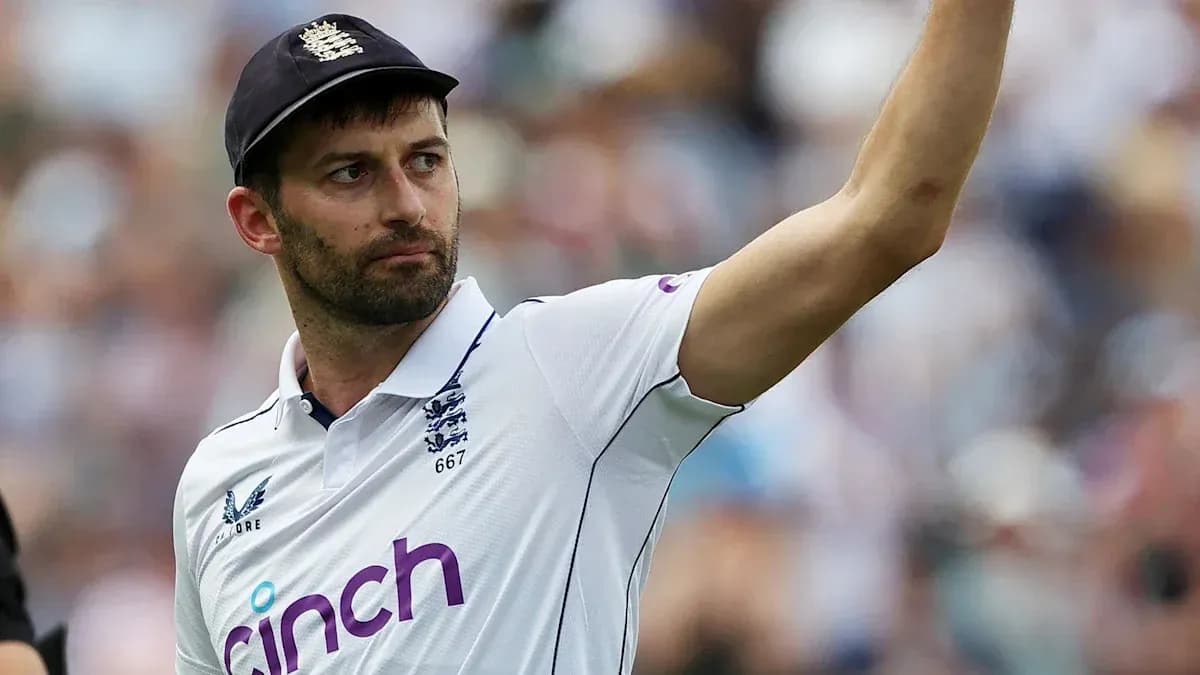
Mark Wood has always lived on the edge. On the edge of his run-up, on the edge of his body’s limits, on the edge of what a fast bowler can reasonably ask of bone, muscle and willpower. On Thursday, aged 36 and out of road, he finally stepped away, announcing his retirement from international cricket with immediate effect.
For England, it is another heavy door closing. For Wood, it is the end of a dream he refused to give up on until his body made the decision for him.
“I've always tried to be resilient and come back from injury to prove people wrong and show everyone what I can do,” he said in a statement on social media. “Unfortunately, this time I lost the battle.”
A body that wouldn’t let go
Wood’s story has always been a tug-of-war between extraordinary speed and a frame that simply couldn’t keep pace. One of the fastest bowlers ever to pull on an England shirt, the Durham quick spent as much time in rehab rooms as he did in dressing rooms.
The final act came quietly. After 15 months out with an elbow problem and subsequent knee surgery, he fought his way back for the first Ashes Test in Perth in November. It was supposed to be a late-career rebirth. Instead, it lasted just 11 overs.
The same left knee that had been under the surgeon’s knife swelled again. Wood flew home for treatment. He never bowled for England again.
“On medical advice, Test cricket and 50-over cricket are not possible, so the England dream has slowly been ground out of me over the last year,” he admitted. The wording was stark. So was the reality.
A career of peaks, punctured by pain
Strip away the injuries and the numbers tell a serious story. Wood took 119 wickets in 38 Tests after his debut in 2015, and was part of the side that reclaimed the Ashes on home soil that same summer. In white-ball cricket, he finishes as England’s sixth-highest wicket-taker in men’s T20 internationals with 54 wickets from 38 games, and 80 in 70 one-day internationals.
But the numbers never quite capture the chaos he created at full tilt.
Ankle, knee, elbow – the list of damaged parts reads like an orthopaedic checklist. In 2018, desperate to ease the load on his body, he lengthened his run-up. It sounded counterintuitive. It worked. The new approach freed him, gave his action rhythm, and crucially, it did not cost him a yard of pace.
With that remodelled run, he became central to England’s greatest modern triumphs. In 2019, he helped carry Eoin Morgan’s side to the 50-over World Cup, taking 18 wickets in the tournament and hobbling out to bat on that surreal, unforgettable day at Lord’s alongside Ben Stokes. Three years later he was in the squad that won the T20 World Cup in 2022, though a calf injury denied him the closing stages.
The trophies stack up: World Cup, T20 World Cup, Ashes. He is one of a tiny band of English cricketers to own all three.
The thrill of pure pace
Anyone who has ever picked up a cricket ball has tried, once, to bowl fast. Mark Wood did it for a living. At a level almost no one else could touch.
There were days when the stars aligned and he was unplayable. St Lucia in 2019 stands out: West Indies blown away in a spell that announced the new, longer run-up version of Wood as a genuine force. The ball thudded into the keeper’s gloves, batters groped, and suddenly England had a tearaway quick who looked like he’d been dropped in from another era.
He never lost the boyish edge. Wood sprinted in, often bowling himself off his feet, quite literally horizontal on follow-throughs that ended in a tangle on the turf. Crowds loved it. Not just the speed, but the personality that came with it. He joked, he engaged, he never took himself too seriously. He played like someone who knew cricket is supposed to be fun, even as he pushed his body to breaking point.
“The sight of Wood flying in, bowling himself off his feet… was one of the most thrilling in the game,” is not hyperbole. It was the point. He made fast bowling feel dangerous and joyous at the same time.
Ashes fire and Headingley lightning
Even in England’s darker days, Wood burned bright. On the grim 2021-22 Ashes tour, when almost everything went wrong, he was one of the few to emerge with credit, hammering away on flat pitches, still hitting speeds that made batters twitch.
His most iconic Test spell, though, came at Headingley in 2023. England were 2-0 down in the Ashes, the series slipping away. Held back until the third Test, Wood was unleashed and the game changed.
He bowled at what felt like the speed of light. The ball to Usman Khawaja – a 95mph thunderbolt that smashed through – instantly joined the Ashes highlight reel. It was not just the wickets; it was the mood shift. Every time he turned at the top of his run, the ground crackled.
Then came the finish. In a nail-biting chase, Wood walked out with Chris Woakes, another player parachuted into the series at the same moment. Between them, they dragged England over the line. With bat and ball, the pair almost single-handedly kept the series alive. Without that surge, England would have been buried 3-0 and done.
“It’s been a privilege to watch the latter part of a great career,” said Rob Key, managing director of England men’s cricket. “To have been a point of difference in Ashes series wins, two World Cup wins, and to have thrilled crowds every time he got the ball in his hand is something very few players achieve. He can look back with enormous pride on a career very well spent.”
The last of a generation
Wood’s retirement does more than remove 90mph thunderbolts from England’s armoury. It closes a chapter.
Stuart Broad has gone. James Anderson has followed. Chris Woakes has stepped away from Test cricket. Now Wood joins them. Add in the all-round toll on Ben Stokes, and England have lost 1,871 Test wickets in under three years. That is not a changing of the guard; it is a demolition of an era.
He leaves with a curious distinction too. With Wood gone, Joe Root is now the only current England Test cricketer who has actually won an Ashes series. The lineage has thinned quickly.
There was no final flourish in Australia for Wood. No farewell spell under a blazing sun, no last hostile burst at the Gabba or the MCG. The long road back from elbow and knee surgeries never quite delivered the pace England wanted down under. He played only the first Test in Perth and later admitted he felt “ashamed” of how it went. That will hurt him far more than it should.
Yet it does not define him. The defining images are of him charging in, hair flying, body contorting, stumps cartwheeling, and team-mates swarming.
What comes next
Wood has made it clear he wants to keep playing cricket in some form, even if the heaviest workloads are no longer an option. County cricket, franchise leagues, perhaps mentoring the next generation of quicks – the future remains open, even if the England chapter is now closed.
“Playing for England has been the greatest honour I could have ever wished for and a dream come true,” he said. You believe him because you saw it every time he ran in, every time he dragged a battered body back for one more spell.
The dream is over. The memories are not. And for a country now searching for its next genuine fast bowler, the real question is simple: who dares run in as hard, and risk as much, as Mark Wood just did for a decade?