Marnus Labuschagne's Struggles in First-Class Return
Marnus Labuschagne’s first steps back in first-class cricket lasted just 36 balls. A long-awaited return, over almost as quickly as it began.
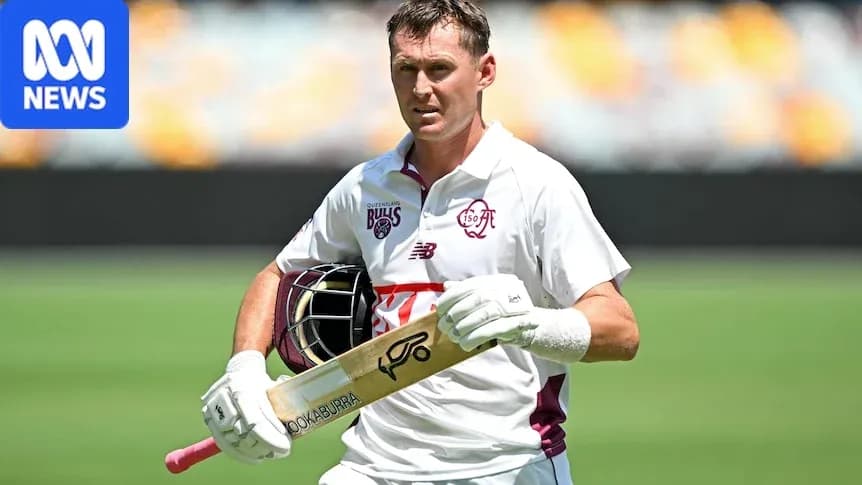
Back at the Gabba on Sheffield Shield duty for Queensland after being dropped from the Test side, the 32-year-old managed only 12 before nicking off, Jake Doran taking the catch off Riley Meredith. Same mode of dismissal, same uneasy feeling. Fourth stump, feet rooted, bat prodding away from the body. The kind of shot that has haunted his recent Test innings.
Ordinarily, a Shield match in November carries a clear purpose for a player of his stature: runs, rhythm, a case to shove under the national selectors’ noses before the summer heats up. This one is different. For Queensland’s captain, there is no immediate door to bash down. He has already been cast aside, a central figure in an Australian side that bullied England in last year’s Ashes but has stumbled since — two wins in five against Bangladesh and South Africa, no series trophies to show for it.
Still, the Gabba offered him something the Test arena no longer does: uncomplicated support. A modest crowd, maybe a hundred or so, drifted in, many clearly there for him. They had to wait. Angus Lovell dug in for 60 balls for his 18 before edging Beau Webster to the slips, thumping his bat in frustration after doing the hard graft on a lively surface.
Only then did Labuschagne emerge, greeted by warm applause that briefly drowned out the relentless jackhammers from the construction sites circling the old ground. One voice cut through as he took guard: “Come on Marnus.” Simple, hopeful, almost pleading.
His response was immediate. First ball, from former Test teammate Webster, he threw his hands through a square drive and watched it rocket to the rope. For a heartbeat, it felt familiar again — the assertiveness, the crispness, the certainty.
Then reality nudged back in. A thick edge flashed past third slip off Jackson Bird, streaky rather than assured, a reminder that this rebuild will not be a quick patch job. Like the Gabba’s redevelopment around him, the work is noisy, messy, and nowhere near finished.
The quirks were all there, too. The fidgeting hands. The exaggerated leaves. The bouts of shadow-batting between deliveries. The same mannerisms that once seemed endearing and then, during his lean Test stretch, started to look like distractions. What played out at the Gabba could have been lifted straight from Gqeberha, where he scratched his way to 14 and 39 in Australia’s innings defeat.
As Tasmanian seamer Gabe Bell honed in on that off-stump channel, Labuschagne’s leaves grew more theatrical, the bat raised high and withdrawn late, like a matador teasing the bull closer and closer to the red line of his stumps. He made it to lunch, eight runs to his name, still there, still searching.
The restart brought no reset. Soon after the interval, he chased a ball he had no real need to play, a loose waft outside off, and feathered it behind. Doran did the rest. Labuschagne lingered for a moment, staring down the pitch, clearly annoyed at himself, then turned and trudged away, helmet under his arm, another short innings added to a pile that’s growing too quickly for his liking.
If there was any consolation, it lay in the scorecards from elsewhere. Across the country, big runs were scarce. At the SCG, Sam Konstas made 24 and Kurtis Patterson a duck as New South Wales folded for 204 against South Australia. At the MCG, Marcus Harris scratched his way to 15 on a surface that looked far friendlier when Peter Handscomb moved serenely to a century for Victoria.
None of that changes Labuschagne’s reality. It is far too soon after his bruising tour of South Africa to expect a transformed technique or a mind suddenly cleared of doubt. The problems that cost him his Test place were never going to disappear in a single Shield session.
Outside, the hammers and drills kept pounding away at the Gabba’s skeleton. Inside, one of Australia’s most prolific modern batters tried to piece himself back together. The stadium will be rebuilt on a fixed timeline.
Labuschagne’s reconstruction will not be so simple.