Mittansh Nithiyanandam: MiLC's Youngest Centurion at 20
Life has come full circle for Mittansh Nithiyanandam far earlier than it does for most professionals, let alone a 20-year-old still learning his own game.
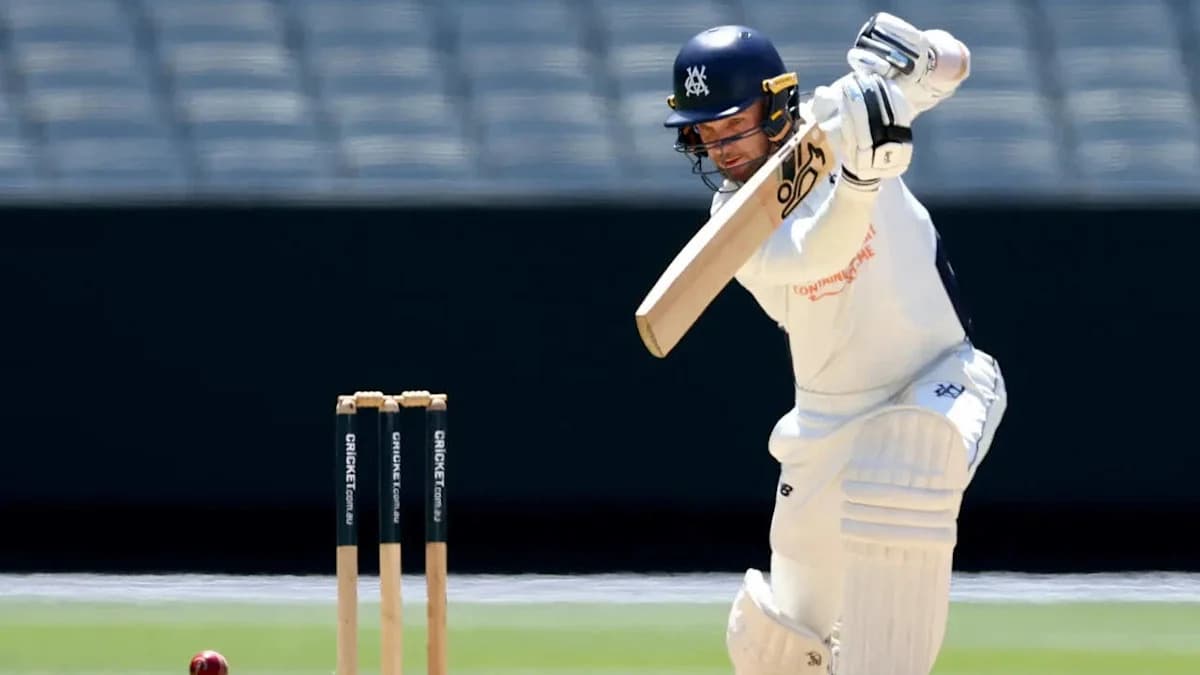
At 15, he needed special dispensation just to step onto a Minor League Cricket field. At 17, he became the competition’s youngest half-centurion. On Saturday, he completed the set, thumping 114 off 68 balls to become MiLC’s youngest centurion, and he did it against a Chicago Kingsmen attack stacked with experience and pace.
The kid who once needed a permission slip now owns the record book.
From two swings in Chicago to a MiLC record
The story traces back to a largely forgettable practice game in Chicago in 2021. A 15-year-old unknown walked in, faced a seasoned local bowler, and swung his first two balls for six. No build-up. No sighters. Just two clean hits that turned heads.
Watching from beyond the rope was Ashar Mehdi, then captain of the Chicago Blasters. He had never heard of Nithiyanandam. He didn’t need more than those two deliveries to ask for a closer look.
There was an immediate obstacle. Minor League Cricket required players to be at least 16. The Blasters had seen enough, though, to push the issue. They filed a formal request for an exemption, and the league agreed. What began as a rule-bending exception for a teenager just to get on the park has, five years on, produced one of MiLC’s youngest and most compelling record-breakers.
The symmetry isn’t lost on anyone, least of all the player at the centre of it.
A century first lived in the mirror
The hundred on Saturday was not new in his mind. He had rehearsed it countless times.
In his early MiLC seasons, Nithiyanandam mostly watched from the dugout or came in late at No. 8. He would go home, stand in front of a mirror with bat in hand, and shadow-bat as if he were opening and scoring a hundred. Same celebration. Same walk back. Same feeling.
When the real thing finally arrived, the past crashed into the present.
"I remembered those days when I was 15, 16 years old," he said. "I would literally dream that one day I was able to do those things. When I hit the hundred and took my helmet off, I remembered those feelings. I knew that younger version of myself would be really, really proud."
The scene he had acted out in a bedroom mirror became reality in front of a fully armed Kingsmen attack.
Mumbai roots, American reality
Nithiyanandam’s journey runs through two cricketing worlds that rarely intersect this cleanly.
Born in Mumbai and moved to the United States when he was six months old, he inherited the game from his father, a passionate India supporter. They would wake at 4am to watch India play, then recreate what they had seen in the driveway. When his father’s work travel made those sessions harder, Mittansh improvised.
He grabbed stress-relief balls his mother brought home, hurled them against the basement wall, and batted for hours. Sofas became fielders. The basement became a stadium. The technique was raw, the imagination anything but.
The choices that followed pulled him away from the standard American script. While classmates talked dorm assignments, college visits and campus life, the conversations in the Nithiyanandam home centred on Mumbai clubs, training schedules and which part of the city would make daily practice less of a grind.
He deferred college for a year and moved alone to Chembur in October 2024, committing himself almost entirely to cricket until April. No guarantees. No contract. Just a bet on himself in the most unforgiving nursery of Indian cricket.
A gamble in Mumbai’s A Division
The door to Mumbai opened through his long-time coach Subu and the link between Chicago Youth Cricket Academy and Achievers Cricket Academy. Subu could offer a training base and a professional environment. What he could not promise was a spot in one of Mumbai’s fiercely contested A Division clubs.
For eight months, the move was a gamble. He would train every day, but selection was someone else’s call. Getting into a team, and staying there, would depend entirely on performances.
Mumbai was technically home but emotionally foreign. He had left as an infant and returned at 18 to live alone in a Chembur apartment, learning not just how to bat on red soil, but how to cook, clean and manage life without a safety net.
A chance finally came with DY Patil. The club liked what they saw in early sessions, yet he spent close to 15 matches on the sidelines before an opening appeared. When it did, it was at No. 7, as a bowling allrounder, against the prestigious Cricket Club of India.
He made it count: 41 off roughly 30 balls, four sixes, and a statement that he wasn’t there to make up numbers. The innings forced his way into more regular opportunities.
Soon he was not only in Times Shield A Division cricket but also the DY Patil T20 Cup, one of the recognised audition platforms for the IPL. The promotion brought him into dressing rooms with players like Prasidh Krishna, Yash Dhull, Priyam Garg and Bhuvneshwar Kumar, and into nets where every session felt like an exam.
“I learned a lot watching experienced players manipulate chases after early wickets. How red-soil pitches altered scoring options against spin. I developed the sweep and reverse sweep, shots that had never been central to my game in America. I began understanding when to attack, when to use the crease and how conditions should dictate decision-making.”
The Mumbai grind sharpened his options. It didn’t dull his edge.
Fearlessness, refined not removed
If there is one constant from those first two sixes in Chicago, it is fearlessness. The message from teammates such as former India Under-19 captain Priyam Garg was clear: don’t lose that, even in four-day cricket.
Nithiyanandam took in Mumbai’s discipline and structure but held on to the American instinct that had grown on thick outfields, where hitting in the air often made more sense than pushing for twos. The result is a style that looks part Wankhede, part weekend park in the Midwest.
That fusion exploded against Kingsmen.
His century arrived a day after an ugly first-ball duck, pinned lbw by a full toss he would back himself to dispatch nine times out of ten. He went home, broke down the dismissal, spoke to his coach, and came back the next day with one clear decision: the method stays. One failure would not rewrite who he is.
Against an attack featuring seasoned professionals, including Ghulam Mudassar, who has touched around 90mph in Major League Cricket, Nithiyanandam batted with authority that belied his age. At 6-foot-1, he used his reach to brutal effect, launching seven sixes and eight fours. He advanced at pace, danced inside the crease against spin, and leaned on the sweep and reverse sweep to drag bowlers away from their preferred lengths.
Nearly 40 of his runs came through those sweep variations, a direct dividend from those months on Mumbai’s red soil. The aggression was familiar. The structure around it was new. There was still madness when he took centre stage, but now there was method guiding it.
A different kind of American teenager
All of this has come at a cost, at least in the conventional sense.
Through high school, Nithiyanandam was a varsity swimmer. His days began at 5am in the pool, then school, another swim session, cricket training, homework, sleep, repeat. Proms and homecomings passed without him. Tournaments took priority. On one of those nights when classmates were in tuxedos and limousines, he was in cricket gear, scoring a hundred.
He has already turned away from many of the usual markers of an American teenage life. In return, he has a MiLC record, a Mumbai education, and a game that looks increasingly built for bigger stages.
The basement walls, the Chembur apartment, the mirror hundreds — they all point in the same direction now. The question is no longer whether Mittansh Nithiyanandam belongs. It’s how far this blend of Mumbai schooling and American audacity can take him.