Mohammad Yousuf: Pakistan's Decline Since Perfect Night in Dubai
The night Pakistan had waited for a generation, Mohammad Yousuf believes, is the night that broke them.
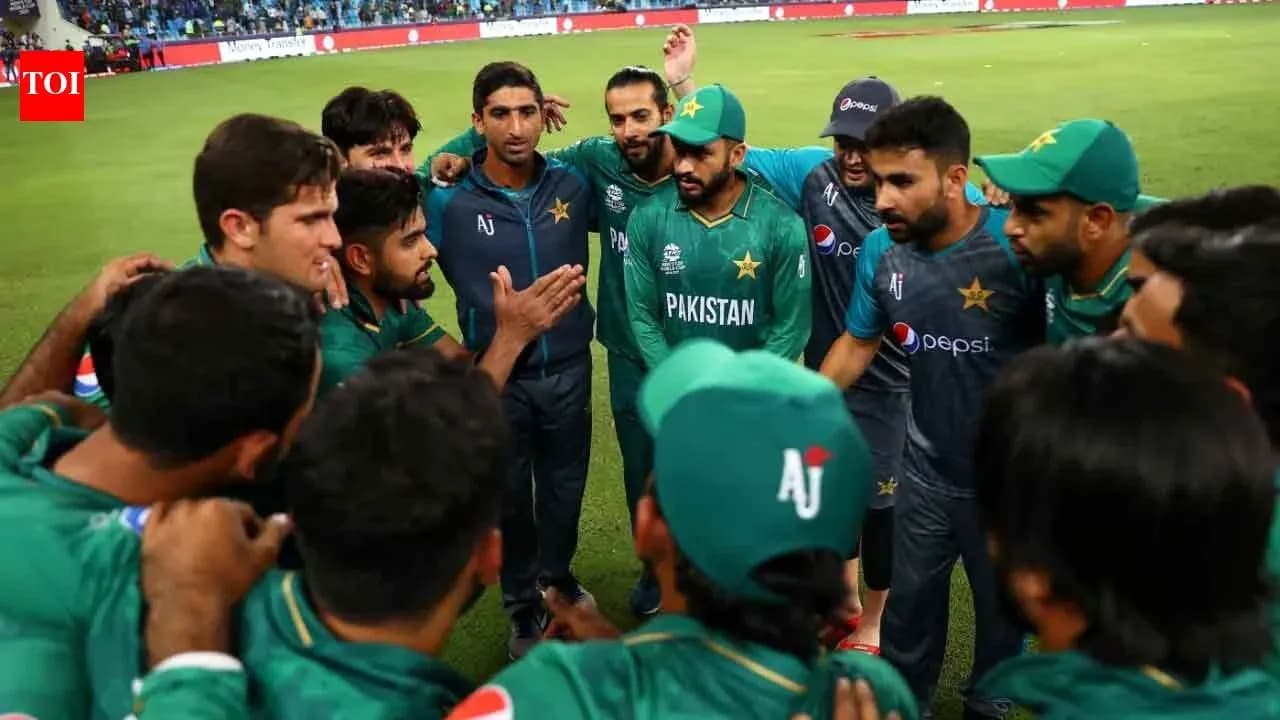
In Dubai in 2021, Babar Azam and Mohammad Rizwan walked off unbeaten, having shredded India by 10 wickets in a T20 World Cup chase that carried the weight of history. Pakistan had never beaten India in any World Cup before that evening. They did it with ease. Ruthless, clinical, flawless.
For many, it was a cathartic, era-defining win.
For Yousuf, it was the trigger.
“That match which we won against India in 2021, that damaged us a lot,” the former Pakistan batting great said on Samaa TV, cutting through nostalgia with a blunt verdict. “Because after that victory, players started to think that they had achieved something big. They couldn’t understand what they had to do next.”
The message was simple: the win changed more than just a record. It changed minds.
From humility to hubris
Babar’s 68 not out, Rizwan’s unbeaten 79, the unbroken stand of 152 – it was a statement performance. Pakistan dismantled their fiercest rivals on the biggest stage, and the country erupted. That night was framed as a turning point, proof that a new, fearless Pakistan had arrived.
Yousuf sees the same point on the timeline. Only the arrow, in his view, points the other way.
“When you are performing well, you should stay humble,” he said. “If you behave with your collar raised, and get disrespectful, problems will arrive. And a lot of them have arrived in Pakistan cricket.”
This, for him, is not just about results on a scoreboard. It is about attitude. A shift from collective purpose to individual ego. From responsibility to entitlement.
The famous victory, he argues, fed a dangerous illusion: that something had been completed, rather than started.
A dressing room chasing the armband
Yousuf did not stop at mindset. He went straight to the heart of Pakistan’s recurring turmoil – the captaincy.
“Everyone in the team was trying to become the captain of the Pakistan team,” he claimed. In his eyes, the obsession with the armband overshadowed the basics: runs, wickets, consistency, accountability.
“The consequences are still hurting Pakistan cricket,” he said. “Look at all the cricket Pakistan has played in the last four-five years, from ODI World Cups, T20 World Cups to Asia Cups and Champions Trophy. There has been terrible cricket.”
Coaches have cycled through. Structures have been tweaked. The Pakistan Cricket Board, Yousuf insists, has tried.
“The PCB has been supporting you throughout. So many coaches have come and gone, so many things have changed just to try and help the Pakistan team. But no player has stood up and taken responsibility. Eventually, PCB had to take a step that it did. I back what PCB did.”
The problem, in his telling, is not a lack of opportunity or backing. It is a lack of ownership.
England tour meltdown and a ruthless reset
All of this has come to a head on the current tour of England, where Pakistan’s red-ball cricket has been brutally exposed.
An innings-and-103-run defeat at Headingley. A 194-run loss at Lord’s. Two heavy blows, one after another, leaving Pakistan ninth in the World Test Championship table – last place, with only nine teams in the standings.
“Pakistan ka naam kharab ho raha hai (Pakistan’s reputation is getting ruined),” Yousuf warned.
The PCB responded with one of the most dramatic mid-series overhauls in recent memory. Seven players – Mohammad Rizwan, Imam-ul-Haq, Salman Ali Agha, Ali Usman, Khurram Shahzad, Aamir Jamal and Muhammad Awais Jafar – were sent back home with one Test still to play. Head coach Sarfaraz Ahmed and assistant coach Umar Gul were removed. Seven replacements were called up, five of them uncapped.
The timing stunned many. Yousuf was unmoved.
Asked if the board was right to act with a Test still remaining, he was clear: “Yes, there is no issue with when PCB have taken action. The Pakistan team is ninth in the World Test Championship standings. They are ninth because there are only nine teams in the table. So when that’s happening, the board has to take some steps to improve.”
He also hinted that the cull might not be purely about form. “Something” inside the dressing room, he suggested, may have forced the board’s hand, though he stopped short of detailing what that might be.
Not just one bad tour
Yousuf refuses to let this crisis be framed as a reaction to a single disastrous series in England.
“I don’t see an issue with the PCB reaction. Because the team has been playing terrible cricket. It’s not just this one series against England,” he said. He pointed back to the recent past: a T20 World Cup final in 2022, an Asia Cup final – high peaks on paper, but followed by a steep, sustained slide.
“Since those finals, just look at the performances coming out of this Pakistan team,” he added.
The numbers back the unease. Pakistan have struggled across formats, their inconsistency turning into something more severe. They were swept 2-0 by Bangladesh earlier this year, their second 0-2 defeat to the same opposition after the 2024 home series. For a side that still trades on its reputation as a sleeping giant, those results cut deep.
Leadership, selection, long-term direction – all of it now sits under a harsh spotlight. Coaches have changed. Captains have changed. The narrative, though, remains stubbornly familiar.
And in Yousuf’s mind, the roots of this unraveling run back to that perfect, intoxicating night in Dubai, when Pakistan finally beat India by 10 wickets in a World Cup and believed, perhaps fatally, that the hardest part was already done.